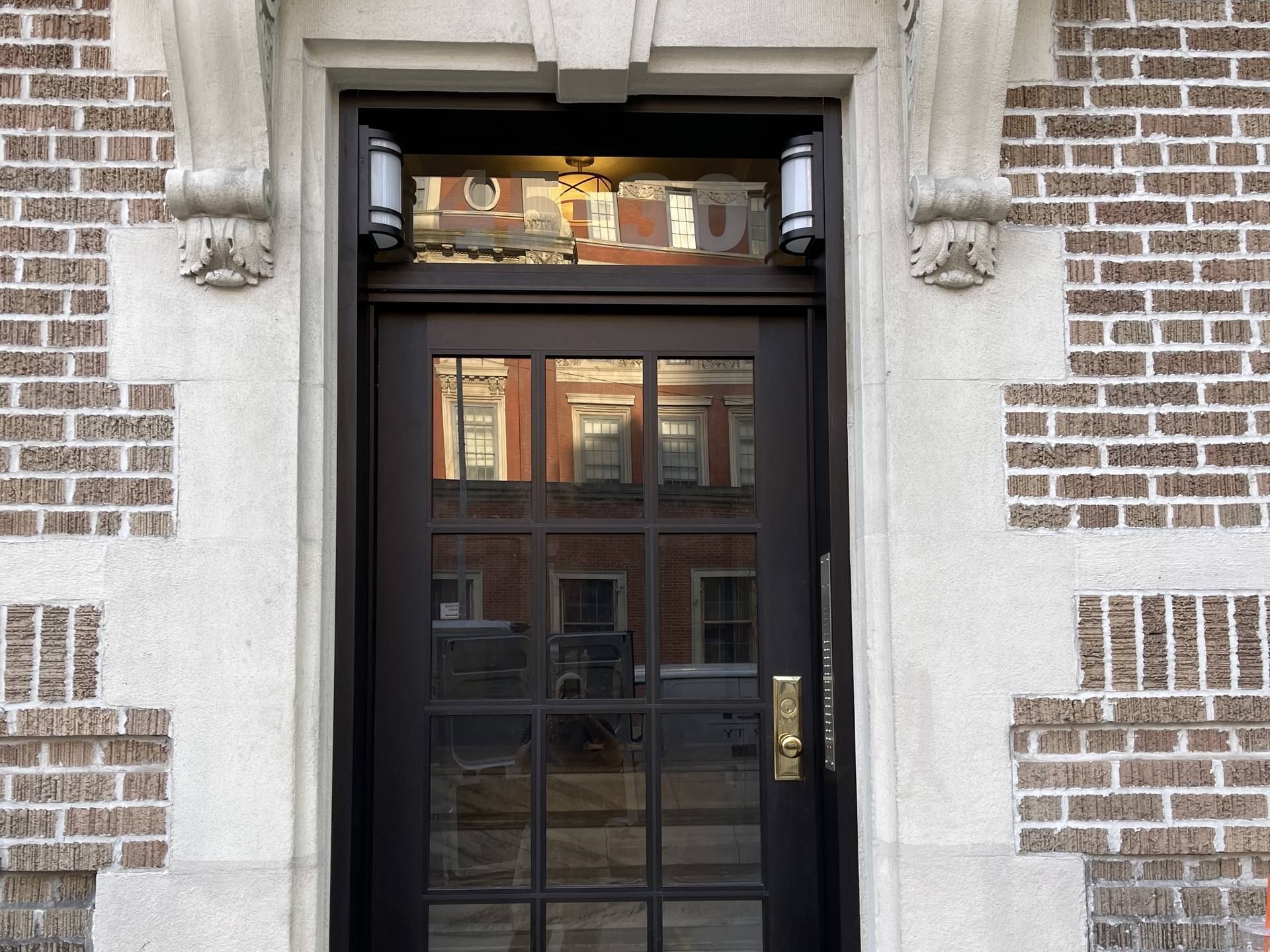
Parker Custom Security installed a steel bi-fold security door in the street entry of Kehila Kedosha Janina, the synagogue and museum at 280 Broome Street on the Lower East Side of Manhattan. Built in 1926–27 and designated a New York City landmark in 2004, Kehila Kedosha Janina is the only Romaniote synagogue in the Western Hemisphere. Its entry vestibule is small, with the original paneled wood street door, a mosaic tile floor, and a staircase immediately inside. A full-width swinging door would not fit, so the new door folds on a continuous hinge into half the space and sits within the existing opening, leaving the historic facade untouched. When the synagogue is closed, the steel door adds a second barrier just inside the street door. When it is open, the leaves fold flat against the jamb. Parker Custom Security has secured synagogues, churches, and other buildings across Manhattan and New York City since 2003.
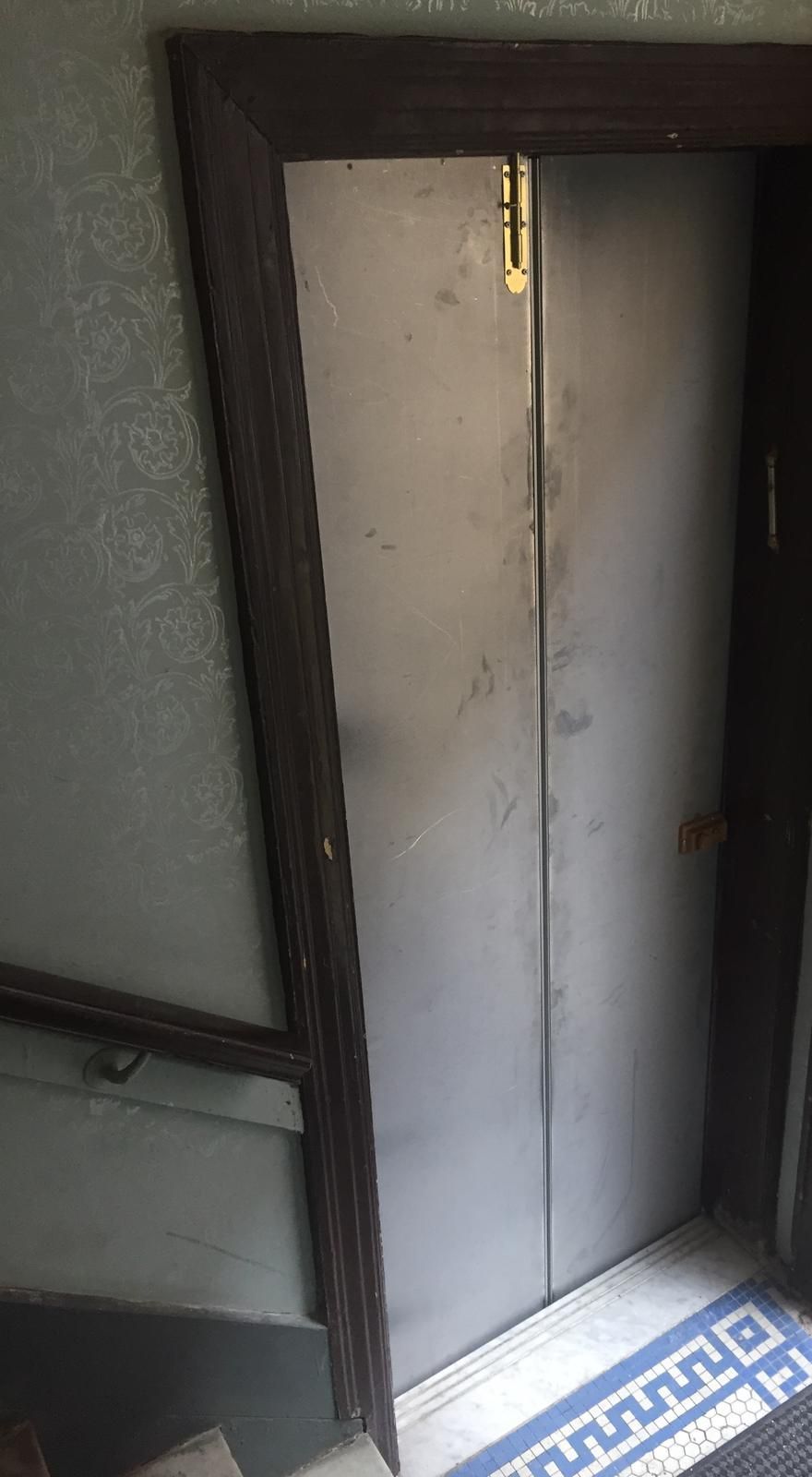
The steel bi-fold door closed inside the synagogue's original wood-trimmed entry, above the mosaic tile vestibule floor.
Securing the Entrance at Kehila Kedosha Janina
Kehila Kedosha Janina has served Romaniote Jews, a Greek Jewish community with roots going back more than 2,000 years, since its congregation was founded on the Lower East Side in 1906. Today the building at 280 Broome Street is both an active synagogue and a museum, which means its front door has to welcome visitors during open hours and stay secure the rest of the time.
Like many historic houses of worship in New York City, the building was designed long before modern security was a consideration. The street door is the original paneled wood door, and directly behind it is a compact vestibule with a staircase. The goal was to add real security at that entrance without altering the building's character.
Project Details
The Challenge: A Historic Entry With No Room for a Standard Door
Securing a historic entrance is rarely as simple as hanging a new door. At Kehila Kedosha Janina, the constraints were clear from the start:
- A tight vestibule. The space behind the street door is small, and the staircase starts right inside. A single full-width door swinging into that space would collide with the stair, the walls, or the street door itself.
- Historic fabric to protect. The paneled wood street door, the wood trim, and the blue-and-white mosaic tile floor are original. The new door had to work around them, not replace them.
- A building that is open to the public. As a museum as well as a synagogue, the entrance has to open fully for visitors and close securely when the building is empty.
Sound Familiar? Security Questions Every House of Worship Faces
If you are responsible for a synagogue, church, or mosque in New York City, some of these may sound familiar:
- "Our front door is beautiful, but it isn't secure." Original wood doors and older hardware were never designed to resist forced entry.
- "We can't change the facade." Landmarked and historic buildings need solutions that don't alter the street front.
- "There's no room for another door." Older vestibules and stair halls are often too tight for a standard swinging door.
- "We have grant money but need a contractor who can quote it." Security grants require clear, itemized scopes of work.
A door designed for the space, installed just inside the historic entrance, solves several of these at once.
The Solution: A Steel Door That Folds Into Half the Space
Instead of a single swinging door, Parker installed a steel bi-fold door in an existing doorway inside the entry vestibule. The door is made of two steel leaves joined by a continuous hinge, so it folds onto itself as it opens and needs only about half the swing room of a conventional door.
- Fitted to the existing opening: the door sits within the original wood-trimmed frame, so no masonry or facade work was needed.
- Steel construction: a solid metal barrier just inside the original wood street door.
- Folds flat when open: during visiting hours, the leaves fold back against the jamb and leave the entrance clear.
- Historic finishes untouched: the street door, trim, stair, and tile floor all stayed in place.
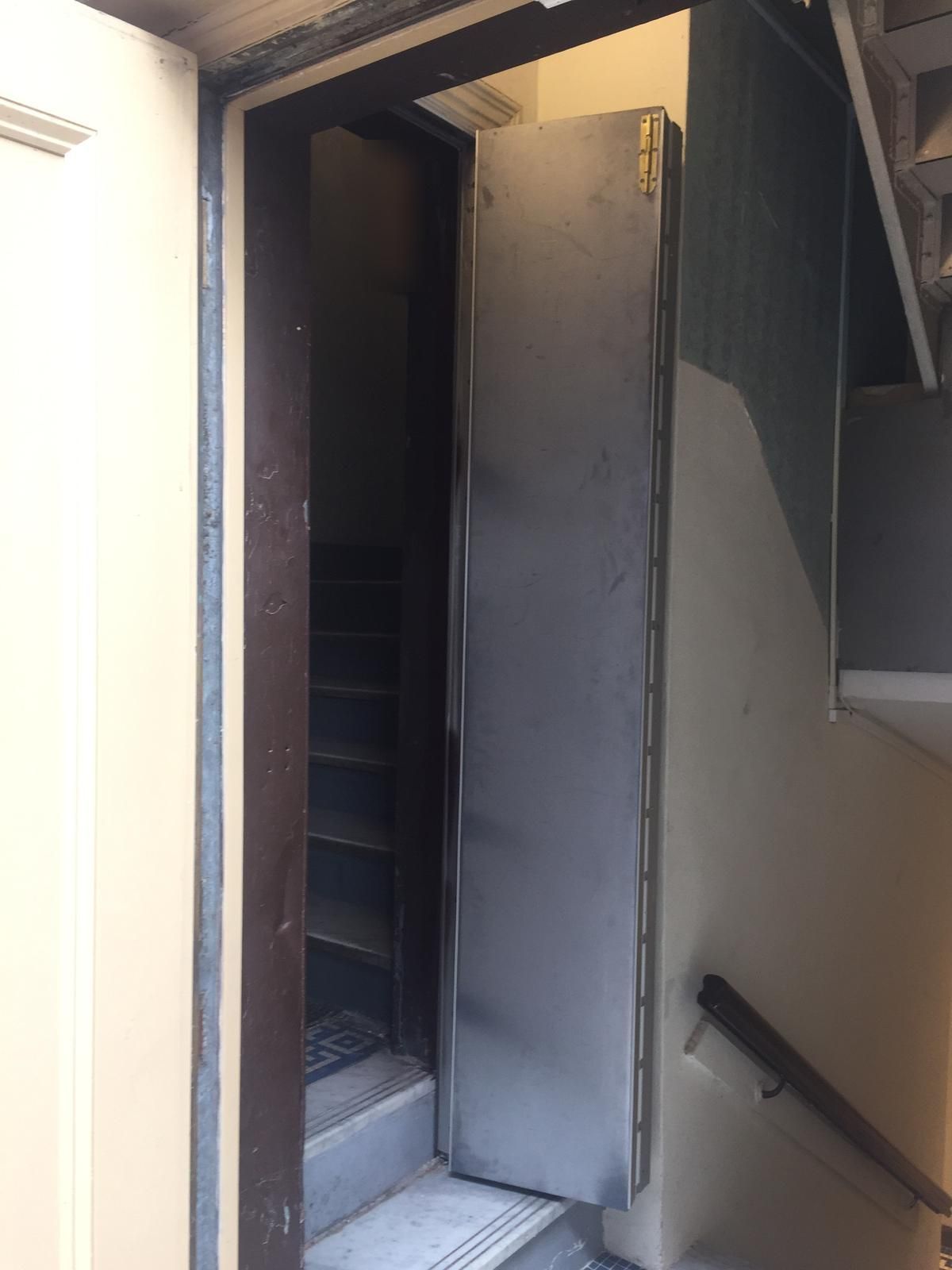
Folded open, the steel leaves sit flat against the jamb so the entrance stays clear during visiting hours.
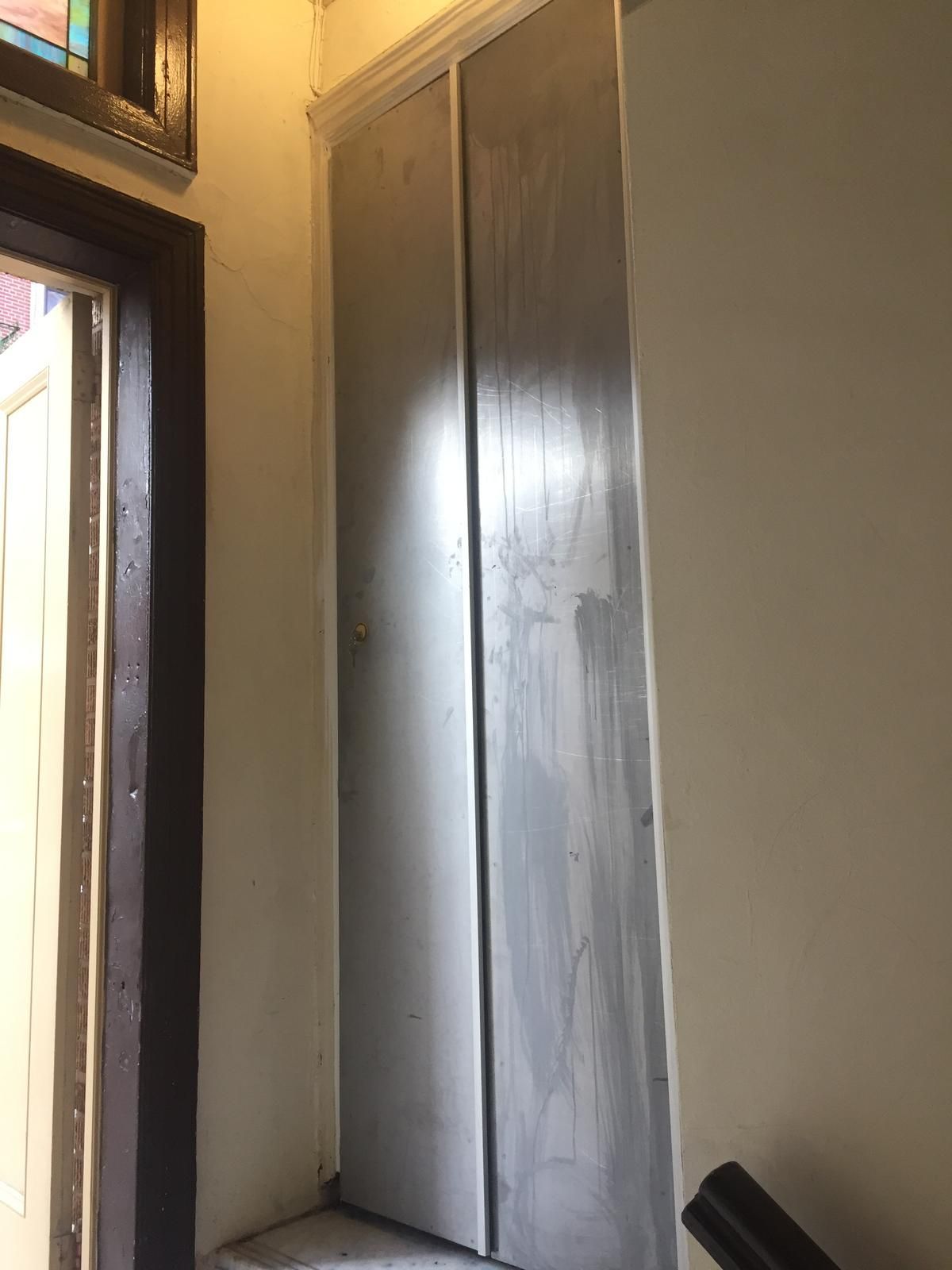
Inside the vestibule: the closed steel door beside the original street entrance and stained-glass transom.
Is Your House of Worship's Entrance as Secure as It Looks?
Parker secures historic synagogues, churches, and schools across NYC with doors and hardware built for the space. Free on-site assessment.
Working Inside a Landmark
Kehila Kedosha Janina is a New York City landmark and is listed on the National Register of Historic Places. Work in a building like this calls for care at every step: protecting original finishes, keeping the work inside the existing opening, and leaving the entrance looking the way visitors expect it to look.
Placing the new door inside the vestibule, past the street door, kept the landmarked facade exactly as it was. Inside, the door was fitted to the existing wood frame instead of replacing it, so the vestibule's trim and the mosaic tile threshold remain intact.
Bi-Fold Security Door Design & Specifications
A bi-fold door is a hinged door split into two leaves that fold together as the door opens. For security in older buildings, it solves a specific problem: protecting an opening that is too tight for a standard door swing.
- Leaves: two steel panels joined by a continuous (piano-style) hinge along their full height
- Swing room: roughly half that of a single door of the same width, because the leaves fold onto each other
- Mounting: hung within the existing frame, so no change to the surrounding masonry or facade is needed
- Best uses: narrow vestibules, stair halls, inner entry doors, and openings that need a secure barrier only part of the day
For openings that also serve as required exits, door hardware has to allow people to get out quickly in an emergency. Parker checks egress requirements for every opening and recommends exit hardware where it is needed.
The Finished Result
Kehila Kedosha Janina now has a steel security door just inside its historic street entrance. When the synagogue and museum are closed, the door adds a second, much stronger barrier. When they are open, it folds out of the way. Visitors still walk through the original wood door, past the original trim, onto the original tile floor.
- Original wood street door was the only barrier
- No room in the vestibule for a standard swinging door
- Historic entry had to stay unchanged
- Steel security door just inside the street door
- Bi-fold design fits the tight vestibule
- Facade, trim, and tile floor untouched
Why Houses of Worship Choose Parker Custom Security
Parker Custom Security has secured synagogues, churches, schools, and nonprofit buildings across New York City since 2003. Recent projects include fire-rated doors and panic hardware for a Bronx church, door security for St. Clare's Church on Staten Island, and access control and a video intercom for a church in West Orange, NJ.
- Over 20 years of commercial and institutional door work in NYC
- Experience in historic and landmarked buildings
- Itemized, door-by-door quotes that support security grant applications
- Licensed, bonded, and insured
Serving Synagogues, Churches & Schools Across NYC
Parker installs security doors, panic hardware, fire-rated doors, intercoms, and access control for schools and houses of worship throughout Manhattan, the Bronx, Brooklyn, Queens, Staten Island, Westchester County, and Northern New Jersey. Contact our team to plan a security upgrade for your building.
Plan a Security Upgrade for Your House of Worship
Get a free on-site assessment and an itemized, door-by-door quote for synagogues, churches, and schools across NYC, Westchester, and Northern New Jersey.
Frequently Asked Questions
Can you add a security door to a landmarked synagogue or church in NYC?
Often, yes. At Kehila Kedosha Janina, a New York City landmark on Broome Street, the steel bi-fold door was installed in a doorway inside the entry vestibule, just past the original wood street door, so the historic facade was left as it was. Every landmarked building is different, so Parker Custom Security looks at the opening, the existing frame, and any landmark considerations before recommending a door.
What is a bi-fold security door?
A bi-fold security door is a door made of two hinged leaves that fold against each other as it opens. Because it needs only about half the swing space of a single door, it suits narrow vestibules and stair halls where a full-width door would hit a wall, a stair, or another door. The door at this synagogue is steel, with its leaves joined by a continuous hinge.
Can the Nonprofit Security Grant Program pay for security doors at a house of worship?
The federal Nonprofit Security Grant Program (NSGP) funds physical security improvements at eligible nonprofits, including houses of worship, and door and entry hardening is a common use. Eligibility, deadlines, and allowable costs are set by FEMA and the state each year, so check the current program guidance. Parker Custom Security can provide an itemized, door-by-door quote to support a grant application.
Who installs security doors for synagogues and churches in New York City?
Parker Custom Security installs and repairs security doors, panic hardware, fire-rated doors, intercoms, and access control for synagogues, churches, schools, and other nonprofit buildings across all five boroughs, Westchester County, and Northern New Jersey. The company has worked on commercial and institutional buildings since 2003.
Will a security door change how a historic entrance looks?
It doesn't have to. At this synagogue the original paneled wood street door, the tiled vestibule floor, and the wood trim all stayed in place. The new steel door fits inside the existing opening and folds back out of the way when the building is open.
How long does it take to install a security door in an existing opening?
It depends on the door type, whether it is a stock or made-to-order size, and the condition of the existing frame. Installation itself is usually quick once the door is ready. Most of the lead time is measuring and ordering a door that fits an older opening. Parker gives a timeline with every quote.