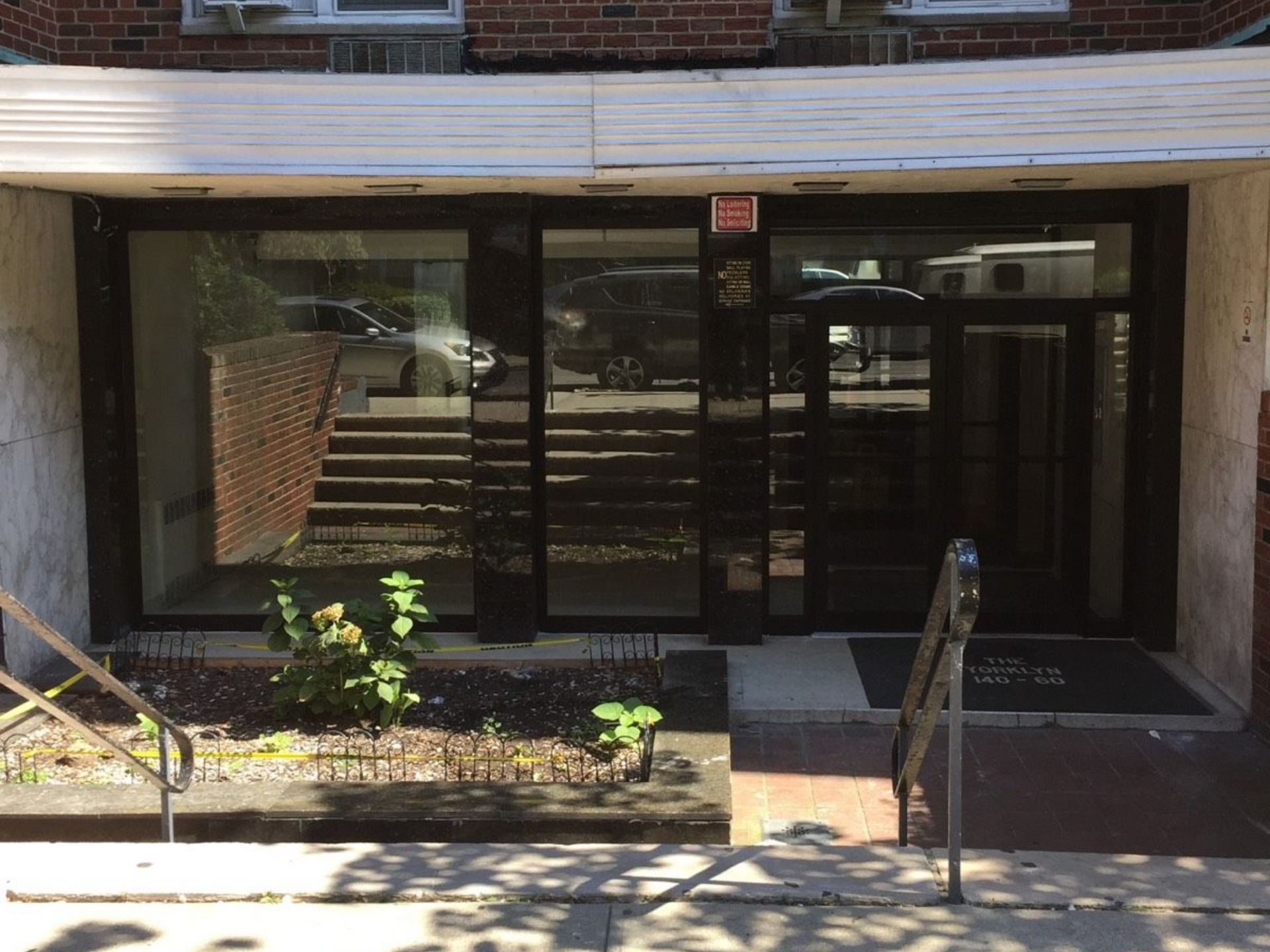
Parker Custom Security installed a multi-door card access control system, a hands-free video intercom, and a ceiling-speaker PA system at The Life Christian Church, a multi-story church campus at 747 Northfield Avenue in West Orange, New Jersey. The church needed to keep its main entrance, office suites, and stairwell doors secured during the week without handing out keys, while still letting staff, volunteers, and visitors in quickly. Our technicians mounted a video door station and a proximity card reader at the main entrance, added card readers and electrified door hardware to interior doors, installed a locked access control panel with a dedicated power supply, placed hands-free color video monitors in staff offices, and recessed PA speakers into the drop ceilings so staff can reach the building from a single paging microphone. Parker Custom Security, in business since 2003, installs access control for schools and houses of worship across Northern New Jersey, New York City, and Westchester.
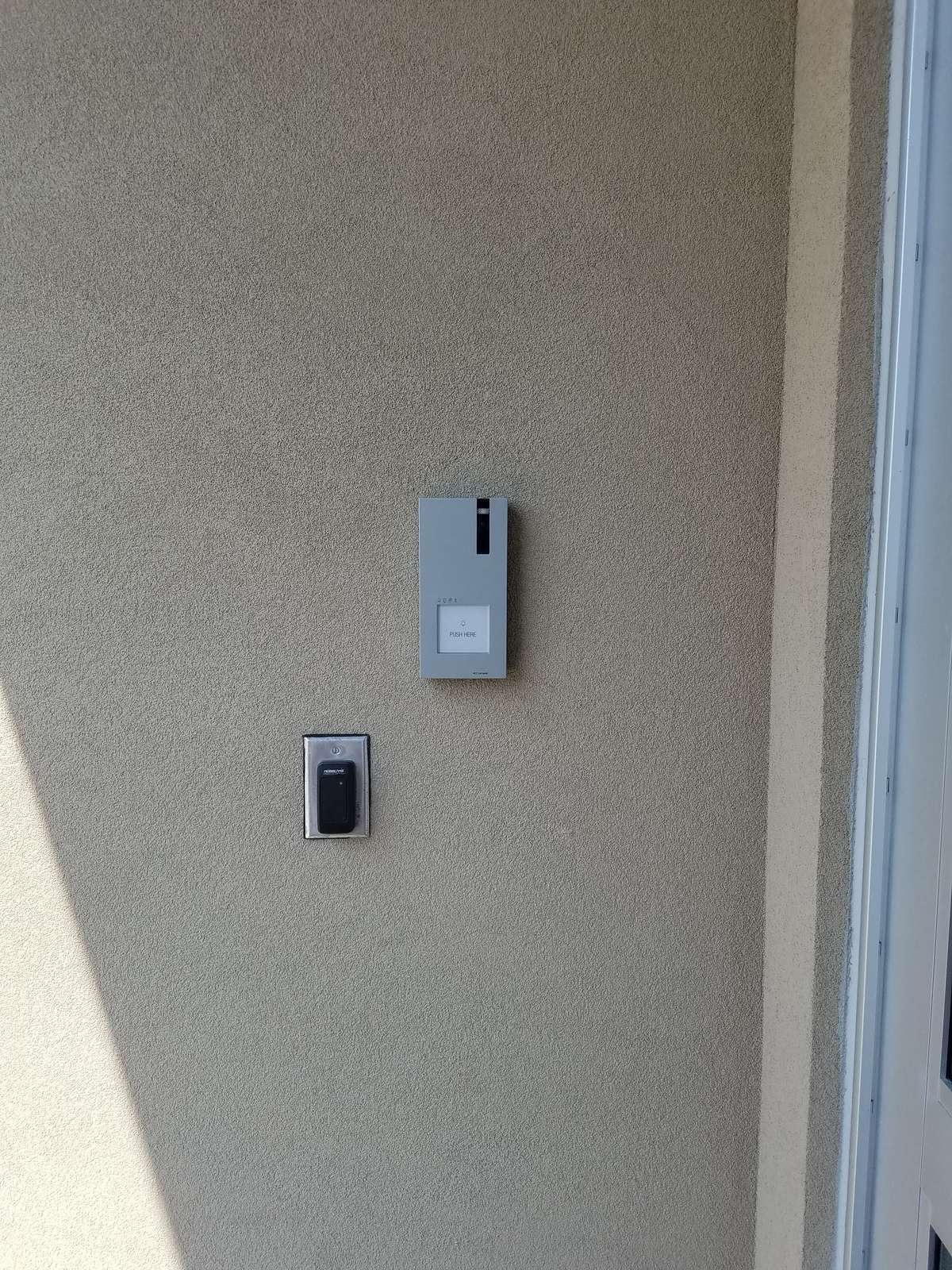
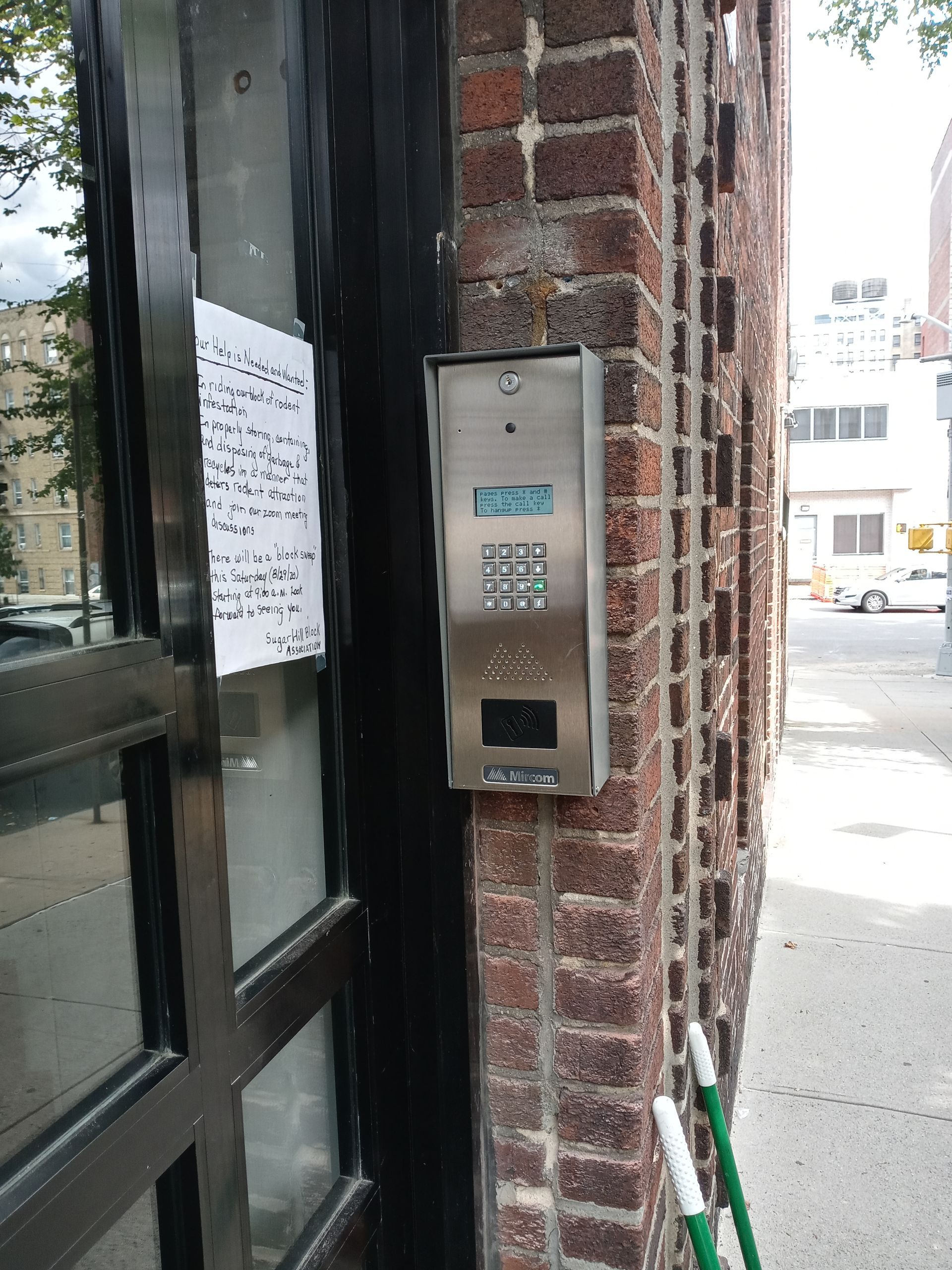
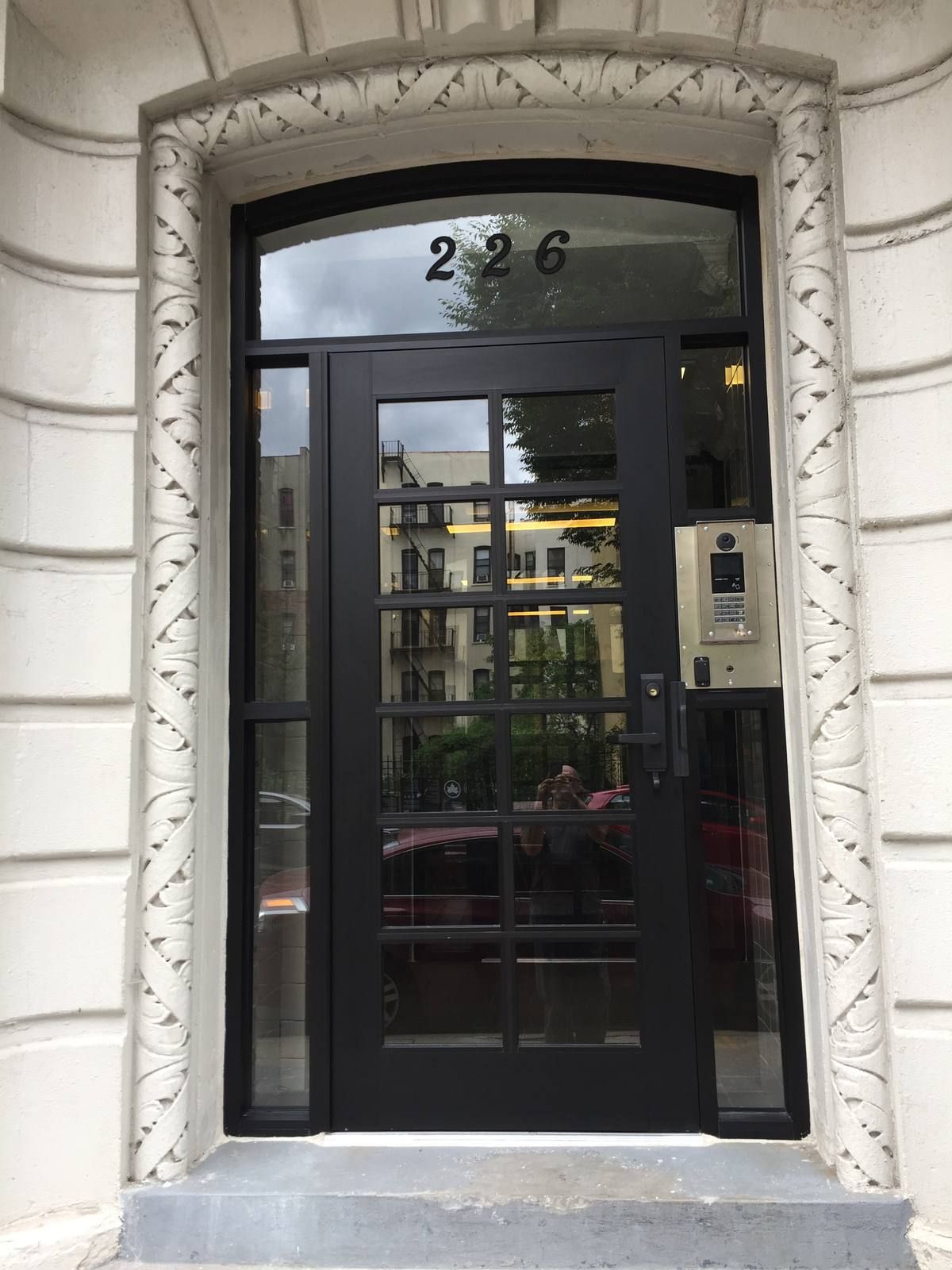
The main entrance at The Life Christian Church: a video door station for visitors and a proximity card reader for staff and volunteers, side by side on the exterior wall.
Securing The Life Christian Church Campus on Northfield Avenue in West Orange
A church is supposed to feel open. On Sunday morning the doors should welcome everyone. But on a Tuesday afternoon, the same building holds staff offices, ministry rooms, donation records, and people working alone on upper floors. Keeping it open and keeping it safe are two different jobs, and most church buildings are only set up for the first one.
The Life Christian Church is a non-denominational congregation with campuses in West Orange and Paramus. Its West Orange campus is a multi-story building with worship space on one side and office and ministry floors on the other. Leadership wanted three things: control over who could open which doors and when, a way for the front office to see and talk to visitors before letting them in, and a building-wide way to make announcements. Parker designed and installed all three as one connected entry system.
Project Details
The Challenge: A Building Open to the Public, With Offices Upstairs
Before the upgrade, the building relied on keys and on staff walking to the door. That works for a small chapel with one entrance. It breaks down on a campus with several floors, a stream of weekday visitors, and a rotating roster of volunteers.
- No control over who held keys — every volunteer or staff change meant a key to recover, and a lost key meant rekeying.
- No way to screen visitors — whoever was nearest had to leave their desk and open the front door without knowing who was on the other side.
- Interior doors left open or locked all day — office suites and stairwell doors were either unsecured or inconvenient, with nothing in between.
- No building-wide announcements — reaching staff on another floor meant phone calls or walking the halls, which is too slow in an emergency.
Security Problems We See in Churches and Public Buildings
If you manage a church, synagogue, mosque, school, library, or community center, some of these will sound familiar:
- "We hand out keys to volunteers and never get them all back." Keys can be copied, lent, and lost, and a lock never tells you who used it. Card credentials can be switched off in seconds.
- "Someone has to run downstairs every time the bell rings." A video intercom lets the office see the visitor, talk to them, and release the door without getting up.
- "We're open to the public on Sunday and a workplace on Monday." Access control schedules unlock the doors for services and events, then lock them automatically afterward.
- "If something happened, we couldn't tell everyone at once." A paging system with ceiling speakers gives you one microphone for the whole floor, whether for a lockdown, an evacuation, or a routine announcement.
Each of these is a door and communication problem, and all four can be solved with one coordinated installation instead of four separate vendors.
The Solution: Card Access, Video Intercom, and Paging as One System
Parker installed three systems that work together at the building's entry points:
- Multi-door access control. Proximity card readers at the main entrance and at interior office, suite, and stairwell doors, with electrified hardware on each controlled door and a central controller that sets who can open which door and when.
- Hands-free video intercom. A surface-mount video door station at the entrance, with color video monitors in staff offices so the front desk and administrative staff can see, speak with, and admit visitors.
- Ceiling-speaker PA system. Speakers recessed into the drop ceilings, driven by a paging amplifier with a desktop paging microphone, for announcements across the floor.
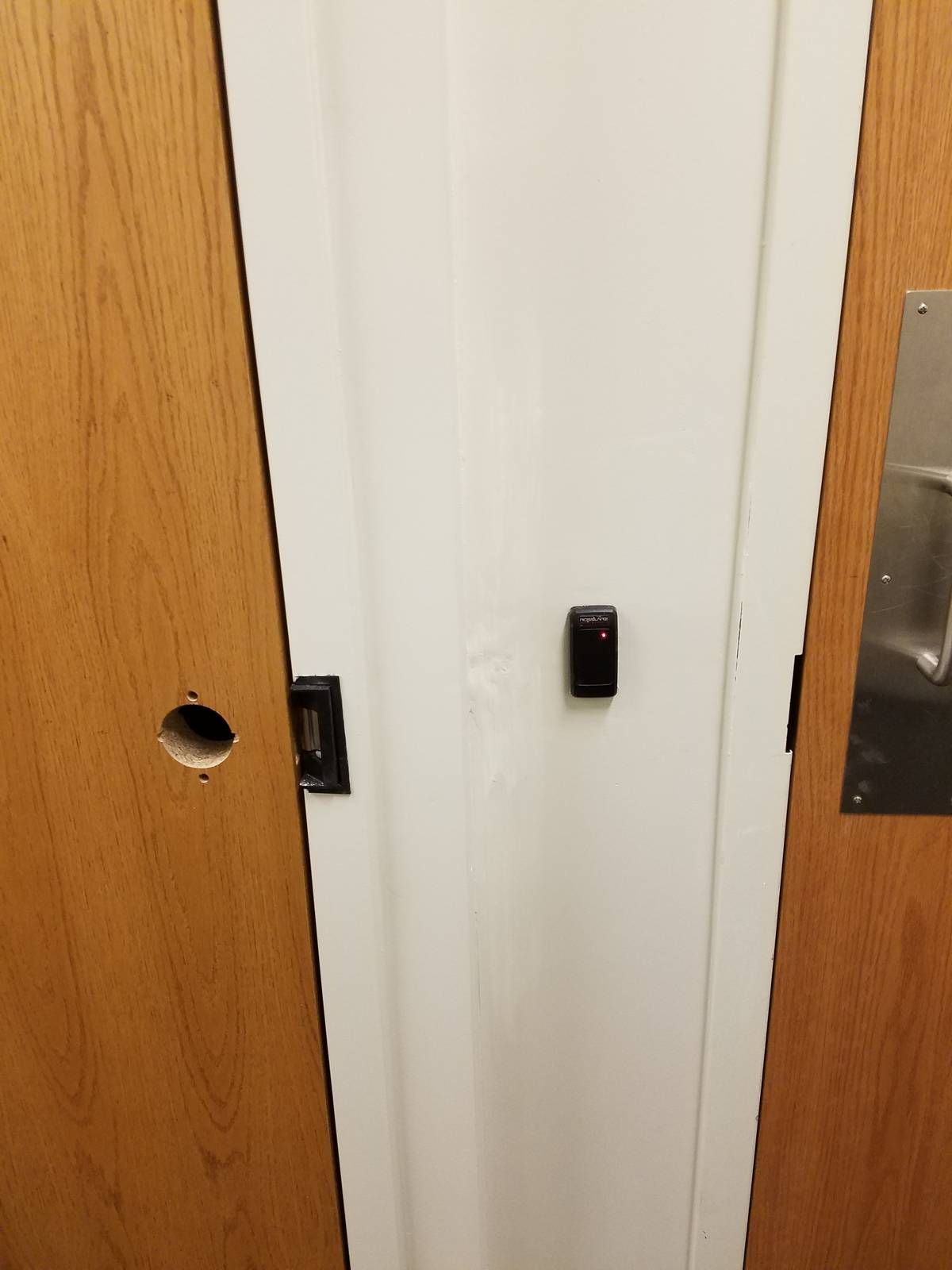
Mid-installation: the card reader and electric strike are mounted, and the door is bored for its new lockset.
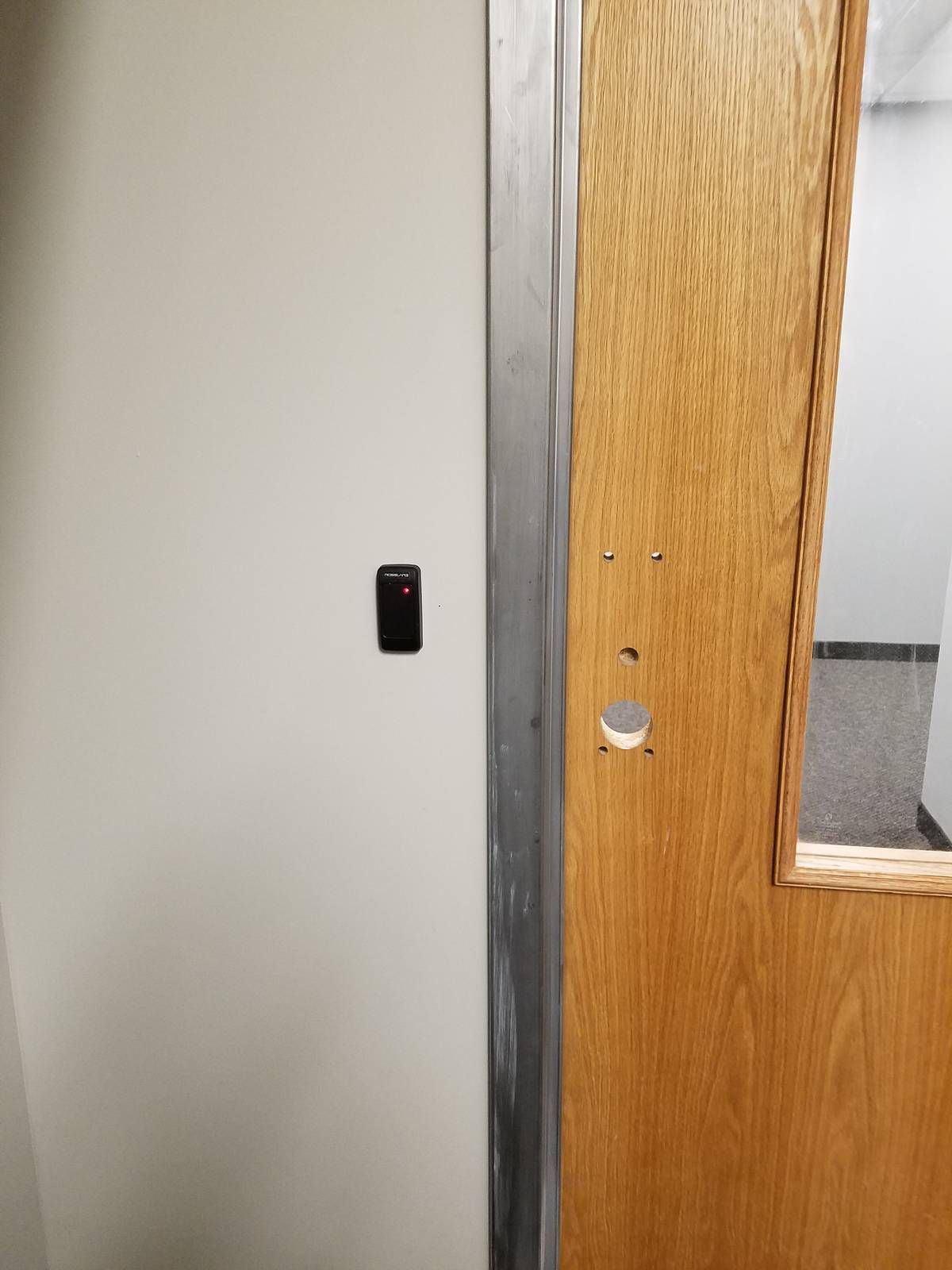
A second controlled door during installation, with the reader live and the door prepped for hardware.
Does Your Church Still Run on a Ring of Keys?
Parker designs and installs access control, video intercoms, and door hardware for houses of worship and public buildings. Get a free on-site assessment.
Installing the System in an Active Church Building
Church buildings rarely close for construction. Services, office hours, and ministry programs keep running, so work like this is sequenced door by door so no area is left without a working lock. Low-voltage cabling runs above the drop ceilings to each reader, strike, intercom station, and speaker, which kept finished walls intact and left no exposed wiring in public areas.
The access control controller and its power supply were mounted together in a locked enclosure in a back-of-house room, where the church can reach them for service but visitors cannot. Every controlled door should be tested to confirm it releases on a valid card, relocks after it closes, and lets people exit freely from the inside.
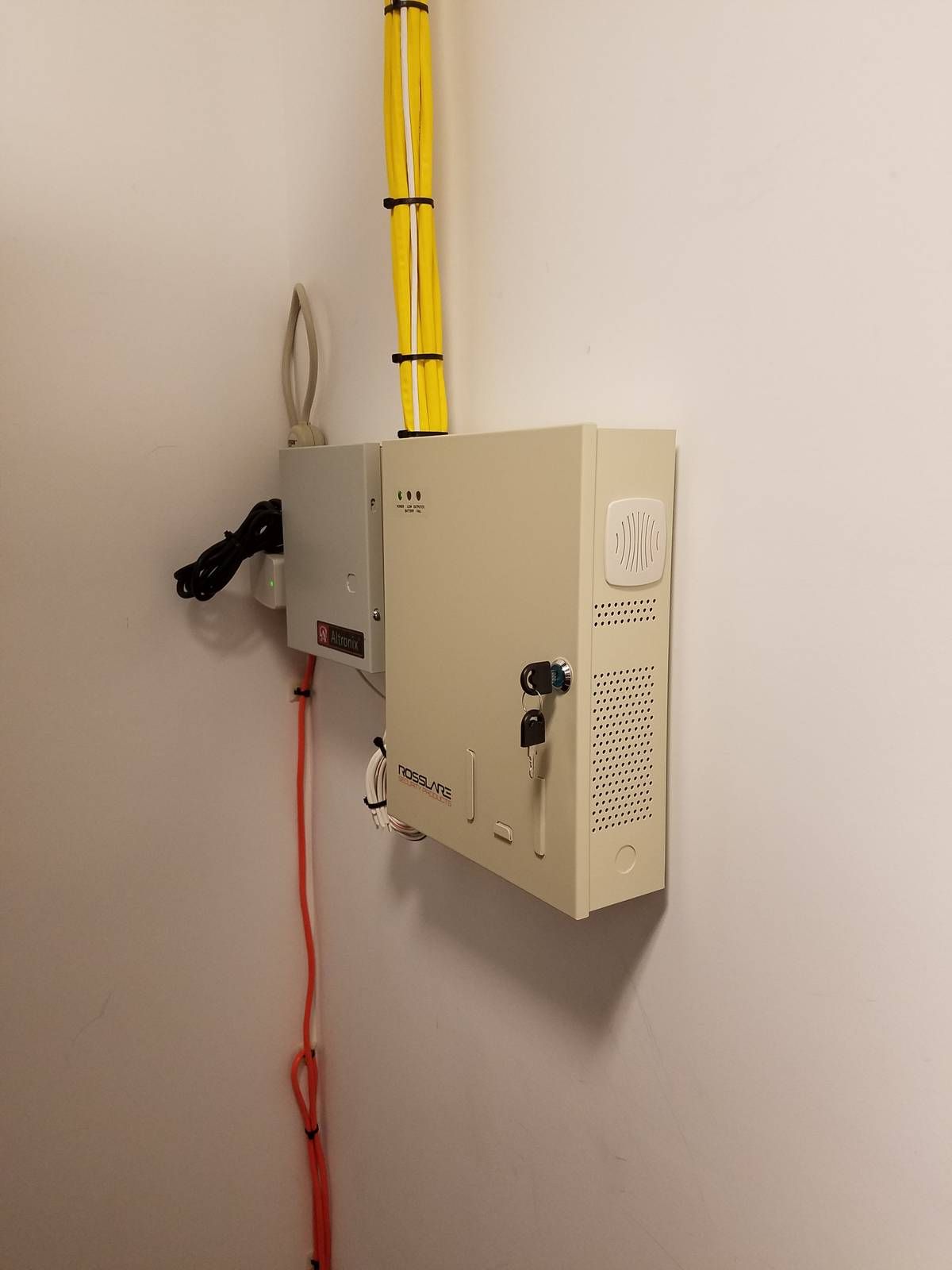
The access control panel and dedicated power supply, mounted in a locked enclosure with cabling fed from above the ceiling.
Card Access on Interior Office, Suite, and Stairwell Doors
Inside, readers were placed on the strike side of each controlled door at a consistent, reachable height. Office doors, glass suite entries, and stairwell doors all use the same credential, so a staff member carries one card for the whole building and the church can grant or remove access to any door from one system.
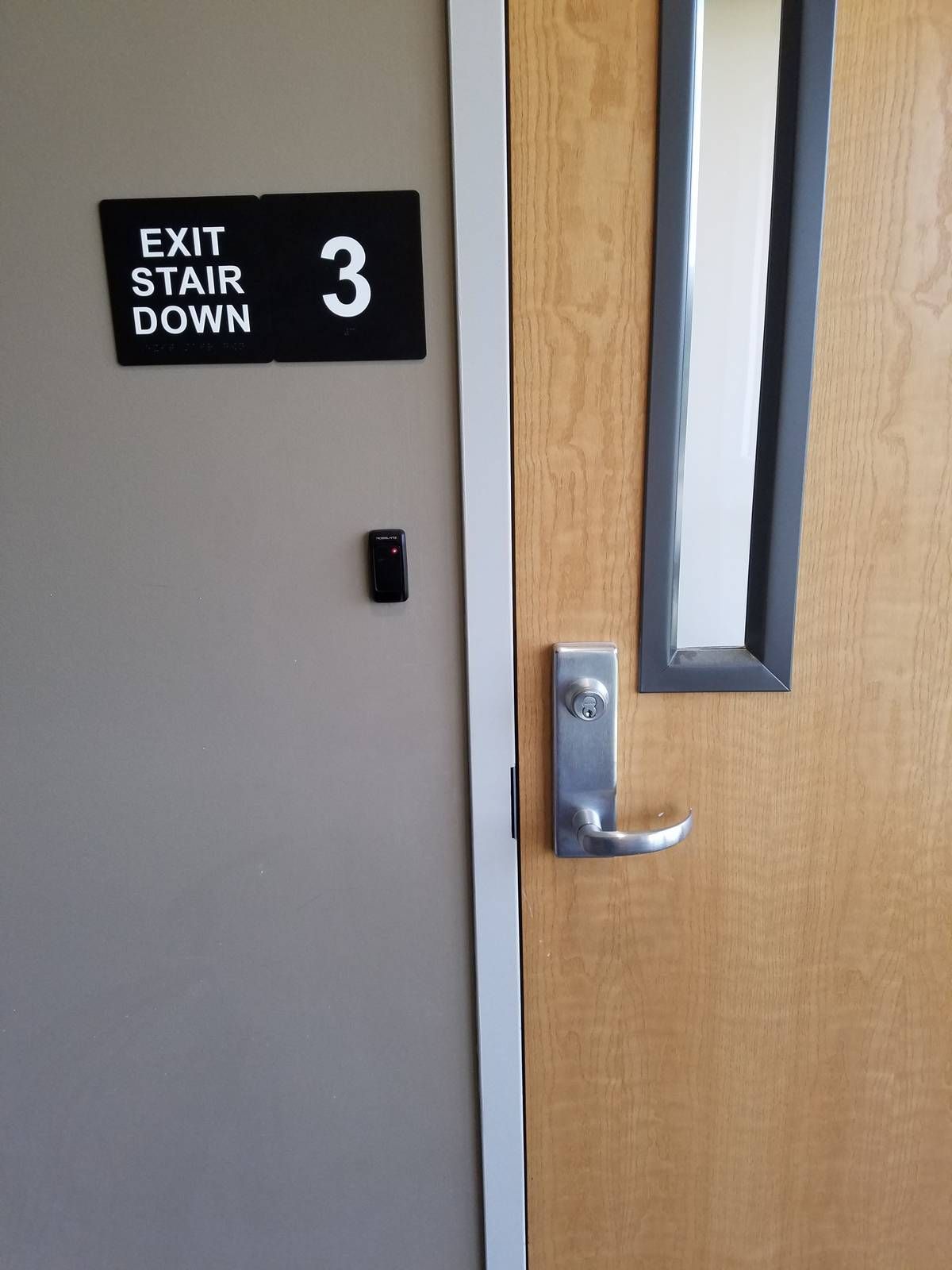
Card reader at a stairwell door.
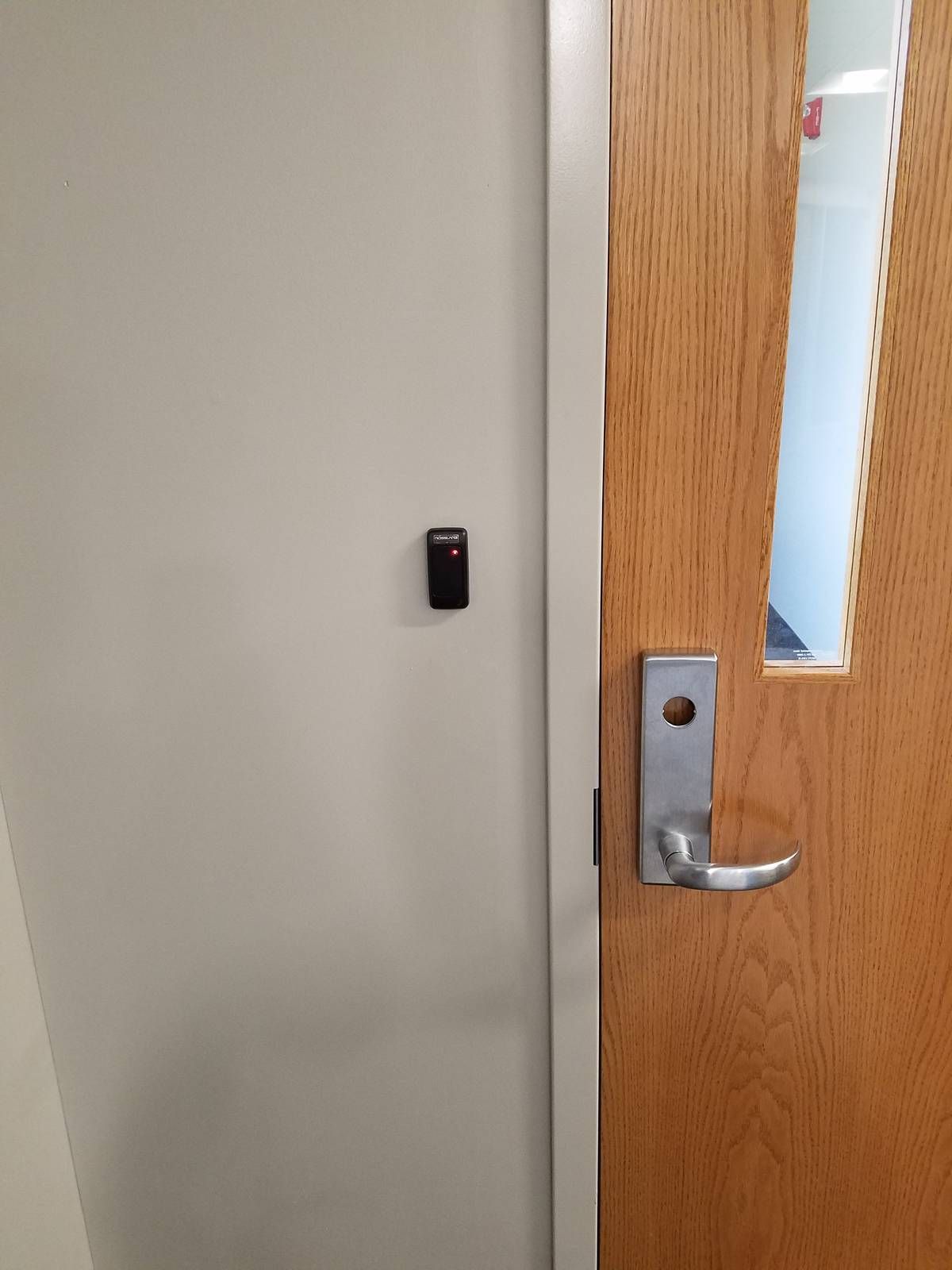
A staff office door with a card reader on the frame side.
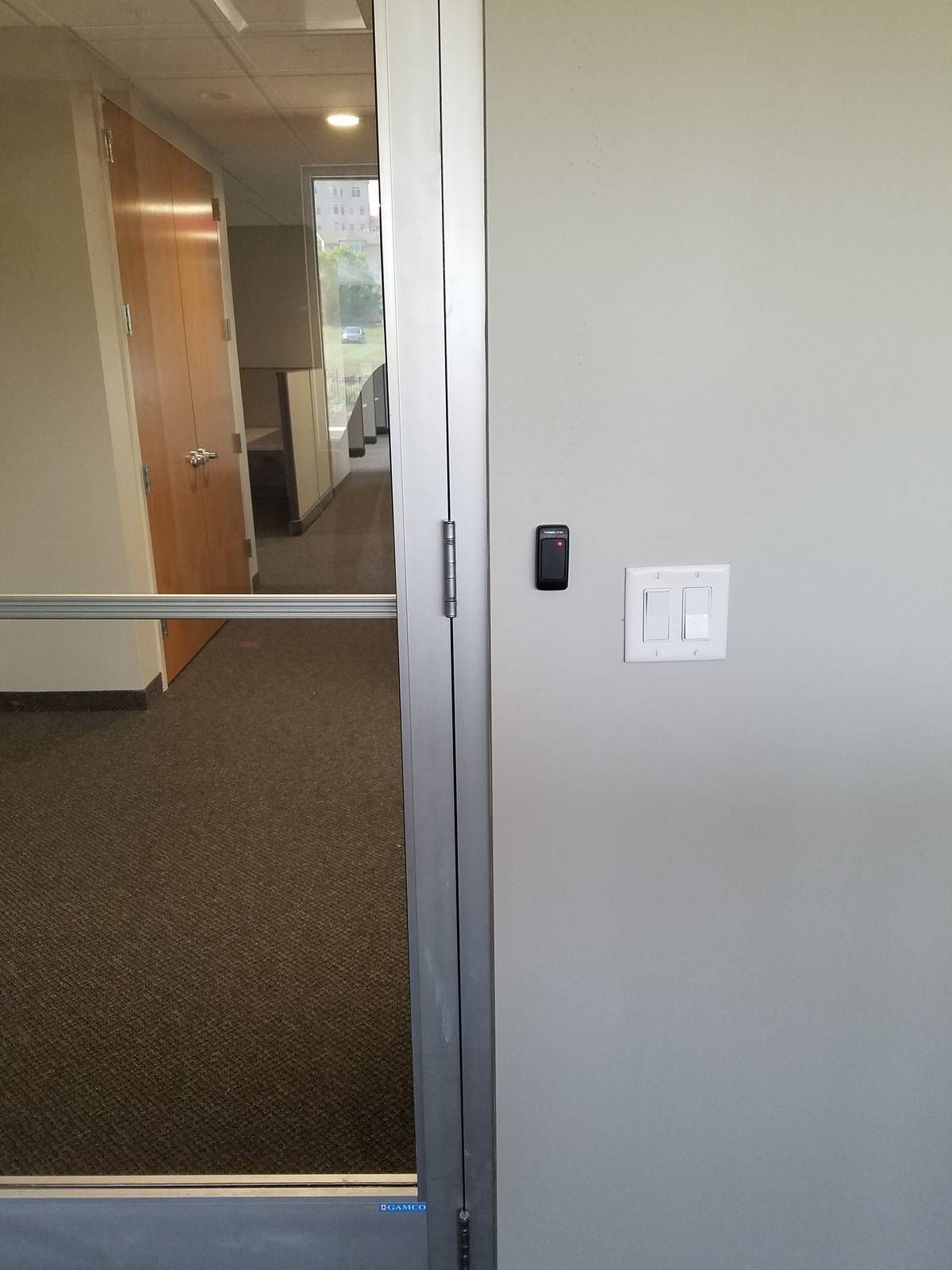
Card access at a glass-framed suite entrance.
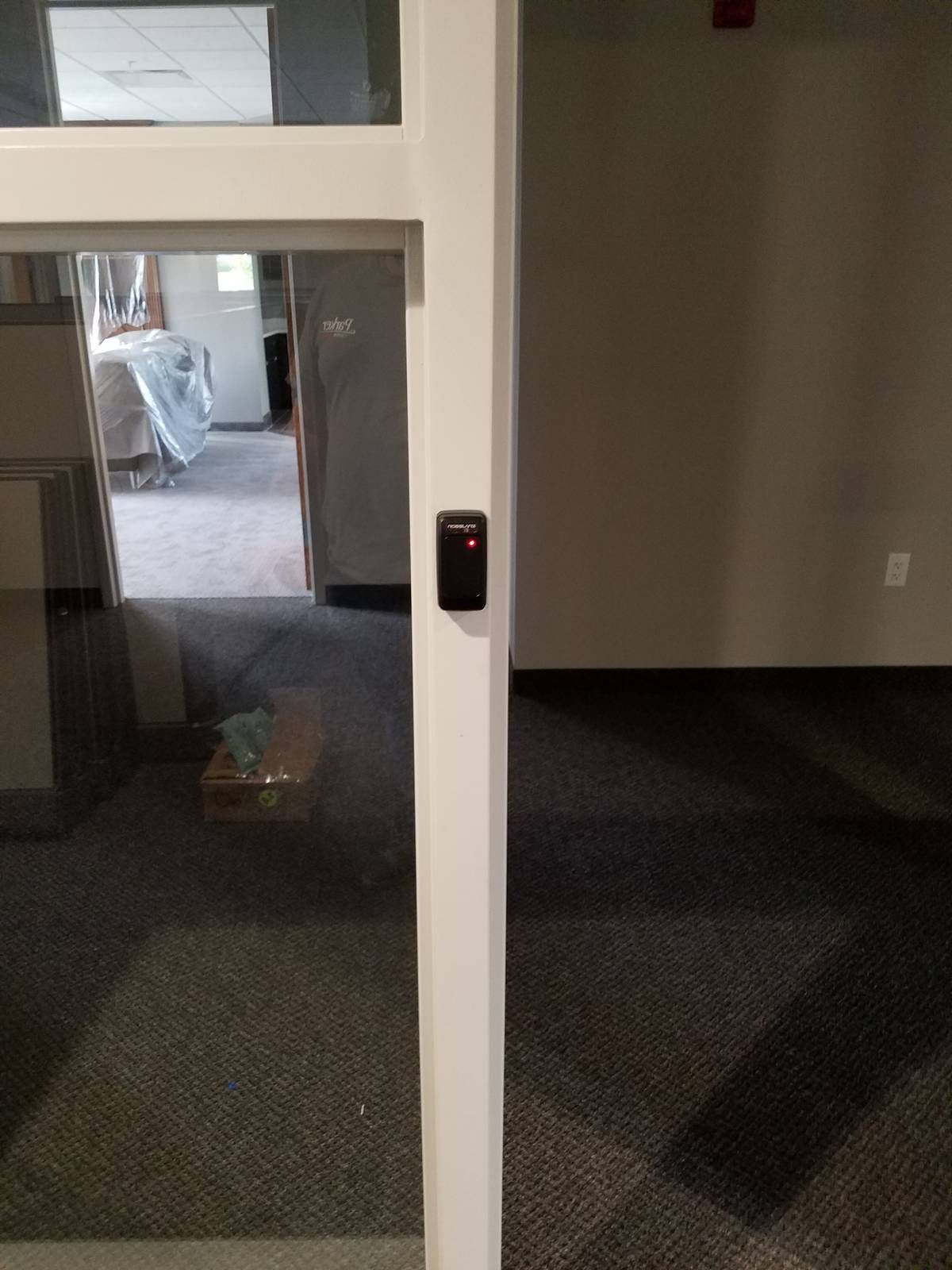
Another suite entrance on the same system and credential.
Video Intercom: See Who Is at the Door Before You Unlock It
The entrance door station has a built-in camera and a single large call button, so a visitor does not need to know who to ask for. The call rings the hands-free color monitors in the offices, where staff can see the visitor, talk to them, and release the entrance door with one touch.
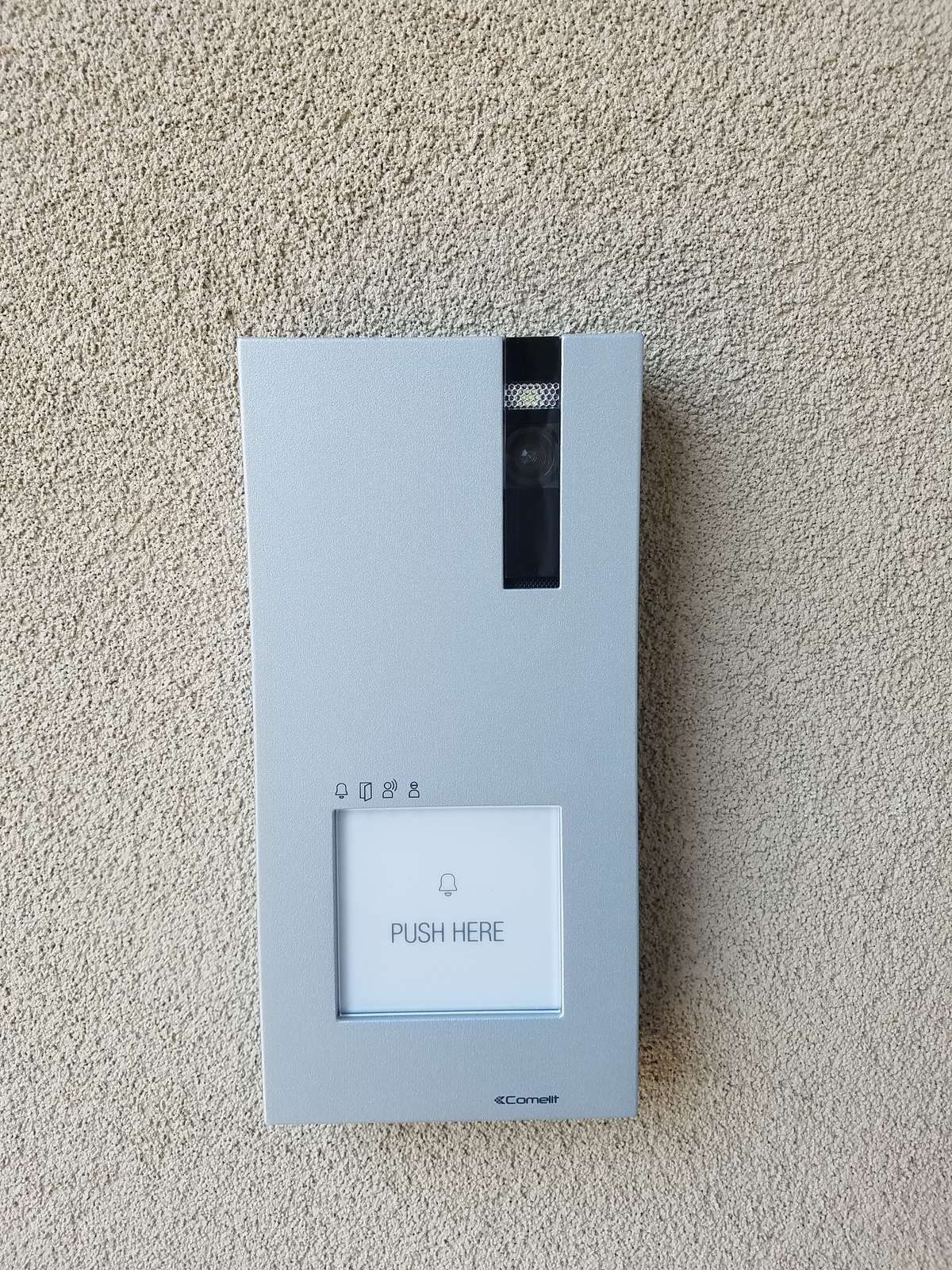
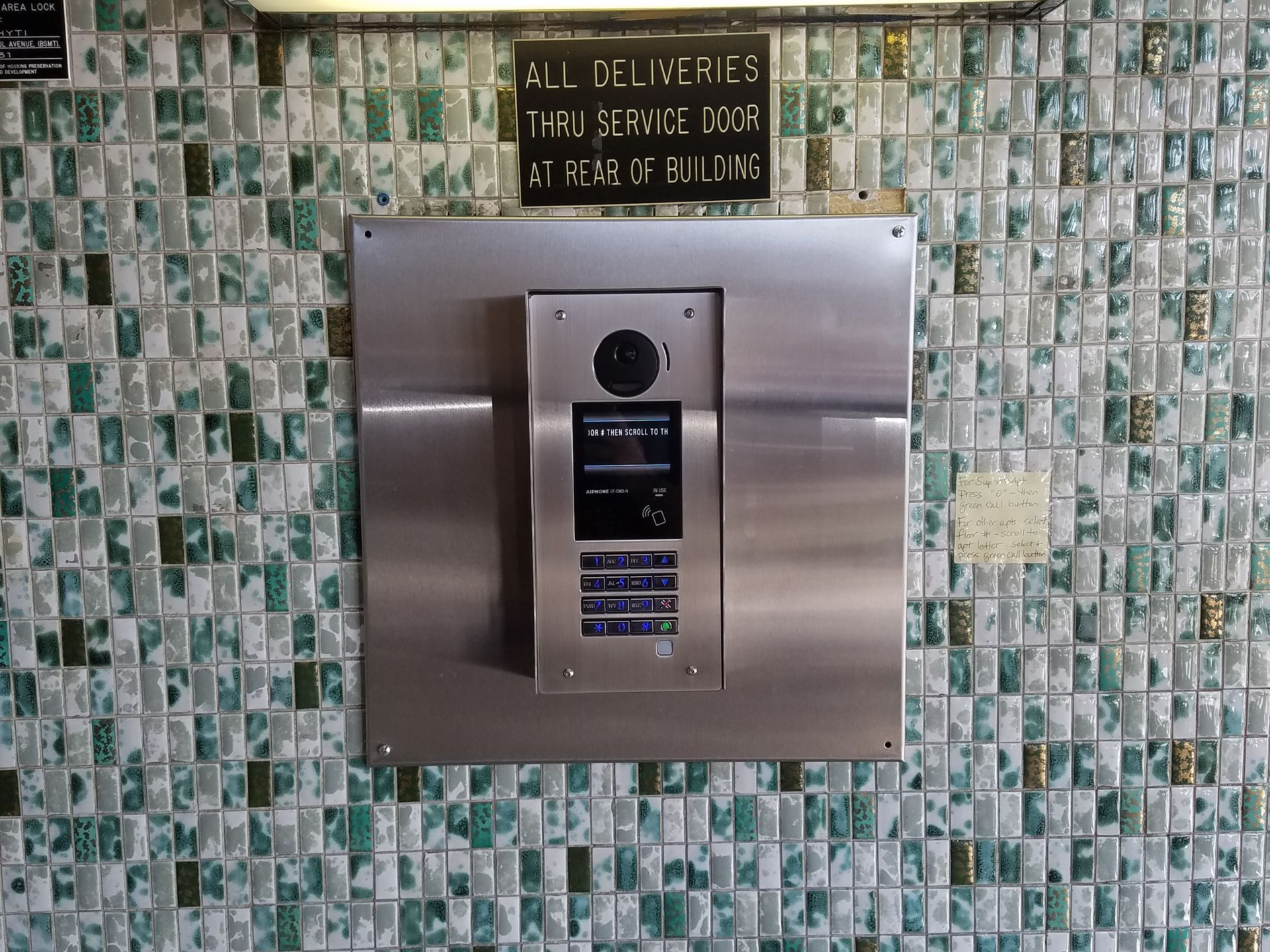
The video door station: built-in camera, one push-to-call button, weather-rated housing.
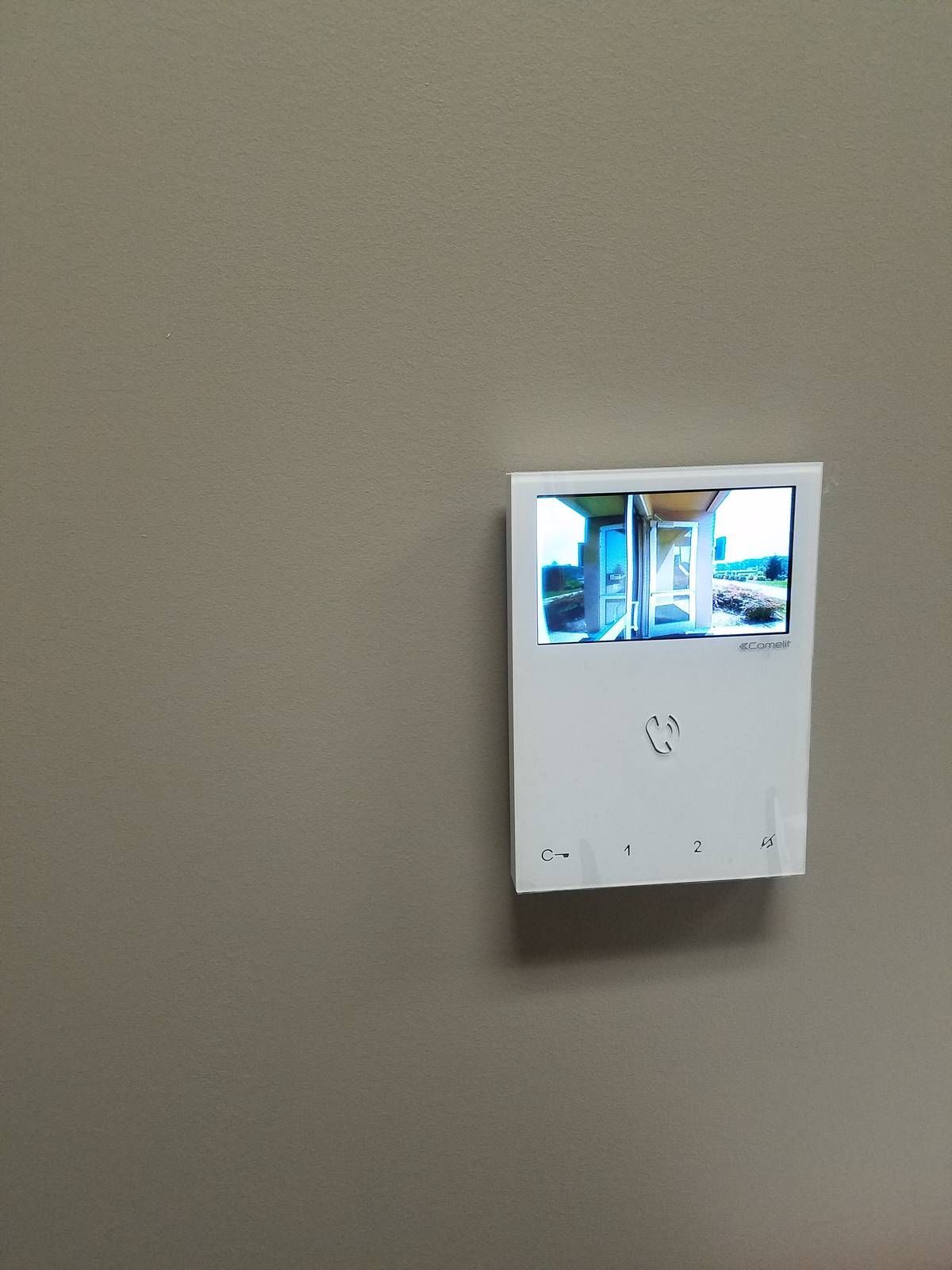
A hands-free monitor in a staff office, showing the entrance camera.
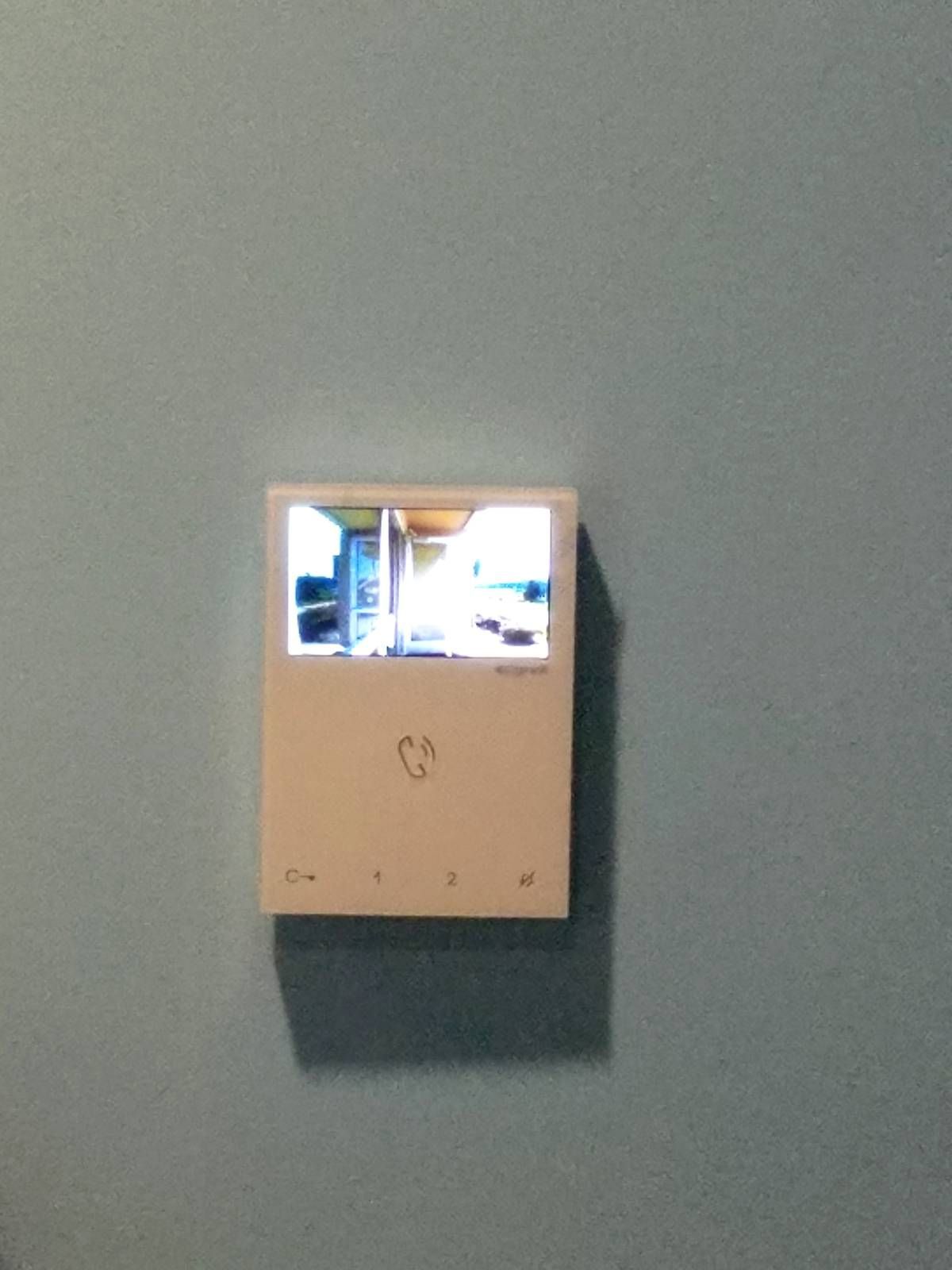
A second monitor in another office. Each one can answer the entrance and release the door.
Ceiling-Mounted PA Speakers for Announcements and Emergencies
The PA system uses round speakers recessed into ceiling tiles, spread across the floor so sound is even rather than loud in one spot and faint in another. A paging amplifier with a desktop microphone drives the speakers, giving staff one place to make a routine announcement or direct people during an emergency.
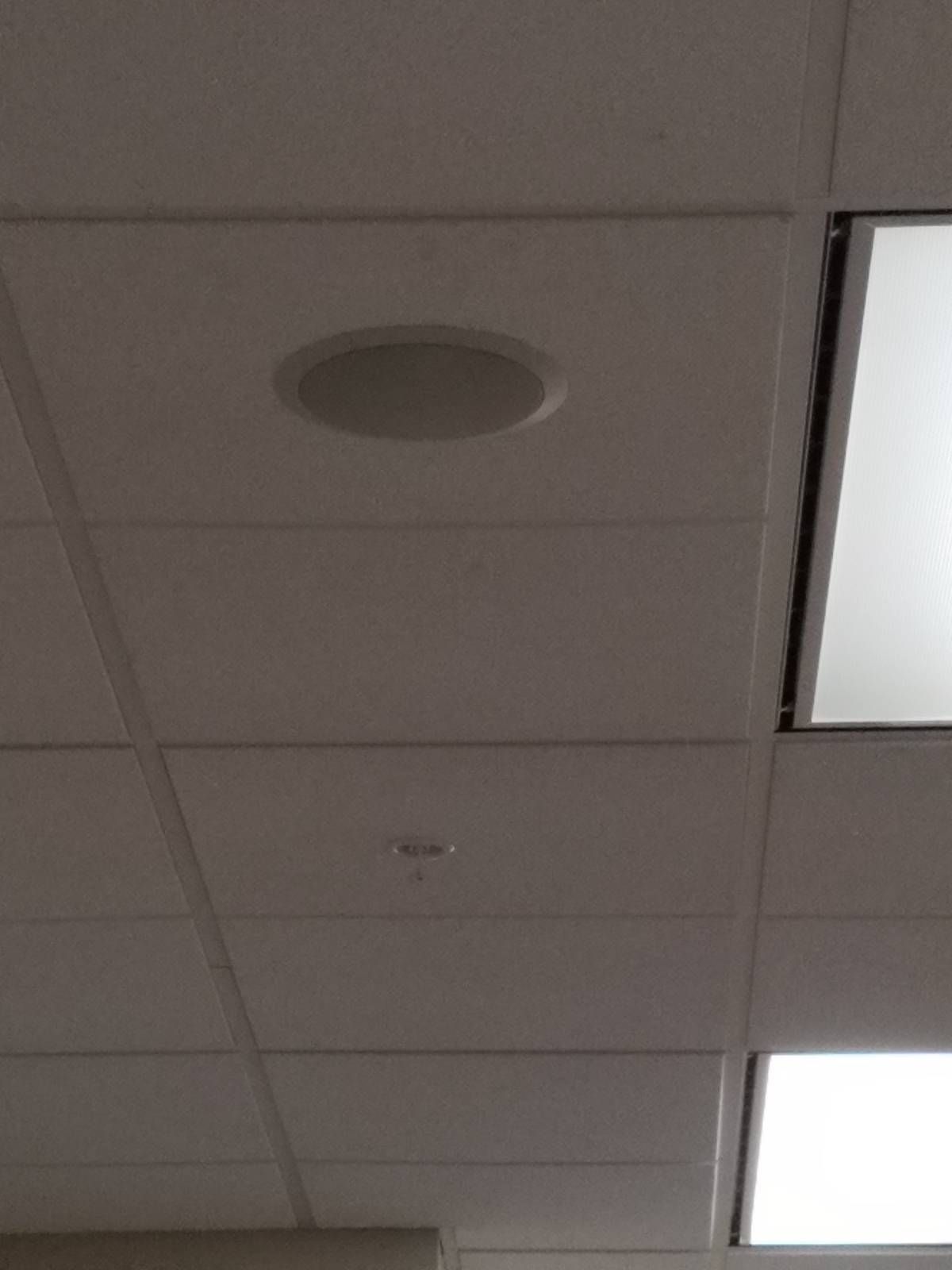
A recessed PA speaker set flush into a ceiling tile.
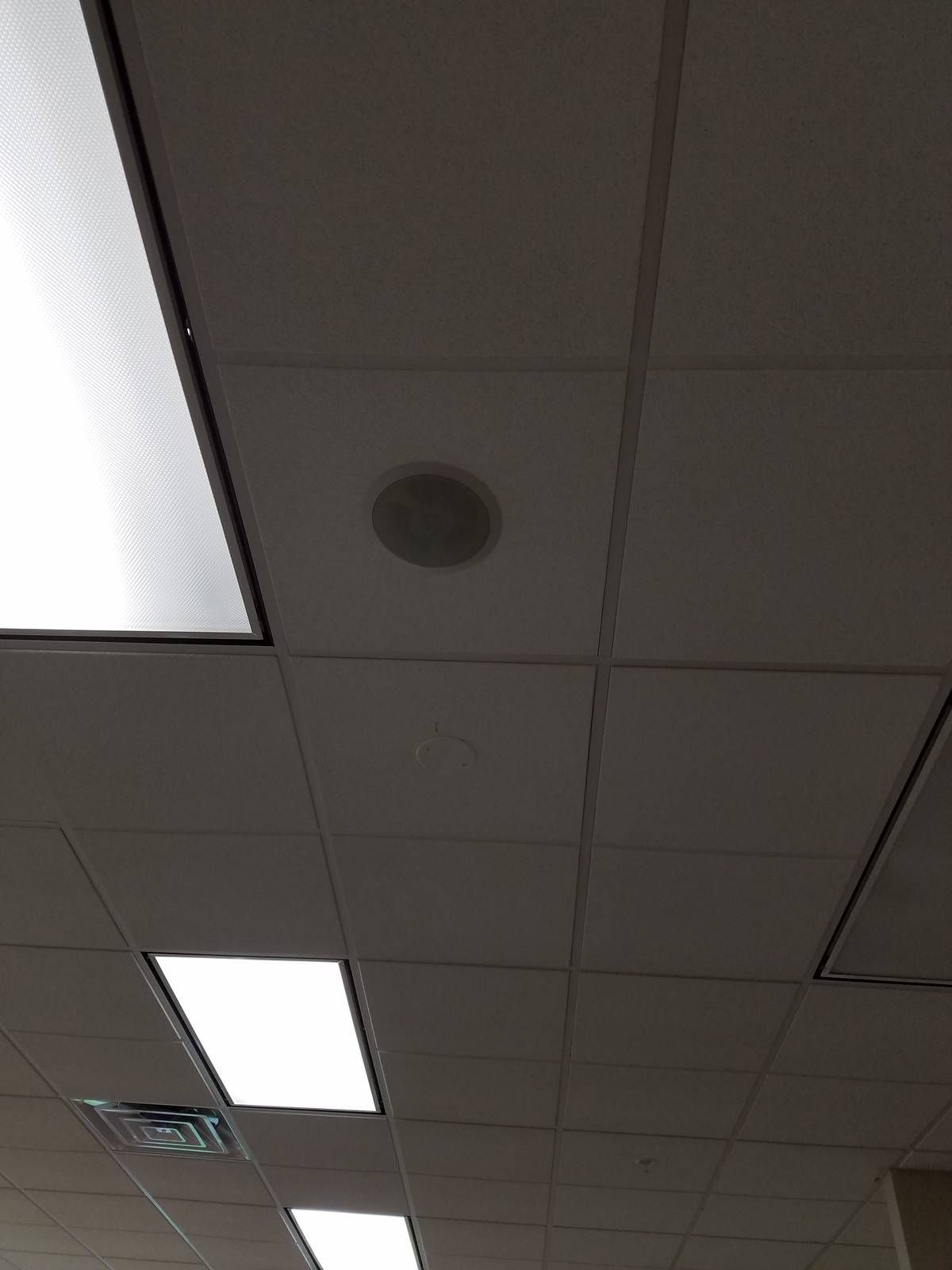
Speakers are spaced across the floor for even coverage.
Church Access Control, Intercom & PA Design Specifications
Access control for a house of worship is a door-hardware project first and an electronics project second. These are the decisions that shape a church or public-building system:
- Credentials: Proximity cards or key fobs, issued per person and grouped by role (staff, clergy, volunteers, contractors). A lost card is switched off instead of rekeying a lock.
- Schedules: Doors can unlock automatically for services and events, then relock afterward, so nobody has to remember to lock up.
- Electrified hardware: Each controlled door needs a way to release, usually an electric strike in the frame or an electrified lockset in the door. The right choice depends on the door, the frame, and whether the door is fire-rated.
- Fail-safe vs. fail-secure: Fail-secure hardware stays locked from outside during a power loss; fail-safe unlocks. The choice depends on the door's role and on local code, and a power supply with battery backup keeps the system running through short outages.
- Free egress: A controlled door must always let people out from the inside with one motion. Access control decides who comes in, never who can leave.
- Intercom placement: The door station's camera should see a visitor's face, and its call button should sit within accessible reach range (no higher than 48 inches under the ADA standards).
- PA coverage: Ceiling speakers are spaced so their coverage overlaps. Lower ceilings need more speakers placed closer together.
Paying for It: Nonprofit Security Grants for New Jersey Churches
Many houses of worship pay for access control through security grants. New Jersey's Office of Homeland Security and Preparedness runs the New Jersey Nonprofit Security Grant Program, which for fiscal year 2027 offered $7 million statewide, including target-hardening equipment awards of up to $100,000 per organization. That round closed on September 11, 2026, and applicants had to submit a vulnerability risk assessment with photographs. The federal Nonprofit Security Grant Program, run by FEMA and administered through the states, covers similar physical security work.
If your church plans to apply in the next cycle, start early. An itemized, door-by-door quote and photos of each entry point make the application stronger. Confirm what is eligible with the grant administrator before you commit to a scope.
The Finished Result
The church now controls its building by schedule and by person instead of by key. Staff and volunteers carry one card that opens only the doors they need. Visitors are seen and greeted before the door opens. The whole floor can hear an announcement from one microphone. The equipment is low-profile and neutral in color, so it fits the building rather than making it feel like a checkpoint.
- Metal keys for staff and volunteers
- No record of who entered or when
- Staff walked to the door to admit visitors
- Interior doors either open or locked all day
- No building-wide announcements
- Proximity cards issued and revoked per person
- Controlled doors on one central system
- Video intercom with door release from offices
- Scheduled locking for services, events, and after hours
- Ceiling PA speakers with a single paging microphone
Why Churches and Public Buildings Choose Parker Custom Security
Parker has worked on commercial doors, entries, and access systems since 2003. We handle the door hardware and the electronics ourselves, so the reader, the lock, the intercom, and the door all work as one assembly. See our church door projects at St. Clare's Church in Staten Island and Mount Horeb Church in the Bronx.
- Over 20 years of commercial door and entry work across the New York metro area
- Door hardware and electronics under one roof — no finger-pointing between a locksmith and an installer
- Experience in occupied buildings — work sequenced around services, office hours, and programs
- Licensed, bonded, and insured for commercial and institutional work
Serving Churches and Public Buildings in West Orange, Essex County & Beyond
Parker installs access control, video intercom systems, and commercial door hardware for houses of worship, schools, and nonprofits throughout Northern New Jersey, including West Orange and the rest of Essex County, as well as all five New York City boroughs and Westchester County. Our other New Jersey work includes the Garden Spires and Spruce Spires entrances in Newark. Contact us to schedule a walk-through.
Plan Your Church's Access Control Upgrade
Tell us about your building and we'll walk every entry point with you, then provide an itemized, door-by-door quote. We serve Northern New Jersey, New York City, and Westchester.
Frequently Asked Questions
Who installs access control and video intercoms for churches in West Orange, NJ?
Parker Custom Security installs card access control, video intercom systems, and commercial door hardware for churches and other houses of worship in West Orange and throughout Essex County and Northern New Jersey. The company has been in business since 2003 and is licensed, bonded, and insured. At The Life Christian Church on Northfield Avenue in West Orange, Parker installed card readers on the entrance and interior doors, a hands-free video intercom, and a ceiling-speaker PA system. Call (212) 491-5627 for a free assessment.
How much does access control cost for a church?
Cost depends mainly on the number of controlled doors, the type of electrified hardware each door needs, and how far cable has to run to each door. Doors that already have compatible hardware cost less to add; fire-rated doors or doors that need new locksets cost more. Adding a video intercom or PA system increases the scope. The most accurate way to price a church system is a walk-through that produces an itemized, door-by-door quote.
Can a church use a nonprofit security grant to pay for access control in New Jersey?
Often, yes. The New Jersey Nonprofit Security Grant Program, run by the state Office of Homeland Security and Preparedness, funds target-hardening equipment for eligible nonprofits, with awards of up to $100,000 per organization in the fiscal year 2027 round. The federal Nonprofit Security Grant Program covers similar physical security work. Applications require a vulnerability risk assessment, so confirm eligibility with the grant administrator and get an itemized quote before the application window opens.
Can access control be added to the existing doors in our church?
In most cases, yes. Existing wood, hollow metal, and aluminum doors can usually take a card reader plus an electric strike in the frame or an electrified lockset in the door. Doors that are damaged, out of alignment, or fire-rated may need repairs or listed hardware first. A site survey identifies which doors can be converted as they are and which need hardware work.
Will card readers lock people inside the church during an emergency?
No. A properly installed access control system controls who can enter a door from the outside, not who can leave. People inside must always be able to exit with one motion, using a lever, push bar, or exit device. Hardware is chosen to meet egress and fire code requirements, and a power supply with battery backup keeps the system working during short outages.
How does a video intercom work for a church office?
A door station with a built-in camera and a call button is mounted at the entrance. When a visitor presses the button, video monitors in the office ring. Staff can see the visitor, talk to them, and unlock the entrance door with a button on the monitor. Nobody has to leave their desk or open the door blind.
Why include a PA system in a church security upgrade?
Locks and intercoms control the door, but in an emergency you also need to tell everyone what to do. A PA system with ceiling speakers and a paging microphone lets staff reach a whole floor at once, whether that means a lockdown, an evacuation, or a routine announcement. Installing it alongside access control means the cabling is run once.