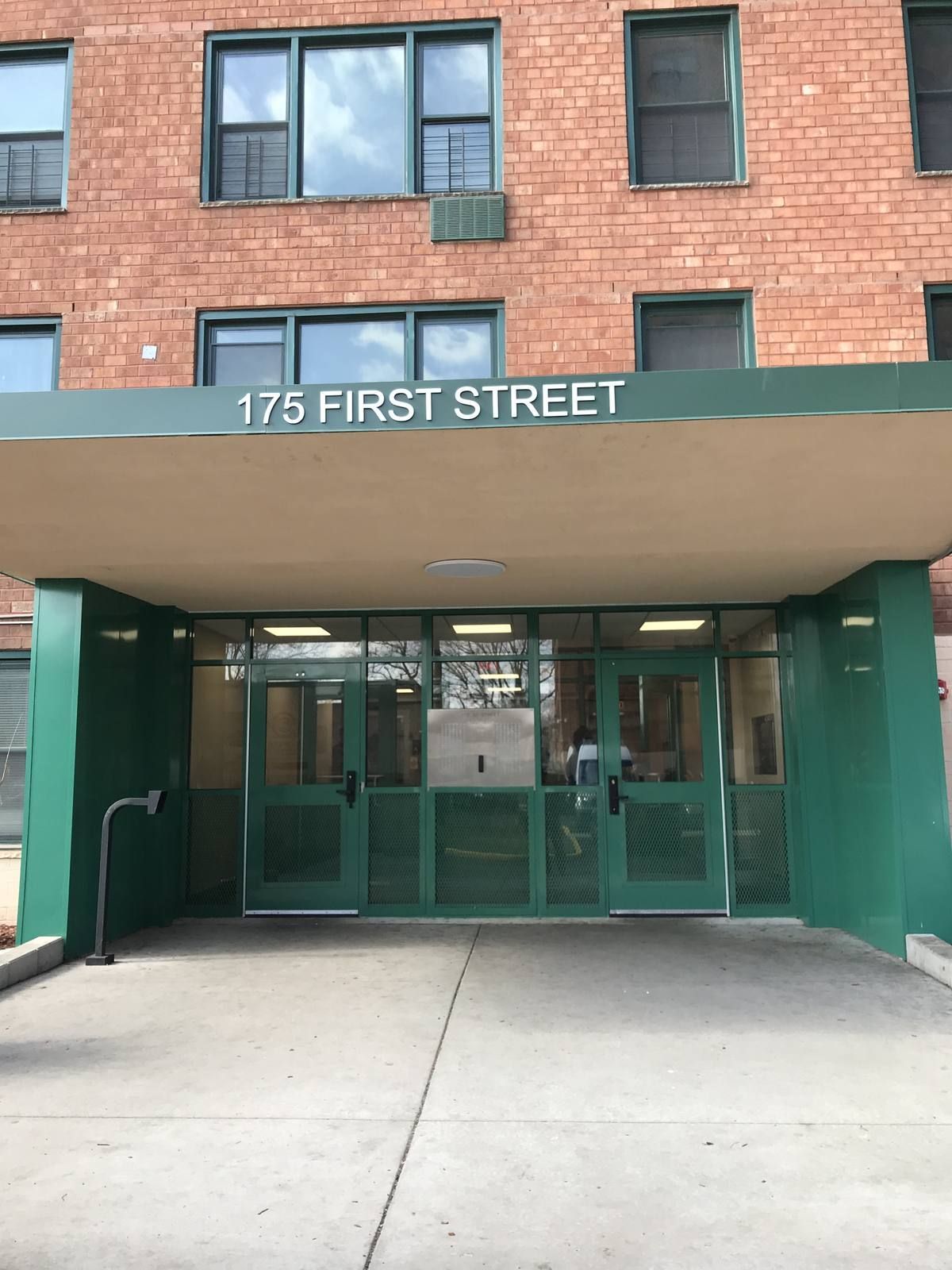
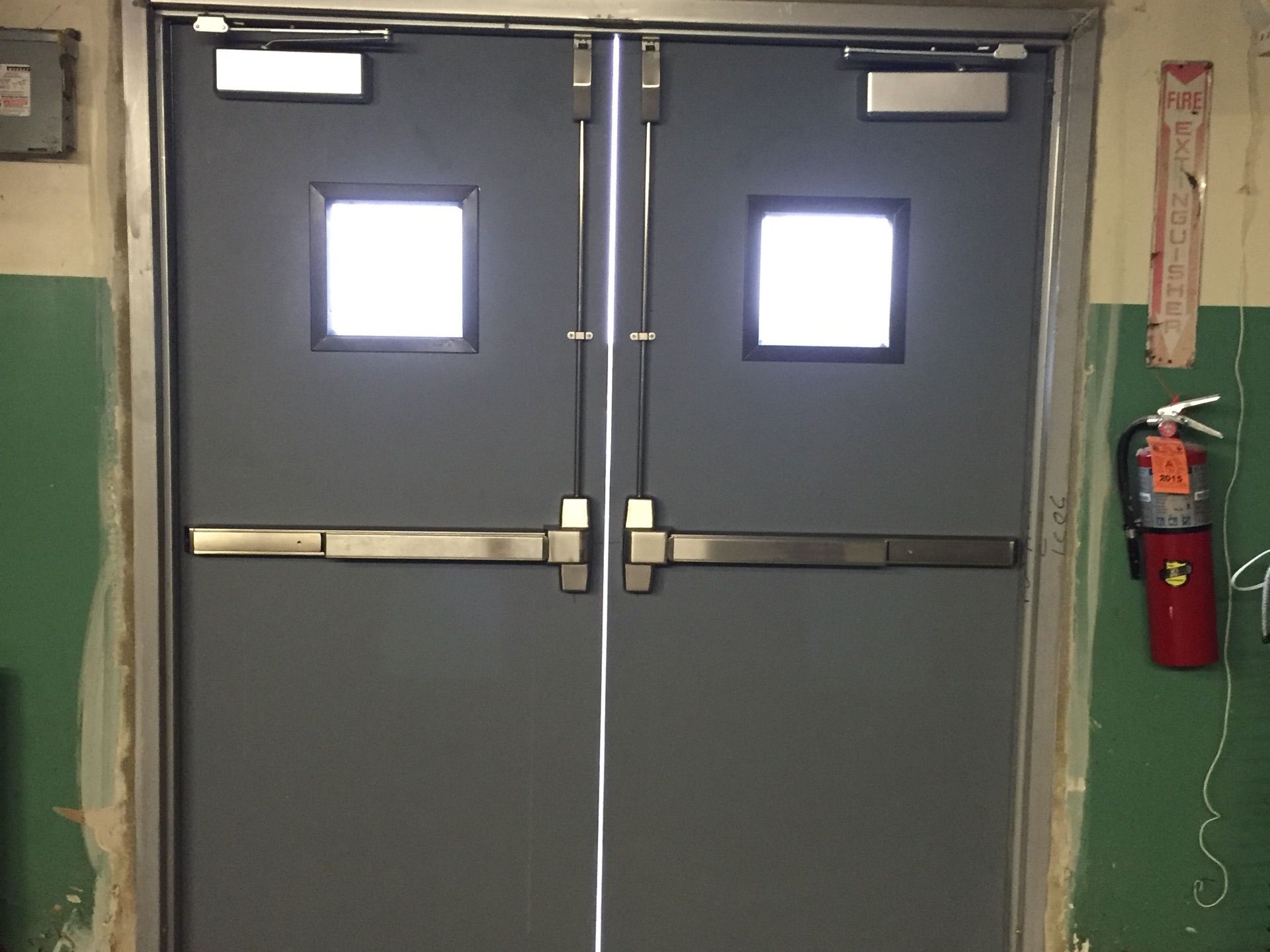
Parker Custom Security installed a Rosslare proximity card access system at 222 North Broadway, a multi-tenant condominium building in the Getty Square area of Yonkers, NY, managed by Prime Locations. We mounted card readers at five doors: the aluminum storefront main entrance, an exterior entrance set in brick, and interior doors leading into common areas. Each door has electrified locking hardware wired back to a Rosslare access control panel and a dedicated Altronix power supply in the building's lower level. Residents and staff now enter with a card or fob instead of a metal key, and management can add or cancel a credential without re-keying a single lock. Parker Custom Security has installed commercial access control systems since 2003 for condo, co-op, and apartment buildings across Westchester County, New York City, and Northern New Jersey, and handles the doors and hardware as well as the readers.
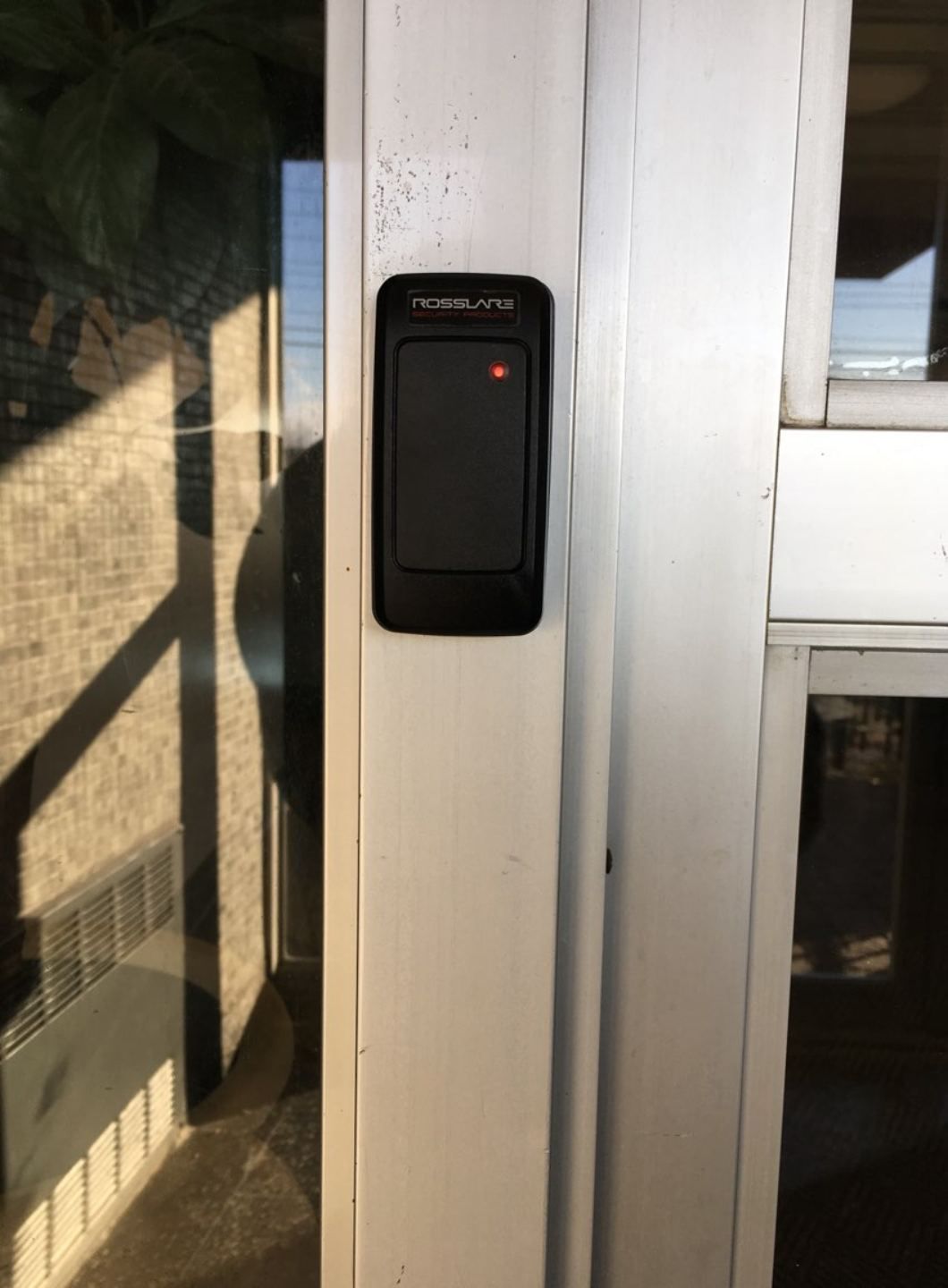
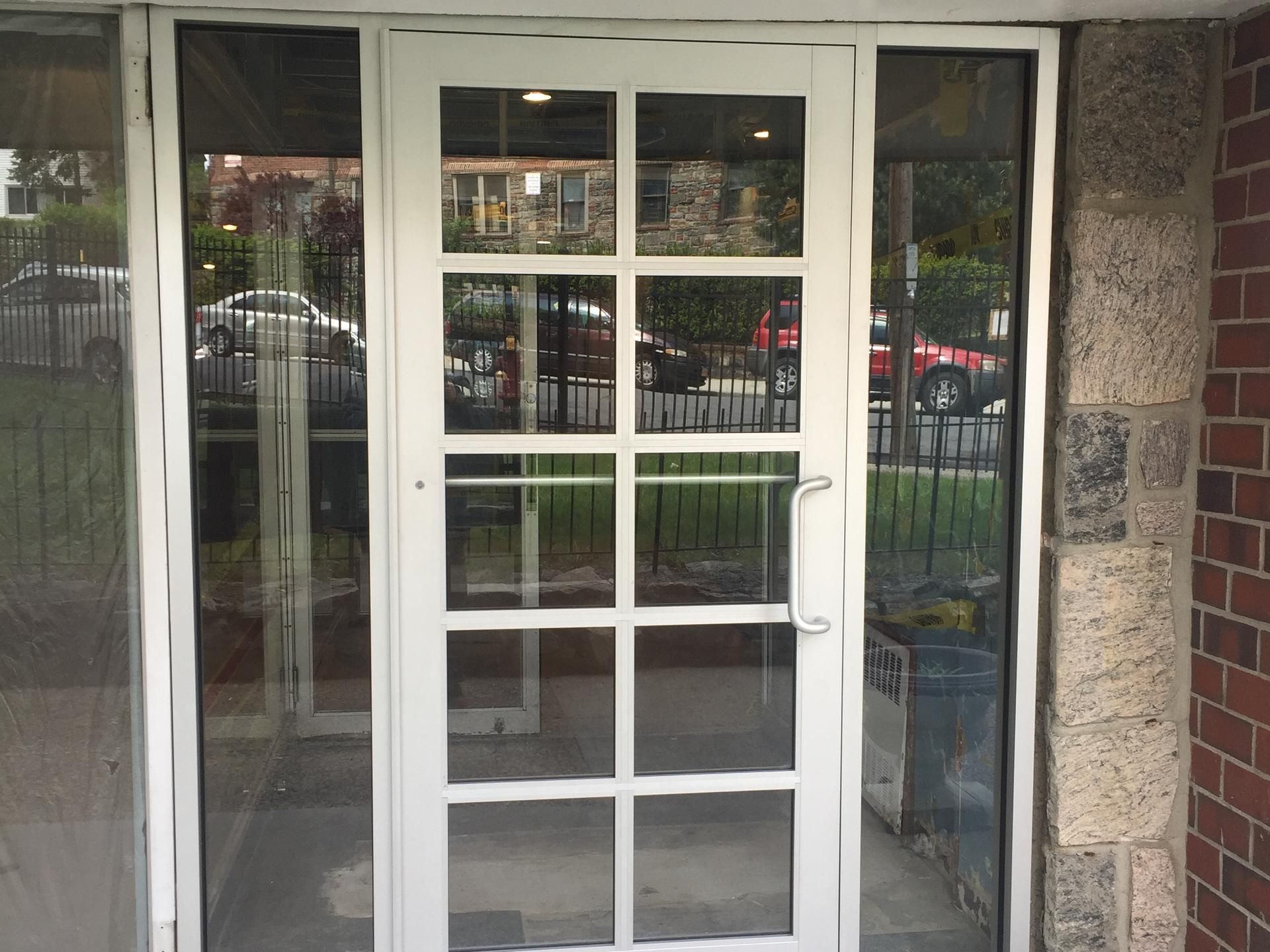
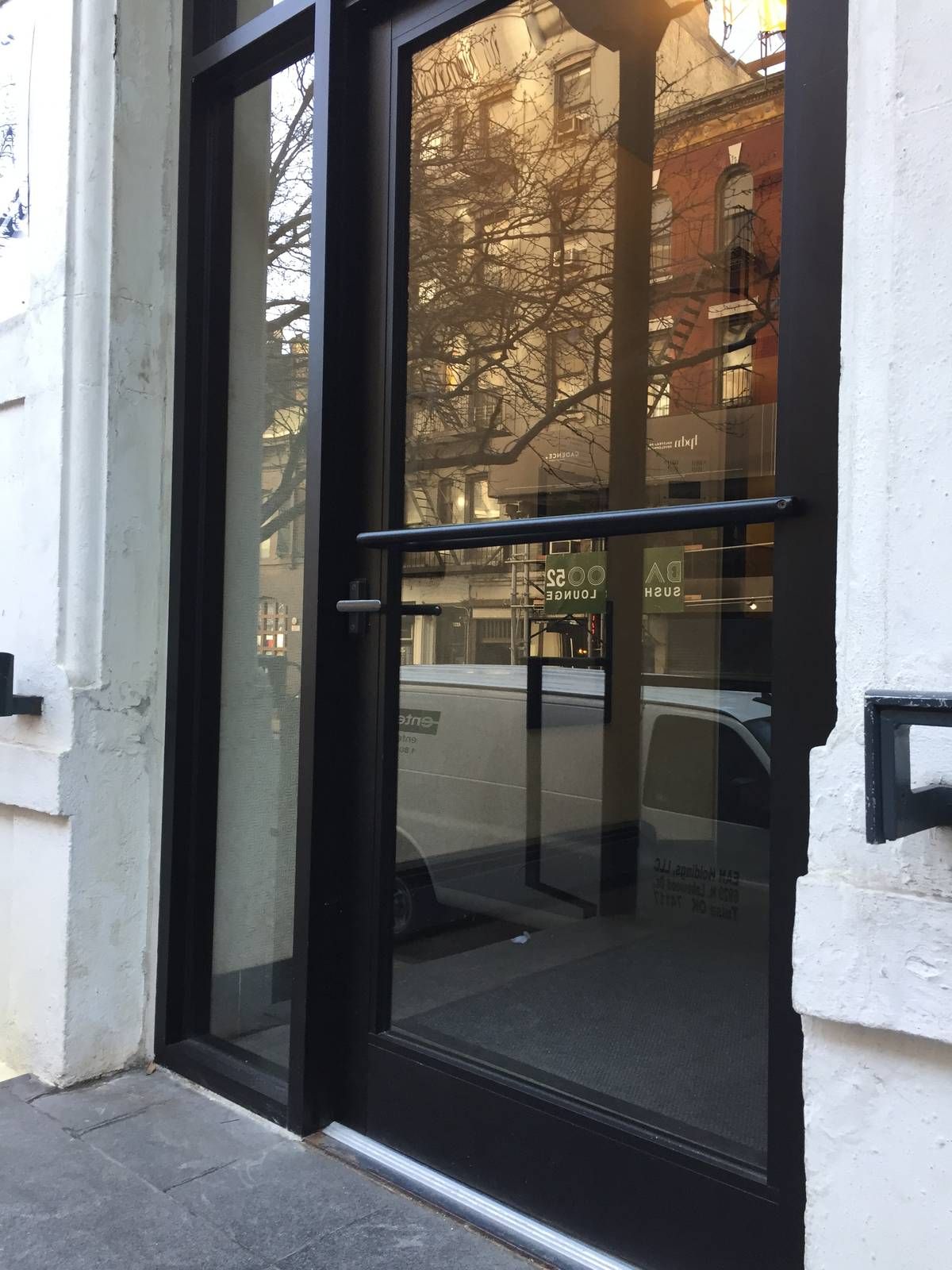
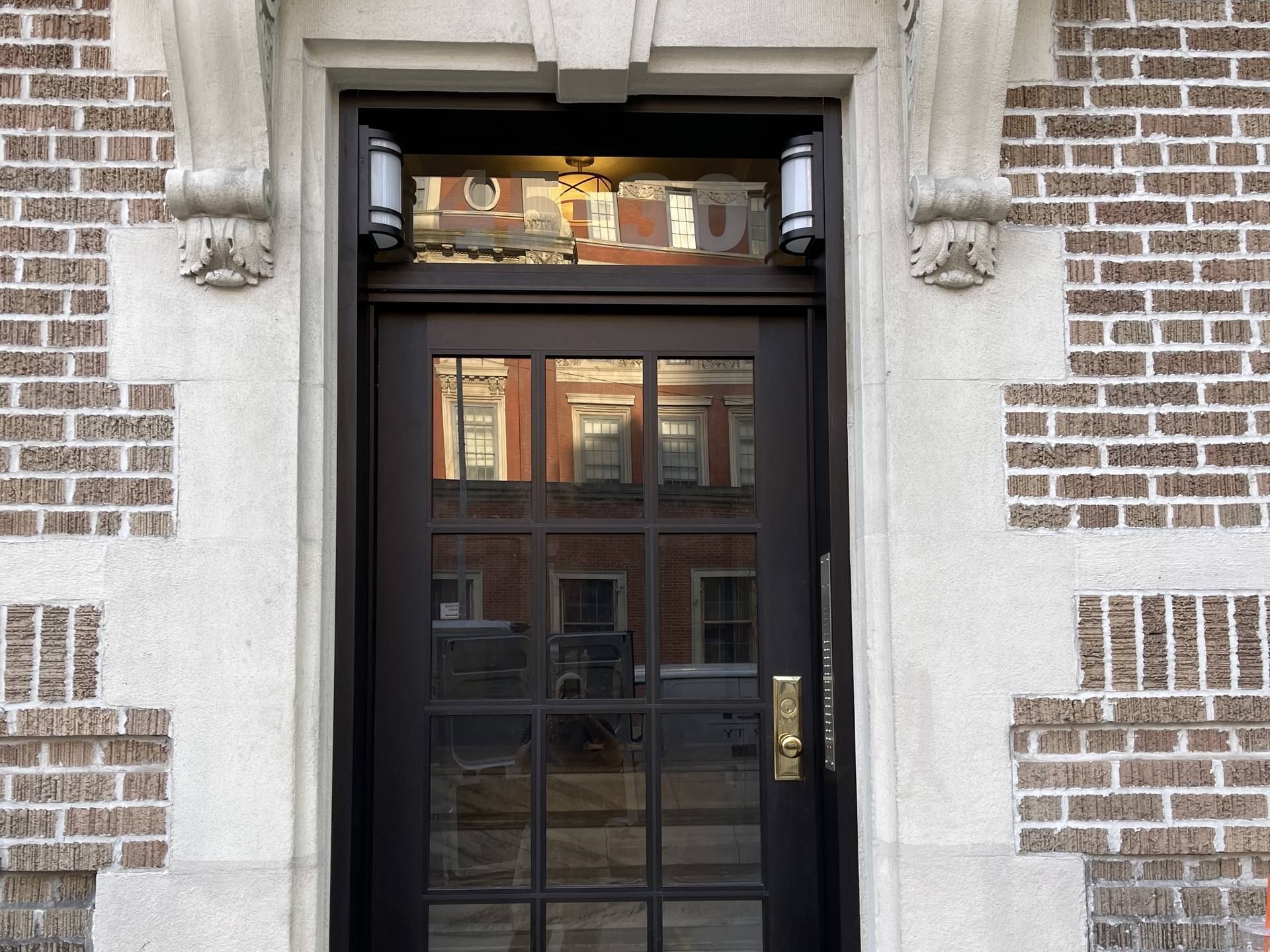
The main entrance: a Rosslare proximity reader mounted on the aluminum storefront frame at 222 North Broadway, Yonkers.
Inside the 222 North Broadway Card Access Installation
222 North Broadway is a multi-tenant condo building near Getty Square in downtown Yonkers. Like most residential buildings with several shared entrances, it has a main lobby door, a second exterior door, and interior doors that lead into common spaces. Every one of those doors is a way in, and every one needs to be controlled.
The building is managed by Prime Locations, a Yonkers property management company that also brought Parker in for the aluminum vestibule and hollow metal door replacement at 101 Highland Avenue. Here the goal was electronic entry: card readers on the doors that matter, all tied to one panel that management controls.
Project Details
The Goal: Controlled Entry at Every Shared Door
In a condo building, the board and the management company share responsibility for who gets in. Metal keys make that hard. Every key that walks out the door with a former resident, contractor, or dog walker is a key nobody can take back, and re-keying a lobby lock every time that happens is expensive and slow.
Card access fixes that by putting control in software. Each resident or staff member carries a card or fob, each door has a reader, and management decides which credentials open which doors.
Sound Familiar? Common Entry Problems in Westchester Condo Buildings
If you manage a condo, co-op, or apartment building in Yonkers or anywhere in Westchester County, some of these probably sound familiar:
- "We have no idea how many lobby keys are out there." Years of move-outs, renovations, and contractors leave keys in circulation that nobody can account for.
- "Every lost key means calling a locksmith." Re-keying a main entrance and cutting new keys for every unit costs money and creates a gap while it gets done.
- "The side door is always the weak spot." A secondary entrance with a basic lock is often easier to get through than the front lobby.
- "Common rooms get used by people who shouldn't be there." Without control at interior doors, amenity and service spaces are open to anyone already inside the building.
A card access system addresses all four with one installation.
The Solution: Proximity Readers on Five Doors, One Central Panel
Parker installed a Rosslare proximity card system covering the building's key doors:
- Main entrance: a reader mounted directly on the aluminum storefront frame beside the door
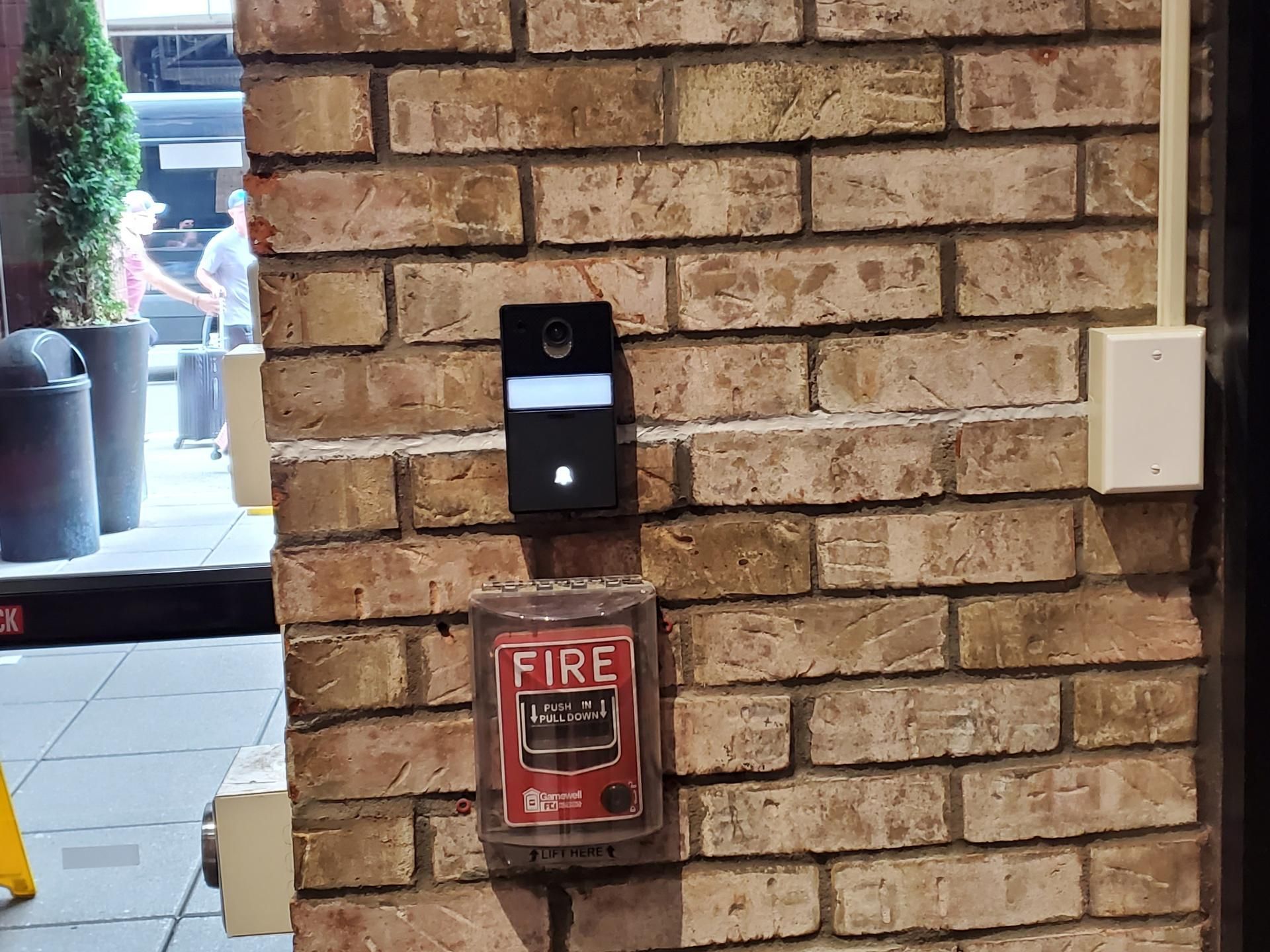
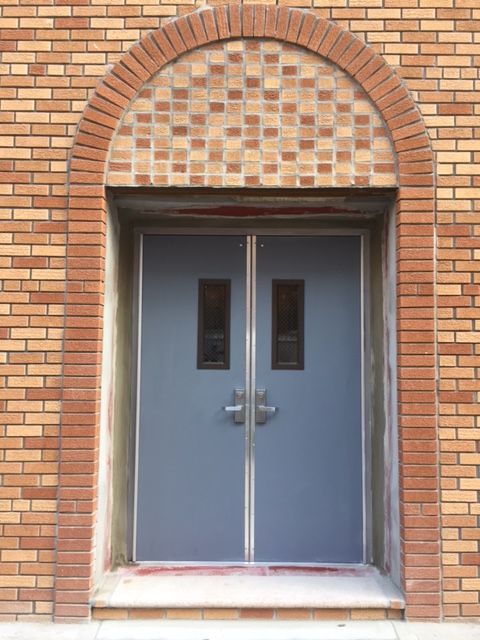
- Exterior entrance: a reader set on the brick wall next to a second street-side door
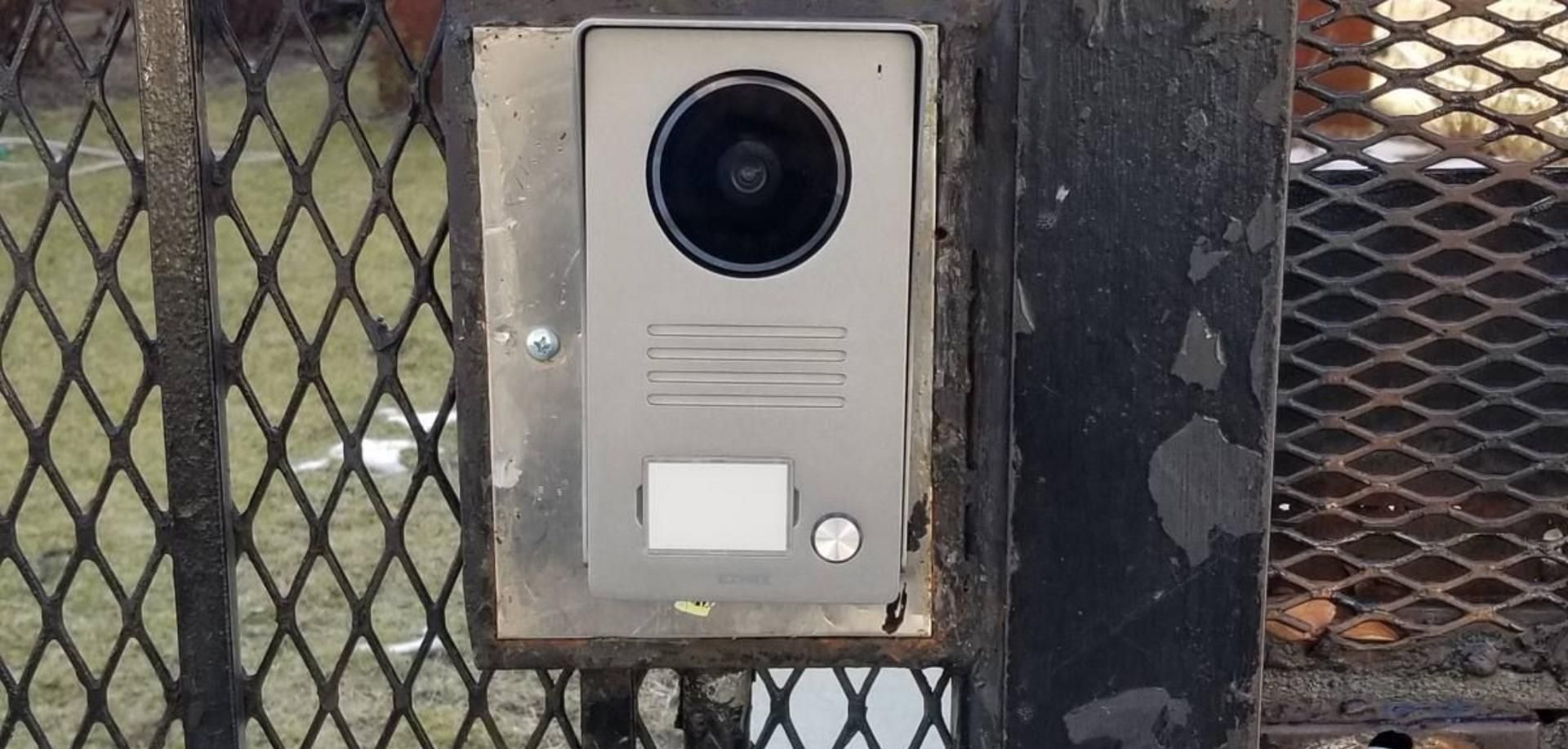
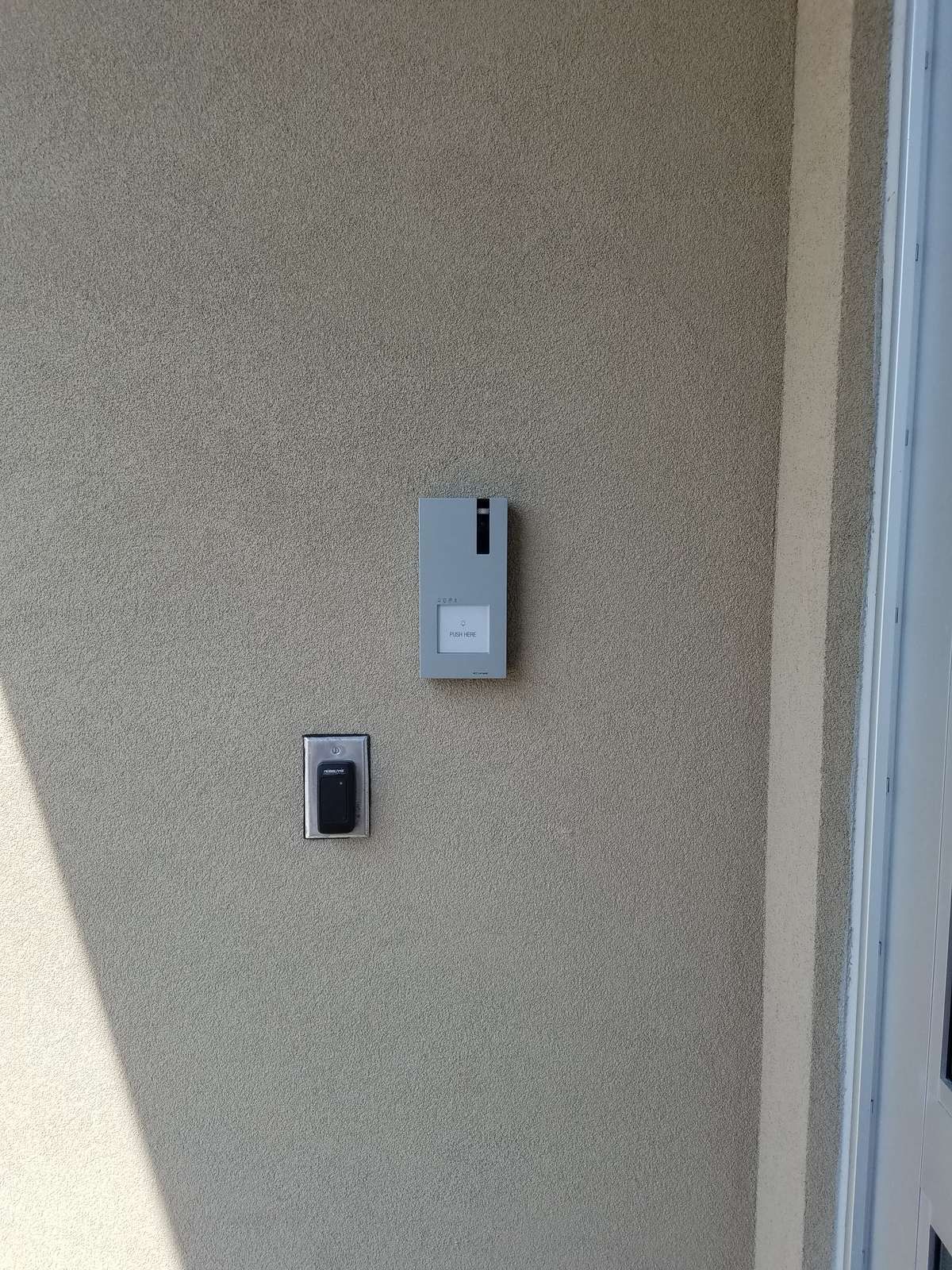
- Interior doors: readers beside doors leading into common areas, mounted on painted drywall and block walls
- Electrified locking hardware at each controlled door, including electric strikes set into the frames
- A Rosslare access control panel and a separate Altronix power supply, mounted together in the lower level
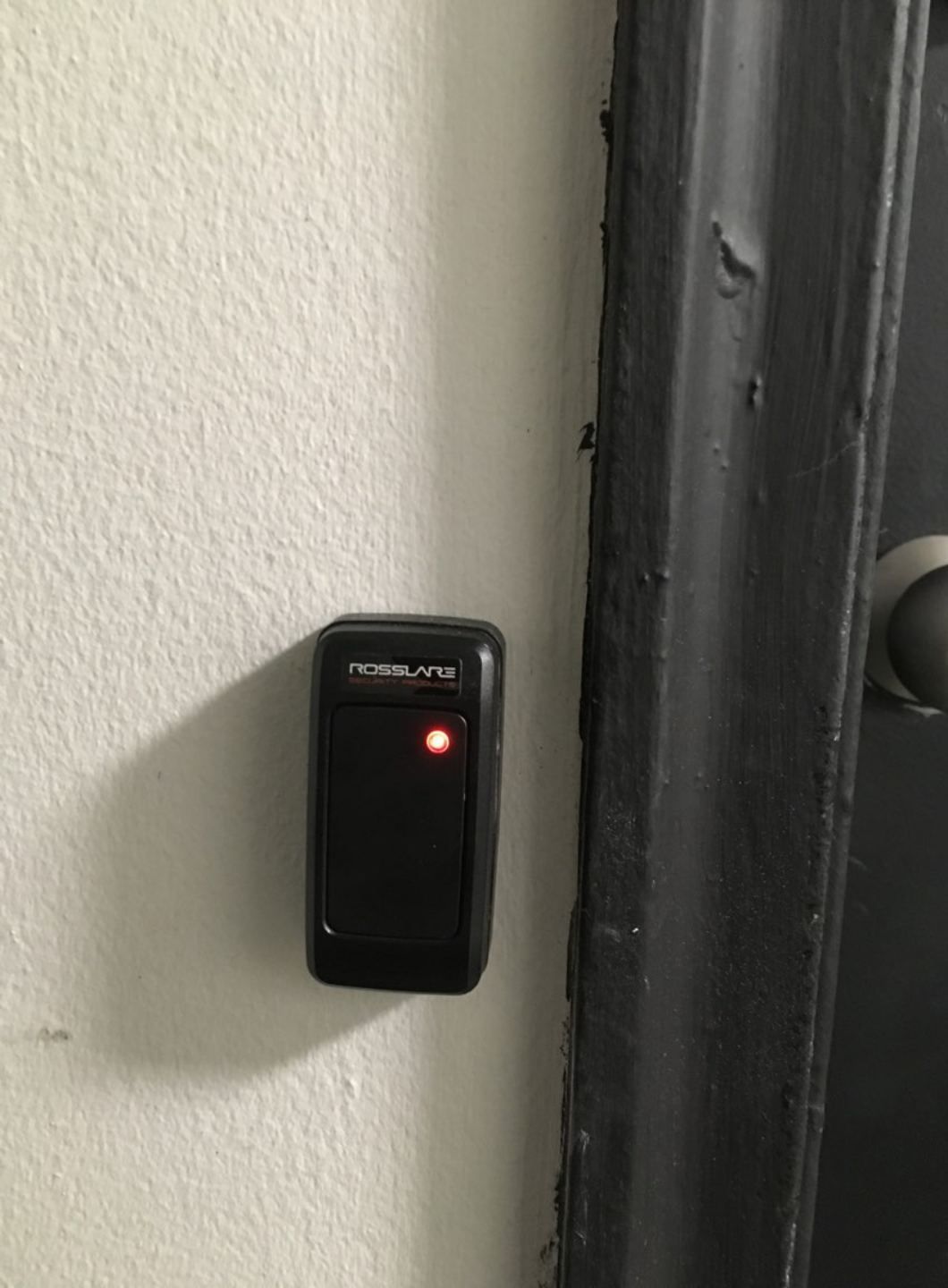
An interior common-area door with its own reader, so management decides who gets past the lobby.
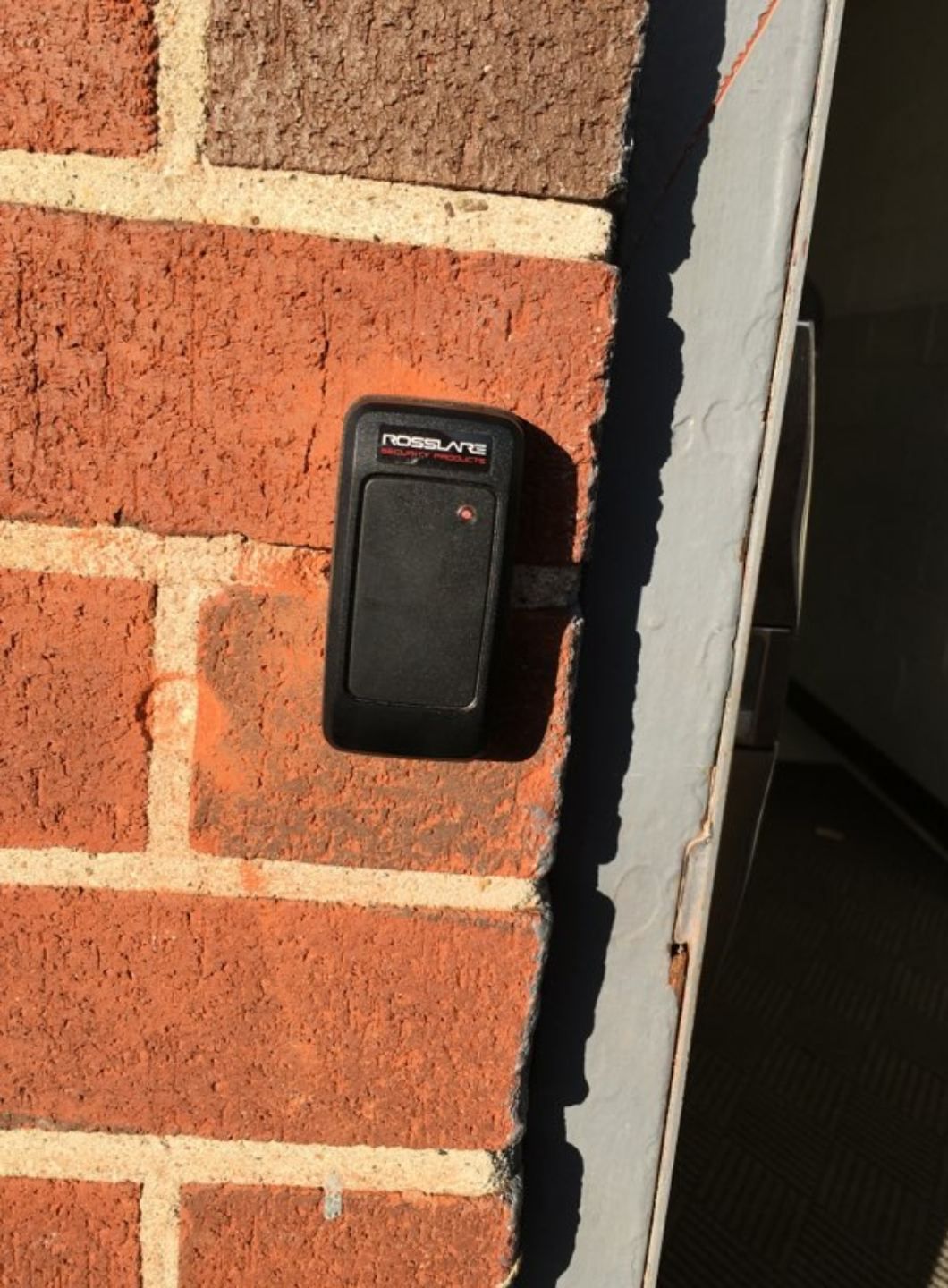
The secondary exterior entrance, with a reader mounted on the brick beside the door.
Still Handing Out Keys at Your Westchester Building?
Parker designs and installs card and fob access for condo, co-op, and apartment buildings. Free on-site assessment.
Executing the Work in an Occupied Condo Building
In an occupied condo building, doors have to stay usable and secure while readers and locking hardware go in. Every door was different: an aluminum storefront frame at the lobby, brick at the exterior entrance, and drywall and block walls inside. Each reader was mounted to suit its surface, and each door's lock hardware was matched to its frame.
All of the wiring runs back to one place. The Rosslare panel and the Altronix power supply are mounted side by side in the lower level, where the building's staff can reach them and where future service is simple.
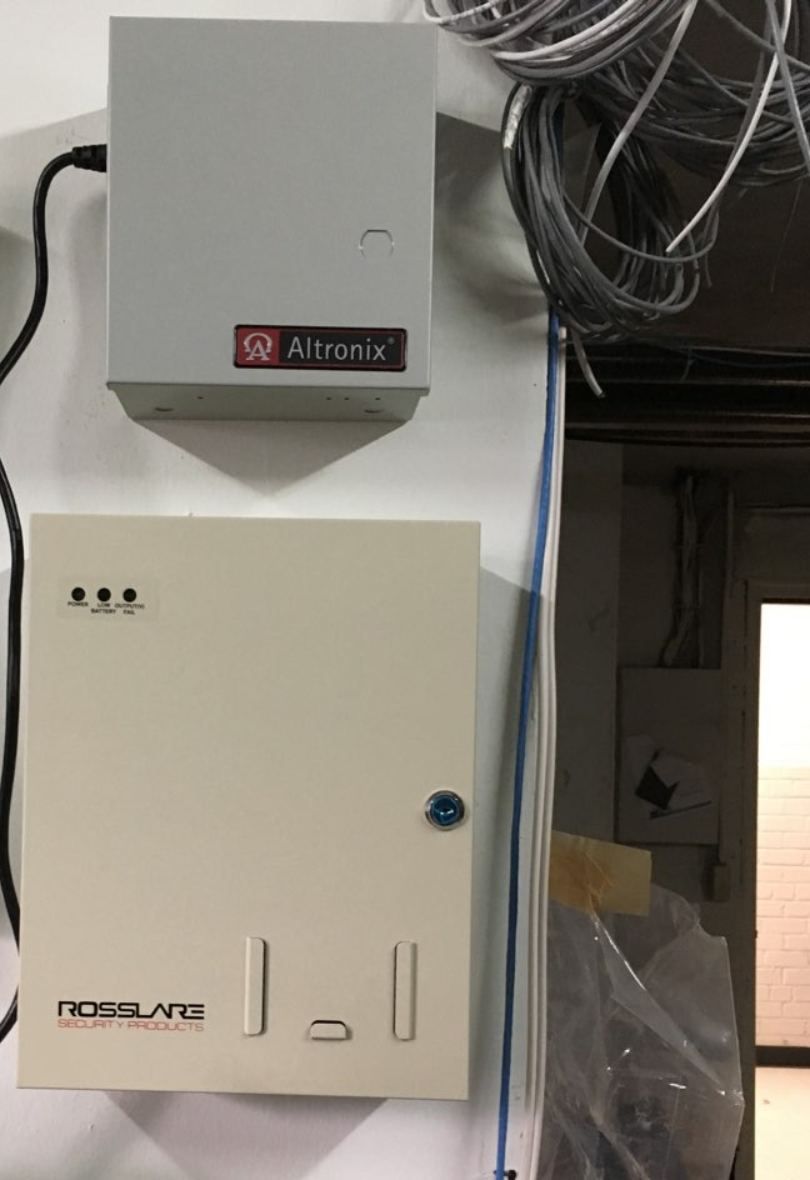
The heart of the system: the Rosslare access control panel (bottom) with a dedicated Altronix power supply (top).
How a Card Access System Is Put Together
A building card access system has four parts. Understanding them makes it easier to compare quotes and plan for future expansion:
- Readers: mounted beside each controlled door. A resident presents a proximity card or fob, and the reader sends the credential to the panel.
- Controller (access control panel): decides whether a credential is allowed through that door at that time, and holds the user list.
- Electrified locking hardware: an electric strike, maglock, or electrified lock that releases when the controller grants access. Choosing the right hardware for each door and frame is where door experience matters.
- Power supply: a dedicated supply for the locks and readers. At this building, the panel enclosure shows status lights for power, low battery, and output failure.
For condo buildings, the practical benefits come from the controller: credentials can be added or cancelled in minutes, access can be limited by door or by time, and adding a door later means adding a reader and lock hardware, not starting over.
The Finished Result
222 North Broadway now has controlled entry at its main lobby, its second exterior entrance, and its interior common-area doors, all managed from one panel. Residents carry a card or fob instead of a key, and Prime Locations can cancel a lost credential immediately instead of paying to re-key a lock.
- Lost keys can't be cancelled
- Re-keying needed after turnover
- No control over interior common doors
- No easy way to change who has access
- Lost cards deactivated in minutes
- No re-keying for move-outs
- Readers on interior common-area doors
- Access managed from one panel
Why Property Managers Choose Parker Custom Security
Parker Custom Security has worked on commercial and multi-tenant buildings since 2003. Most access control companies install readers and leave the door to someone else. Parker is a door contractor too, so the reader, the lock hardware, and the door are one job, done by one crew.
- Over 20 years of commercial door, hardware, and access control work
- Occupied-building experience, with doors kept usable and secure while work is underway
- Licensed, bonded, and insured for commercial and multifamily work
- Commercial-grade equipment from established access control manufacturers
Serving Condo, Co-op & Apartment Buildings Across Westchester & NYC
Parker installs and services access control, intercoms, and commercial doors throughout Westchester County, all five New York City boroughs, and Northern New Jersey. To plan card access for your building, contact our team for a free assessment.
Plan Card Access for Your Building
Get a free on-site assessment and an itemized, door-by-door quote for access control in Yonkers, Westchester, NYC, or Northern New Jersey.
Frequently Asked Questions
How much does card access control cost for a condo building in Yonkers?
The cost depends on how many doors get readers, the condition of each door and frame, how far wiring has to run back to the controller, and the type of locking hardware each door needs. A building with a few controlled entrances costs far less than one with readers on every common door. Parker Custom Security gives a free on-site assessment in Yonkers and the rest of Westchester County and provides an itemized, door-by-door quote.
Who installs access control systems in Yonkers and Westchester County?
Parker Custom Security installs, repairs, and upgrades commercial access control systems for condo, co-op, apartment, and commercial buildings in Yonkers and across Westchester County, as well as New York City and Northern New Jersey. Because Parker is also a commercial door contractor, the same crew handles the reader, the electrified lock hardware, and the door itself.
Can card readers be added to existing aluminum, wood, and steel doors?
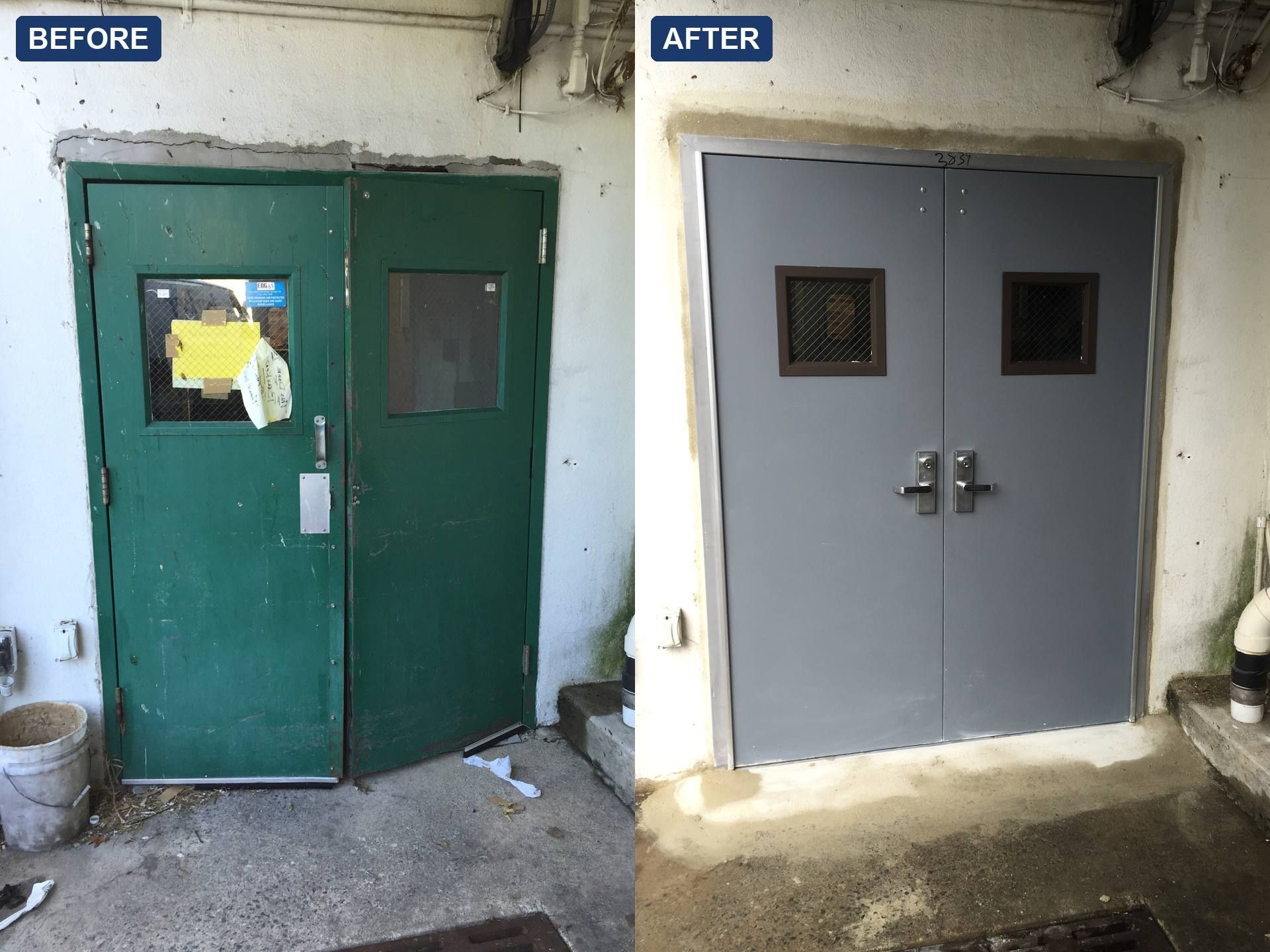
Usually, yes. At 222 North Broadway, readers were added at an aluminum storefront entrance, an exterior door on a brick wall, and interior doors with different frames. Each door is checked first, and the locking hardware, such as an electric strike, is chosen to suit that door and frame. If a door is worn or out of alignment, it should be repaired before access control is added.
What happens to a card access system when the power goes out?
Commercial access control systems run on a dedicated power supply, and most panels include battery backup so the system keeps working through a short outage. Each door's lock is set up as fail-safe or fail-secure depending on its role, so people can always exit and building codes are met. The controller enclosure at this Yonkers building has status lights for power, low battery, and output failure, so the super can see a problem at a glance.
What should a condo board do if a resident loses a key card or fob?
With card access, a lost credential is deactivated in the system and replaced with a new one. Nobody has to re-key a lock or hand out new keys to every resident. That is one of the main reasons condo boards and property managers move from metal keys to proximity cards and fobs.
Can Parker service or expand an existing Rosslare access control system?
Yes. Parker Custom Security installs and services Rosslare along with other commercial access control brands, and can troubleshoot readers, controllers, and power supplies, or add doors to an existing system. If an older system is no longer worth repairing, Parker will say so and price an upgrade instead.