Are Intercoms Required in NYC Apartment Buildings? What MDL 50-a Says

Parker Custom Security Team • September 9, 2026

Share this article

New York's Multiple Dwelling Law MDL 50-a requires every Class A multiple dwelling erected or converted after January 1, 1968 that contains eight or more apartments to have an intercommunication system at its self-locking main entrance door. That system has to do two specific things: let a visitor outside and an occupant inside an apartment speak to each other, and let that occupant release the door lock from within the apartment. Buildings put up before 1968 fall under the same requirement once tenants occupying a majority of the apartments request it in writing. And once an intercom is in place, it is an essential service — a dead buzzer is a hazardous housing violation, not a deferred maintenance item.

That is the short version. The longer version matters more, because most of the compliance problems we get called for in New York City buildings are not "the building never had an intercom." They are buildings that have one, believe they are fine, and are not.

What Multiple Dwelling Law §50-a Actually Requires

§50-a imposes two obligations that owners tend to treat as one. They are separate, and a building can satisfy either while failing the other.

The door obligation. In a Class A multiple dwelling erected or converted after January 1, 1968, every entrance from the street, passageway, court, yard, or cellar has to be equipped with automatic self-closing and self-locking doors. Those doors are required to stay locked except when an attendant is actually on duty. Roof entrances are treated differently — they need self-closing doors, not self-locking ones, with a bolt or lock operable from the interior.

The intercom obligation. Where that same building contains eight or more apartments, it also has to be equipped with an intercommunication system at the self-locking door giving public access to the main entrance hall or lobby. The system must provide voice communication between the occupant of each apartment and a person standing outside that door, and it must permit the occupant to release the locking mechanism from the apartment.

Read those together and the point becomes obvious: the law is not really about the intercom. It is about a locked front door that a resident can screen and open without walking down to the lobby. The intercom is the mechanism. The self-locking door is the objective.

Does It Apply to Your Building?

Three questions decide it.

  • Is it a Class A multiple dwelling? Class A covers dwellings occupied as a rule for permanent residence — the ordinary apartment building, co-op, or condo. Commercial and office properties are not governed by §50-a. If you manage a mixed-use building, the residential portion is what is in scope.
  • Eight or more apartments? The intercom requirement attaches at eight. The self-closing, self-locking door requirement applies regardless of unit count.
  • Erected or converted after January 1, 1968? If yes, the requirement is automatic. If the building predates 1968, §50-a still reaches it — but through a consent path rather than automatically.

That pre-1968 path is the one most owners have never read. Where tenants occupying a majority of all the apartments request or consent in writing, the owner is obligated to install the doors and the intercom system. The work has to begin within ninety days of that request and be completed within six months — a year where a municipal housing authority is the owner. The statute also allows for cost recovery under specified conditions.

In practice this means a pre-war walk-up in Harlem or the Bronx with no intercom is not permanently exempt. It is one organized tenant petition away from a six-month deadline.

What Counts as Compliant — and What Quietly Does Not

The statute describes functions, not products. It does not name a technology, require video, or specify a brand. An audio-only system that performs both required functions satisfies it; a cloud video intercom that performs both also satisfies it. What matters is whether the two functions actually work, from every apartment, to a door that actually locks.

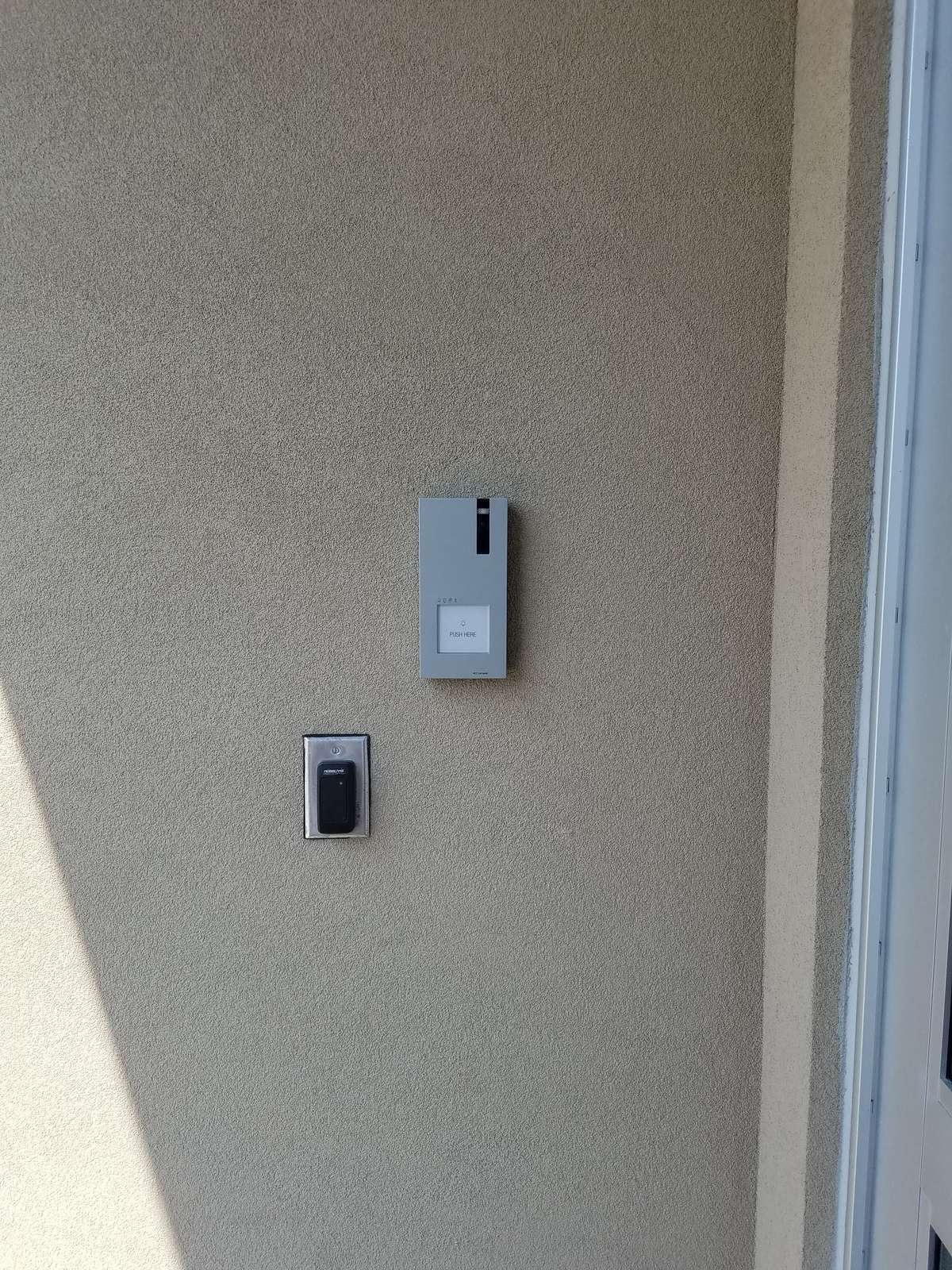
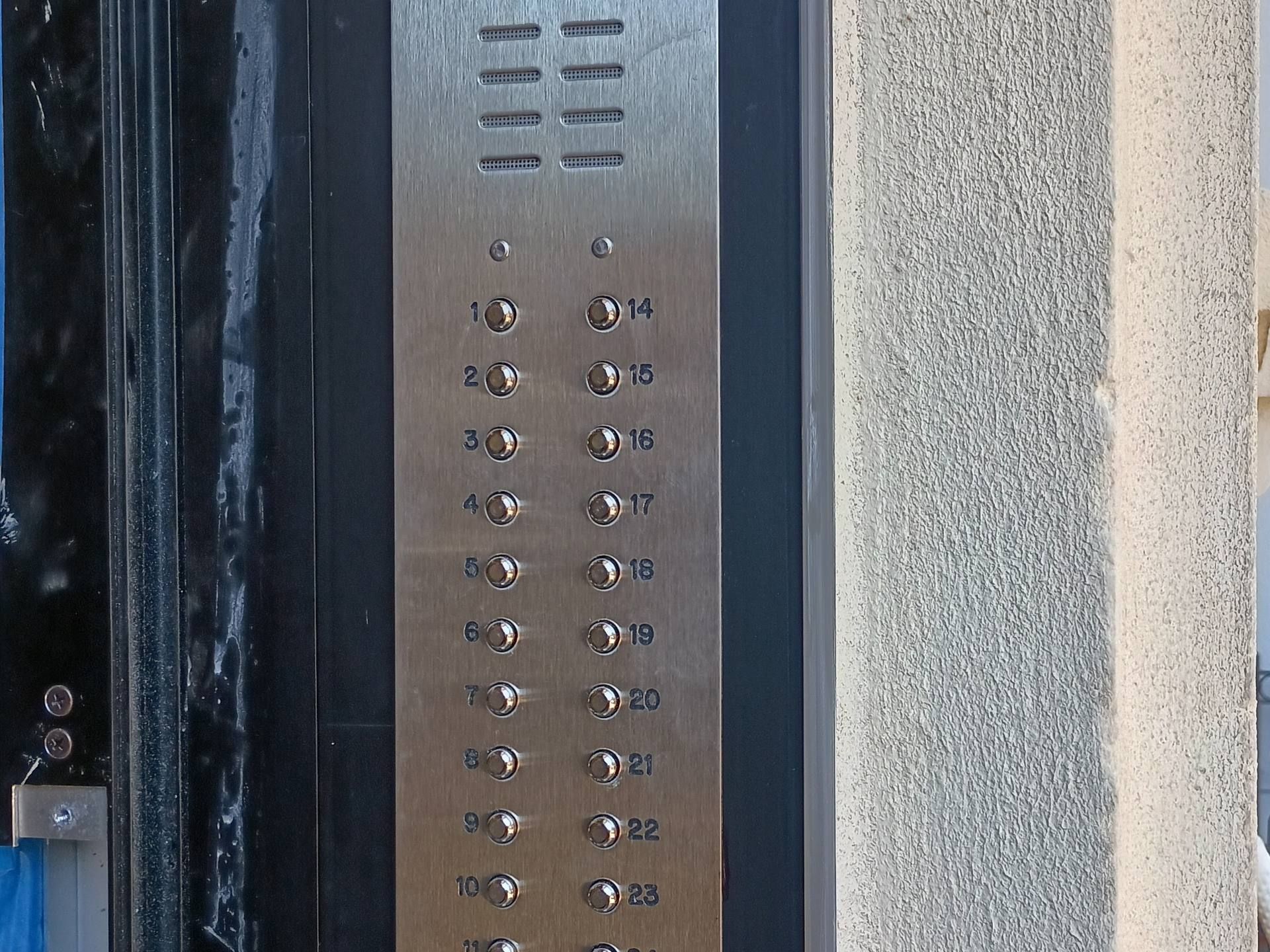
Updated intercom system installed at a multi Tennant building in NYC

A compliant multi-tenant panel does two things at once: a call button for every apartment, and a speaker and microphone so the occupant and the visitor can actually talk. Panel installed by Parker Custom Security at a 26-unit building in Long Island City, Queens.

The failures we find most often in the field:

  • Buzz-in with no voice path. A door release button with no way for the occupant to speak to the visitor does not meet the voice communication requirement. This is common in older buildings where the amplifier died years ago and only the release circuit still works.
  • Voice that works, release that does not. The reverse case. Residents can hear who is downstairs but have to come down to open the door — which defeats the entire purpose of the statute.
  • Units that were never brought back on the system. After a partial renovation or a riser repair, individual apartments are sometimes left dead. The requirement runs to each apartment, not to most of them.
  • A compliant intercom on a non-compliant door. This is the big one, and we will come back to it.

Not sure if your entrance actually meets §50-a?

We test the existing riser and inspect the door before quoting anything — so you find out whether you have an intercom problem, a door problem, or both.

The Door and the Intercom Are One System

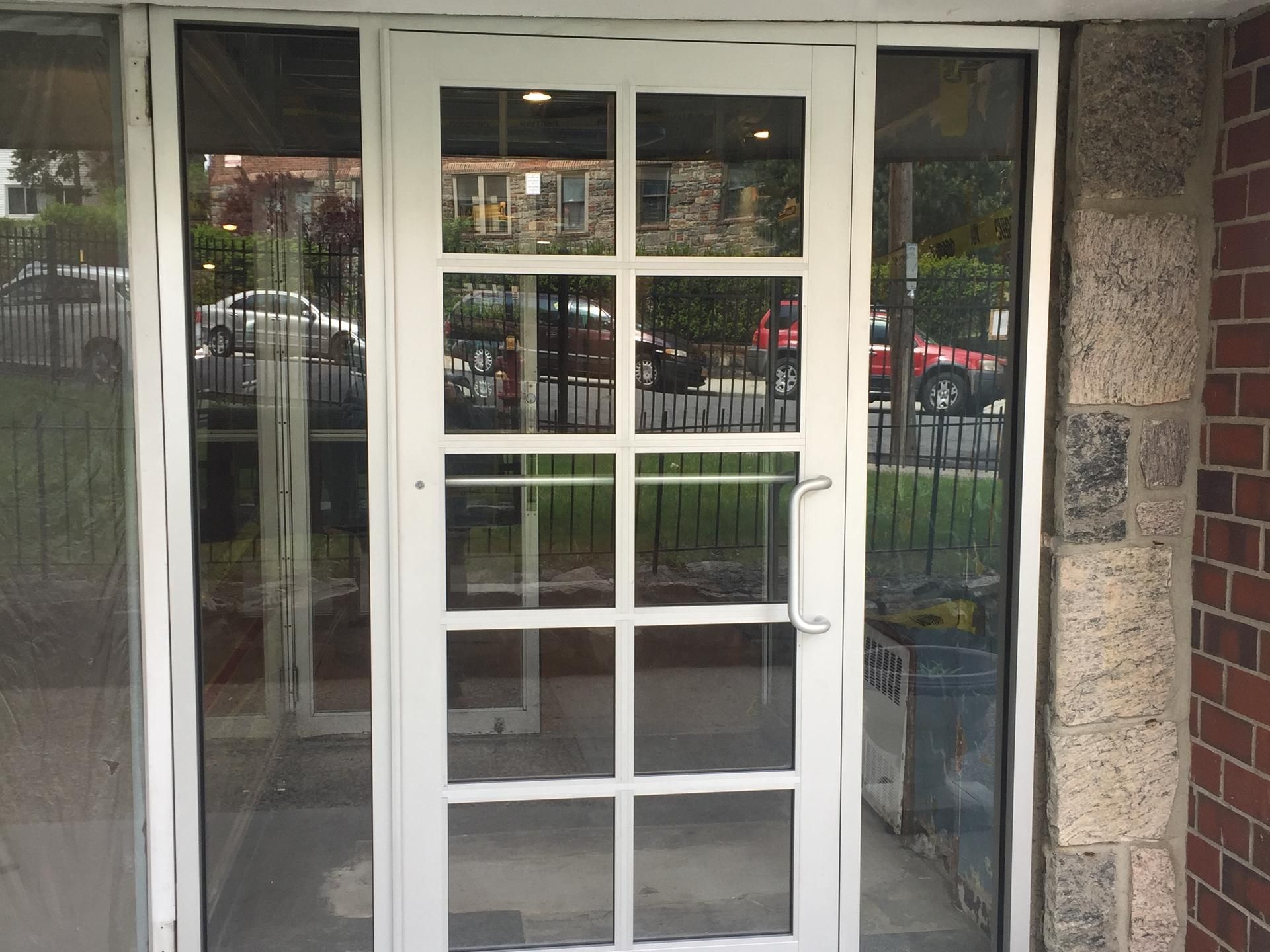
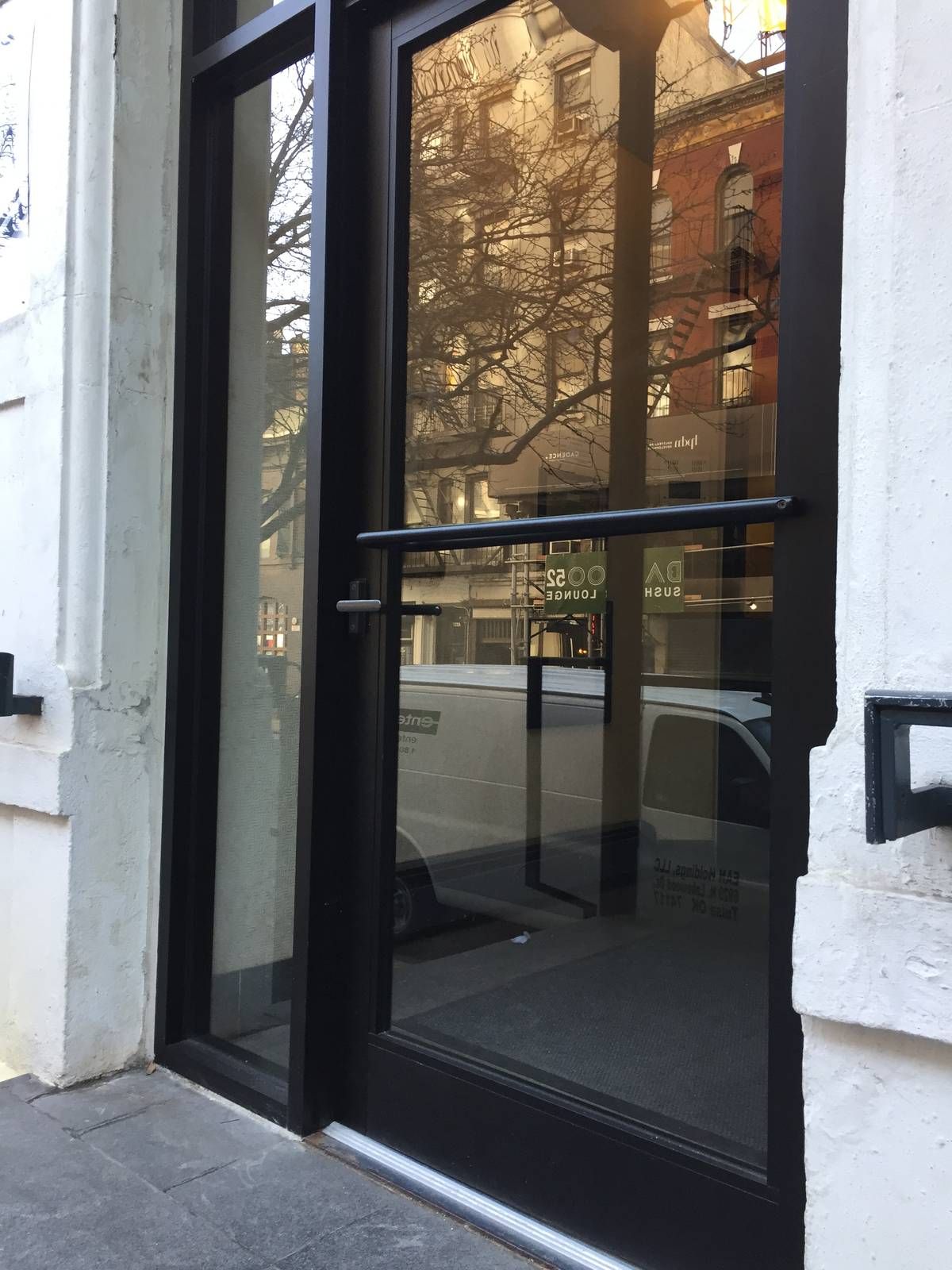
An intercom that works perfectly, mounted next to an entrance door that no longer latches, leaves the building out of compliance and materially less secure than the paperwork suggests. §50-a requires the door to be self-closing and self-locking and to remain locked. A door that does not close under its own power, a strike that has been packed with tape or cardboard so deliveries are easier, a frame that has racked far enough out of square that the latch never seats, a failed closer that leaves the door standing open on a windy afternoon — every one of those breaks the requirement even though the intercom panel is spotless.

This is why intercom scopes so often turn into door scopes once someone actually inspects the entrance. In a building where the front door has taken twenty years of abuse, replacing the panel alone buys a compliant-looking lobby and an entrance that still does not lock. The honest scope usually covers the panel, the wiring, the electric strike or mag lock, the closer, and often the door and frame themselves.

Enforcement: What Happens When It Breaks

New York City's Housing Maintenance Code obligates owners to keep the buzzer or intercom working. A broken intercom is classified as a Class B hazardous violation, and HPD enforces it on tenant complaint. Owners face civil penalties for uncorrected conditions, and the clock starts on notice — not on the owner's convenience.

The exposure runs past HPD, too. New York courts have treated a working intercom as an essential service and found that failing to maintain one breaches the warranty of habitability under Real Property Law §235-b, because it affects both the habitability and the security of the apartment. §50-a itself makes an owner's failure to install or maintain the required equipment a misdemeanor under §304 — as it does for anyone who damages or interferes with the system.

What Actually Fails in NYC Buildings

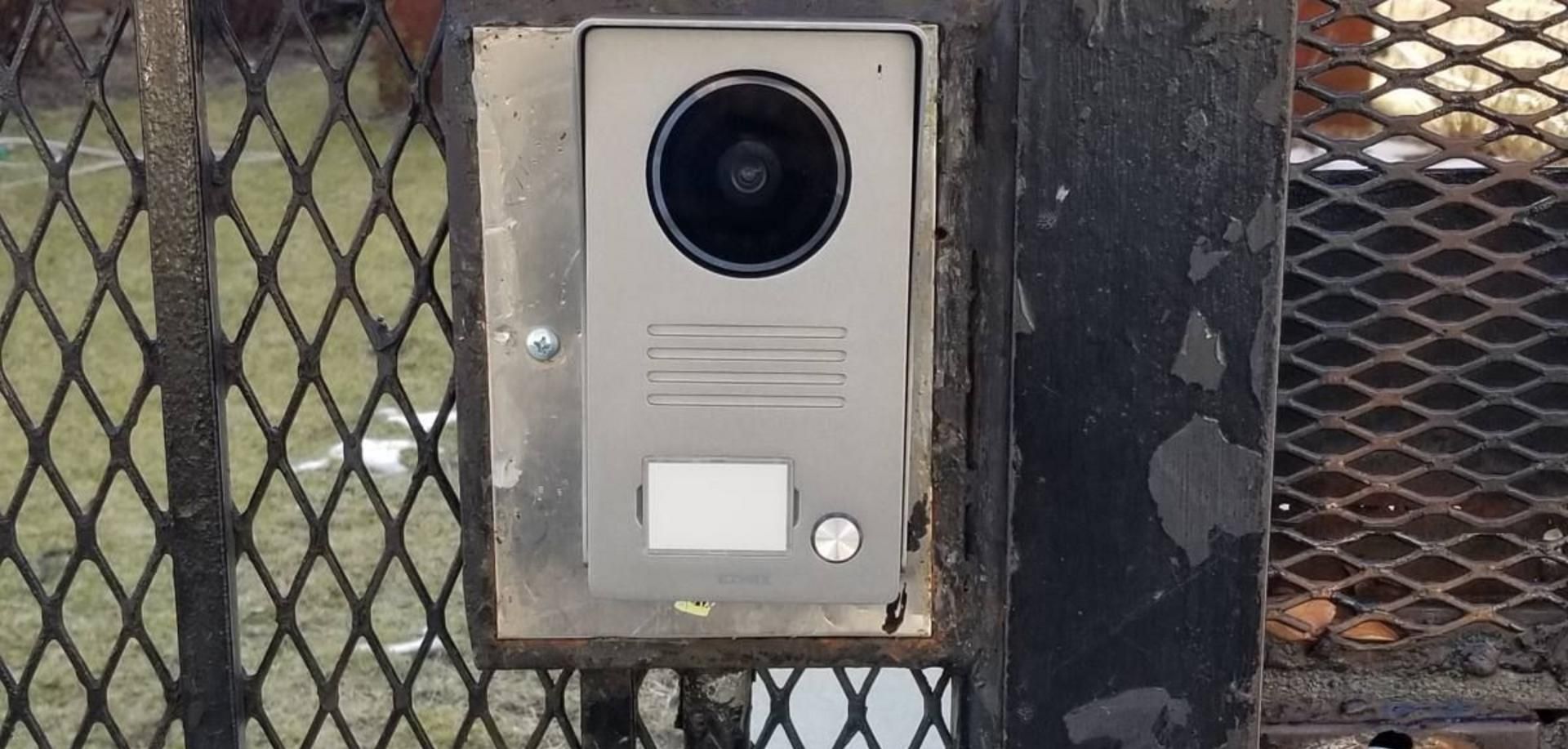
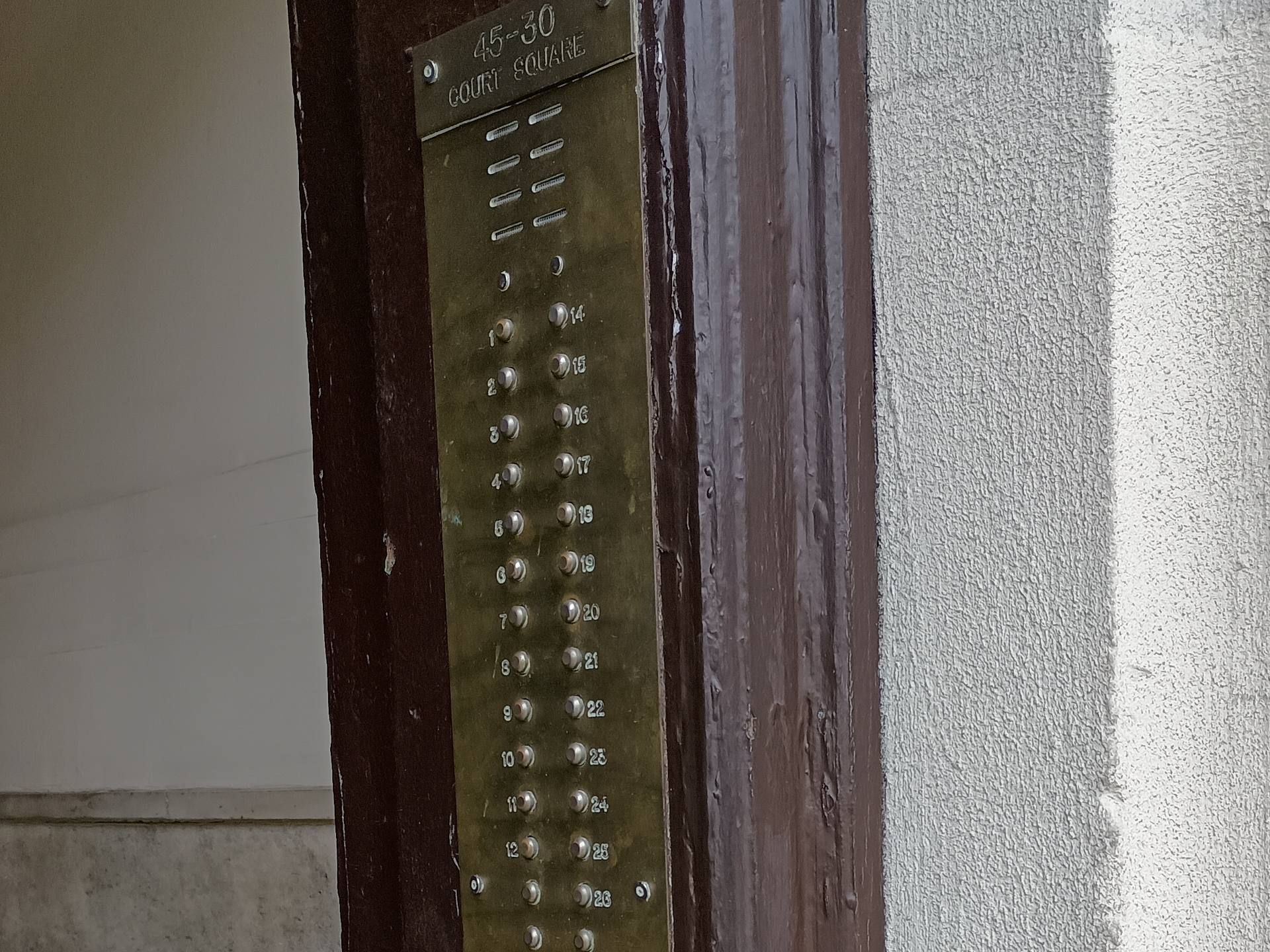
Intercom system at a multi Tennant building.

The panel this building started with. Decades of weather on an unprotected entrance leave the brass oxidized, the lettering worn, and the electronics behind it long past support.

Almost every intercom call we take in New York City traces back to one of a handful of causes, and the building's age predicts which one.

  • Corroded or damaged risers. Decades-old multi-conductor cable running through wet masonry shafts. Individual pairs fail, taking specific apartments offline while the rest of the building works fine.
  • Water in the entrance panel. Street-facing panels on unprotected façades take weather directly. This is the most common cause of a whole-building outage.
  • Dead amplifiers and obsolete head-end equipment. On systems old enough that replacement boards are no longer manufactured, a single component failure can end the system's serviceable life.
  • Failed electric strikes. The release works electrically but the hardware itself is worn past the point of latching reliably.
  • Handsets removed during unit turnover. Renovations pull the in-apartment station and it never goes back.

Repair or Replace?

The deciding factor is rarely the panel. It is the riser. Where the existing cable is intact and the head-end is still supportable, a repair or a panel swap that reuses the wiring is dramatically less disruptive and less expensive than a full replacement — no unit-by-unit access, no new pathways through occupied apartments. Where the riser is failing in multiple locations or the head-end is obsolete, patching it repeatedly costs more over three years than replacing it once.

The technology question — keep it wired, or move to an IP or cloud system — follows from that answer, not the other way around. We cover the system types themselves in our guide to intercom systems for apartment buildings in NYC, and you can see a full replacement in our case study on a Harlem co-op entrance door with video intercom and access control.

Frequently Asked Questions

Are intercoms required in NYC apartment buildings?

Yes, in most of them. NY Multiple Dwelling Law §50-a requires an intercommunication system in every Class A multiple dwelling erected or converted after January 1, 1968 containing eight or more apartments. Buildings with fewer than eight apartments are not covered by the intercom requirement, though the self-closing and self-locking door requirement still applies.

Does my pre-1968 building need an intercom?

Not automatically — but it becomes required once tenants occupying a majority of the apartments request or consent in writing. At that point the owner must begin installation within ninety days and complete it within six months.

Is a broken intercom an HPD violation?

Yes. Under the NYC Housing Maintenance Code, a non-working intercom or buzzer is a Class B hazardous violation, enforceable on tenant complaint, and courts have treated a working intercom as an essential service tied to the warranty of habitability.

Does the law require a video intercom?

No. §50-a requires voice communication and remote door release. Video is a security and convenience upgrade, not a statutory requirement — though many owners choose it when they are already replacing a system.

Does every apartment need its own station?

Yes. The statute describes communication between the occupant of each apartment and a person outside the entrance door, and release of the lock from that apartment. A system that skips units is not compliant, even if most of the building works.

Do we have to rewire the whole building to replace an intercom?

Often not. Where the existing riser is intact, many modern panels and telephone-entry systems can reuse it, which avoids unit-by-unit access entirely. Whether that is possible in your building is determined by testing the existing wiring, not by the age of the system.

Who is responsible for fixing a broken intercom — the owner or the tenant?

The owner. Installing and maintaining the required equipment is the owner's obligation under §50-a, and failing to do so is a misdemeanor under §304 of the same law.

Talk to a Contractor Who Handles the Door and the Intercom

Parker Custom Security has installed, replaced, and repaired intercom systems and entrance doors across New York City, Westchester, and Northern New Jersey since 2003. Because we do both, a compliance question doesn’t turn into two vendors pointing at each other.

Serving Manhattan · The Bronx · Queens · Brooklyn · Staten Island · Westchester County · Northern New Jersey

Recent Posts

Completed aluminum storefront entrance at 175 First Street, Garden Spires, Newark NJ
By Parker Custom Security Team September 4, 2026
Parker Custom Security installed 20+ storefront entrances and over 500 fire-rated apartment doors at Garden & Spruce Spires in Newark, NJ — all in occupied buildings.
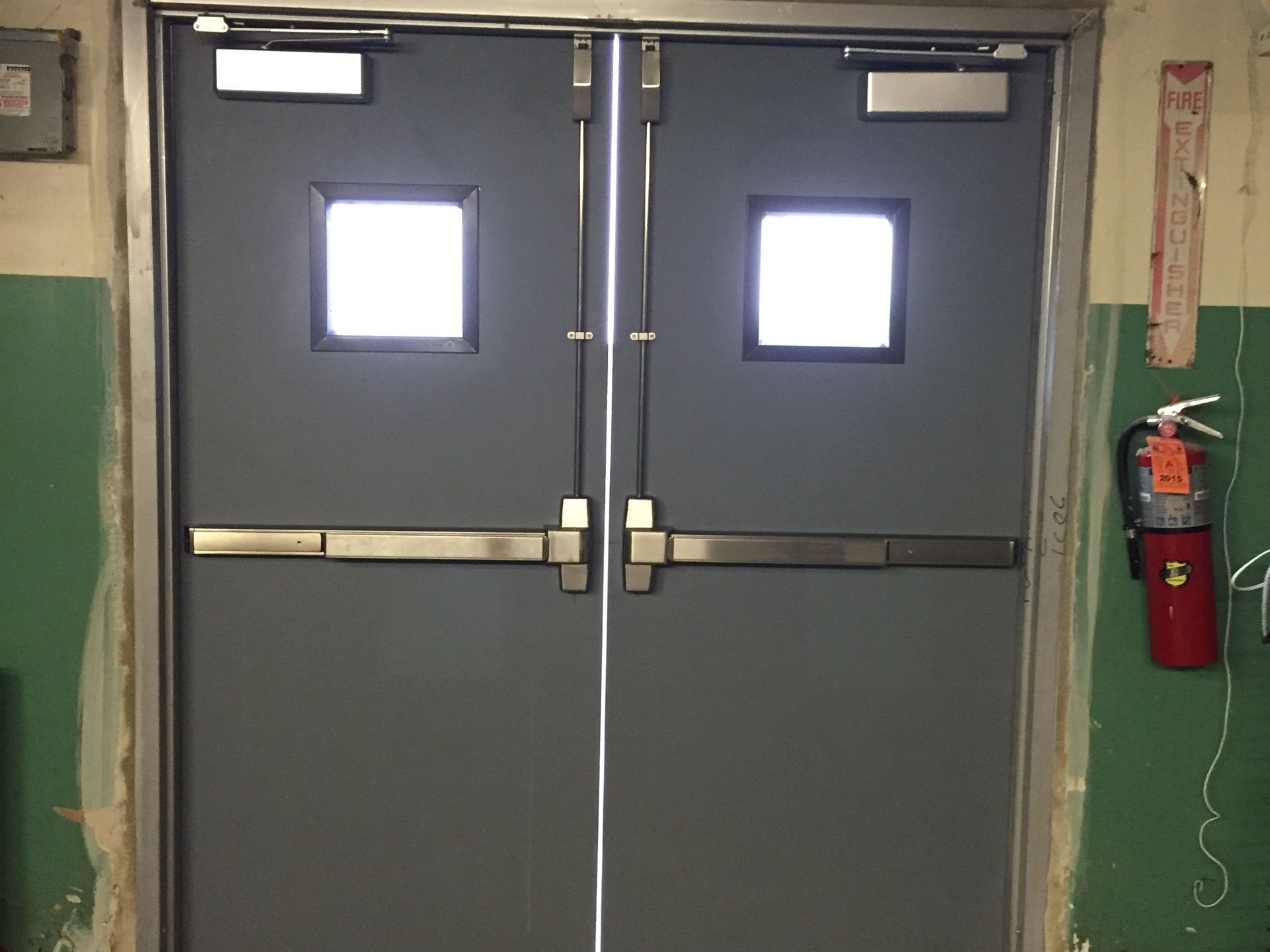
Modern commercial entrance doors with panic hardware and door closers by Parker Custom Security
By Parker Custom Security Team September 2, 2026
Outdated keys, no audit trail, or constant door repairs? Here are 5 signs your commercial building needs a security upgrade — and what to do about it.
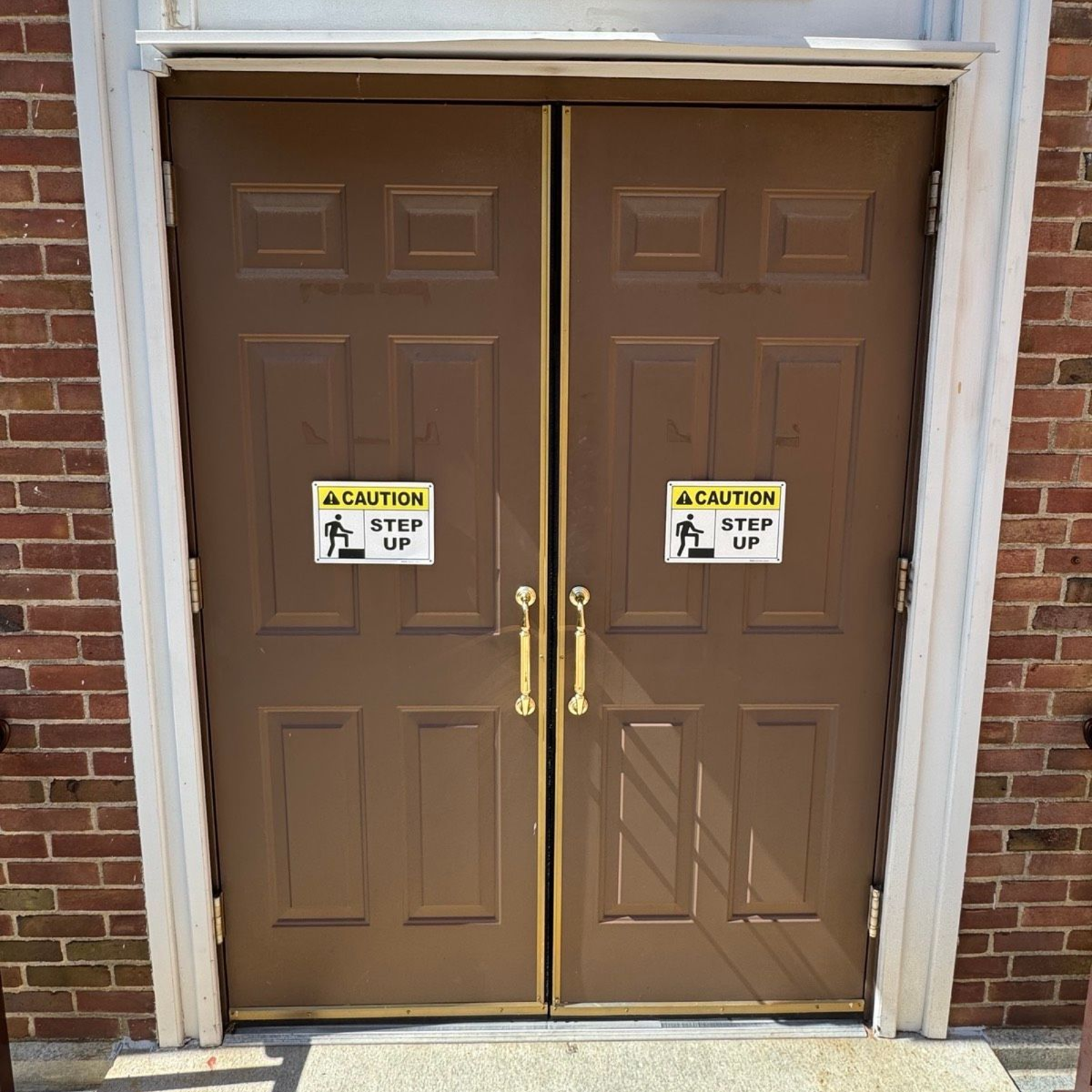
Exterior double entry doors with brass hardware at St. Clare's Church in Staten Island, NY
By Parker Custom Security Team August 26, 2026
See how Parker Custom Security installed high-security locks and panic exit hardware across three entrance doors at St. Clare's Church in Staten Island, NY.
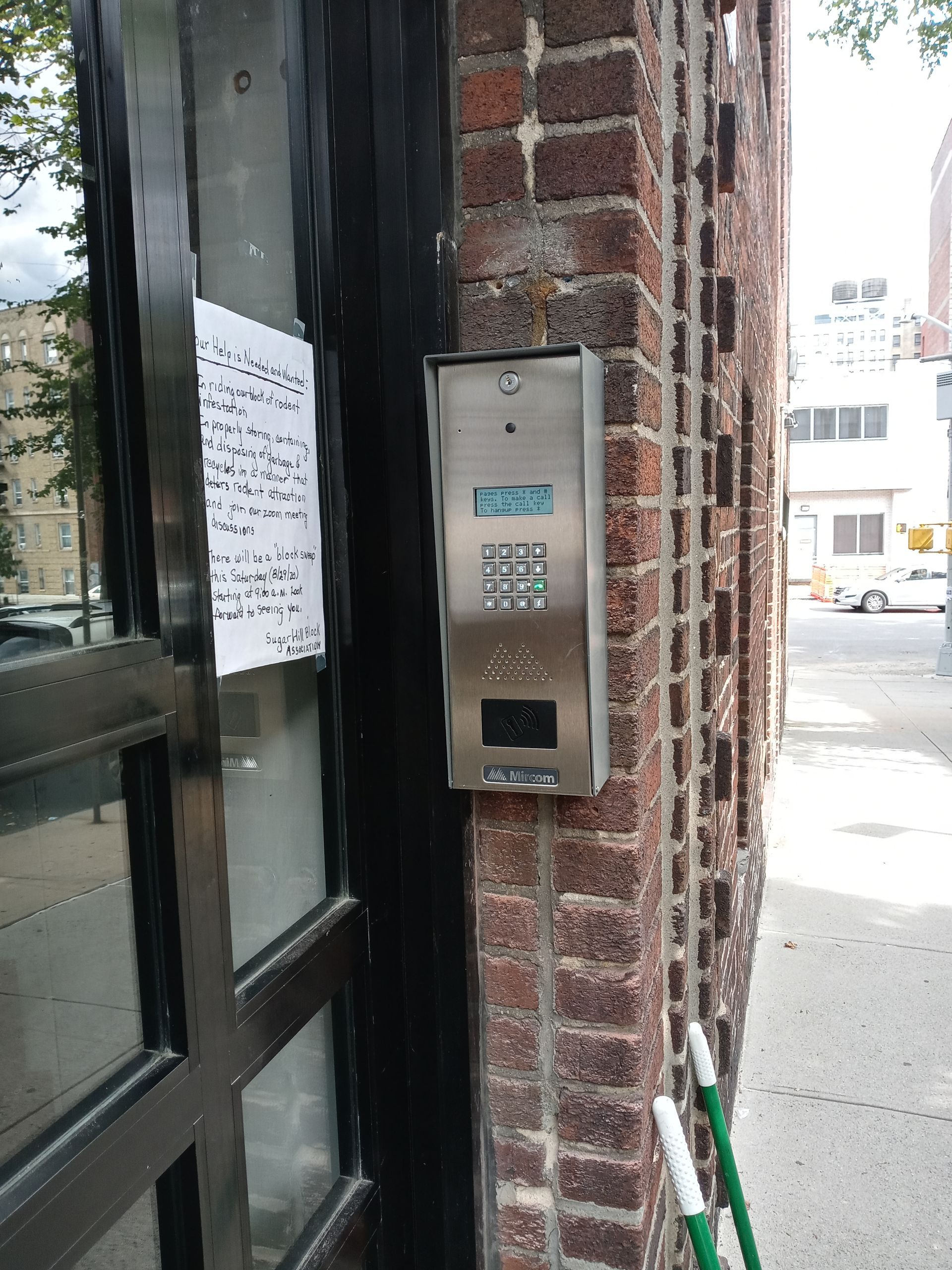
New Mircom intercom system mounted on brick exterior at a multi-tenant building entrance in Hamilton Heights, Manhattan
By Elad Snir August 11, 2026
See how Parker Custom Security installed a new telephone-entry intercom system for a multi-tenant building in Hamilton Heights, Manhattan. Free estimates.
Aiphone GT-DMB-N video intercom panel installed in a Bronx apartment building lobby
By Parker Custom Security Team August 6, 2026
See how Parker Custom Security installed an Aiphone GT Series video intercom system with layered access control in a Bronx, NY apartment building.
Harlem co-op entrance door with a video intercom and keypad/card access-control panel
By Parker Custom Security Team July 9, 2026
Parker Custom Security installed a new aluminum entrance door with video intercom & card/keypad access control — plus a matching vestibule door — for a Harlem co-op.
Completed vestibule installation at an apartment building in Flushing, Queens NY
By Elad Snir July 1, 2026
See how Parker Custom Security replaced an aging vestibule with modern black aluminum entrance doors at a Flushing, Queens apartment building — Free estimates.
Boom lift staged for energy-efficient window installation at a Bronx apartment building by Parker Custom Security
By Parker Custom Security June 22, 2026
See how Parker Custom Security completed an energy-efficient window installation across a multifamily apartment portfolio in the Bronx. Call for an estimate.
Custom Herculite frameless glass double doors installed at CM&F Group corporate office in Manhattan by Parker Custom Security
By Parker Custom Security June 16, 2026
Parker Custom Security transformed the CM&F Group office entrance with custom Herculite glass doors designed to improve appearance, branding, and visitor experience.
Completed commercial storefront door replacement at 905 Eagle Ave Bronx NY — Parker Custom Security
By Parker Custom Security June 4, 2026
Parker Custom Security replaced a deteriorated building entry at 905 Eagle Ave in the Bronx with a modern aluminum storefront door system and integrated access control.
Show More