Why Commercial Doors Stop Closing Properly

Parker Custom Security • April 23, 2026

Share this article

Quick Answer

Commercial doors stop closing properly due to door closer failure, misalignment, worn hinges, damaged frames, or issues with the floor or threshold. In NYC commercial buildings, door closer problems are the most frequent cause — and in fire-rated applications, a door that won't close fully is both a security risk and a code compliance issue.

A commercial door that doesn't close all the way seems like a minor nuisance — until it isn't.

In a fire-rated stairwell, a door that won't latch is a code violation. In a building entrance, it's a security gap. In a high-traffic retail or office environment, it's a constant operational frustration that tells tenants and visitors the building isn't being properly maintained.

At Parker Custom Security, commercial door closer repair and realignment is one of the most common service calls we respond to in NYC, Westchester, and Northern New Jersey. We've seen every variation of this problem. Here's what's usually causing it.

The Most Common Reasons Commercial Doors Won't Close

1. Door Closer Failure

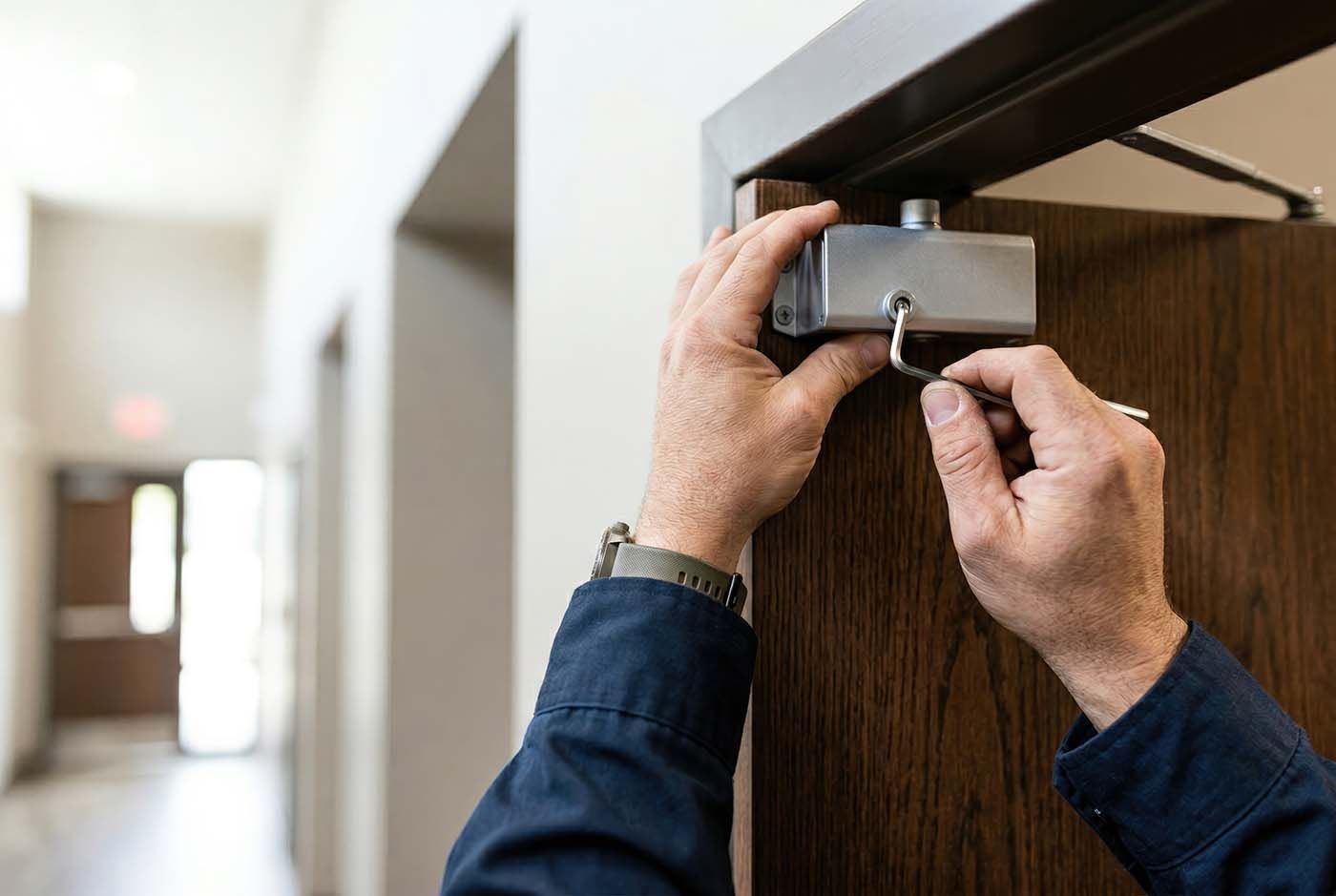
The door closer is the mechanical device mounted at the top of the door that controls how fast and how forcefully the door closes. It's the most commonly failed component when a commercial door stops closing properly.

Closers fail in a few predictable ways. A fluid leak means the closer has lost the hydraulic fluid it uses to control closing speed — often leaving a visible oil stain on the door or frame. Worn internal components cause the door to close too slowly, too fast, or stop short of latching. An incorrectly adjusted closer causes problems even if the hardware is intact. And in high-use buildings, closers can simply reach the end of their rated service life well before any visible damage appears.

2. Door Misalignment

A door that has shifted out of alignment with its frame won't close cleanly. The door leaf may drag against the frame, threshold, or floor — creating resistance that prevents full closure.

Misalignment in NYC buildings is often caused by building settlement, particularly in older masonry structures where floor slabs and door openings shift gradually over time. It can also result from hinge wear, improper installation, or physical impact to the door or frame.

3. Worn or Damaged Hinges

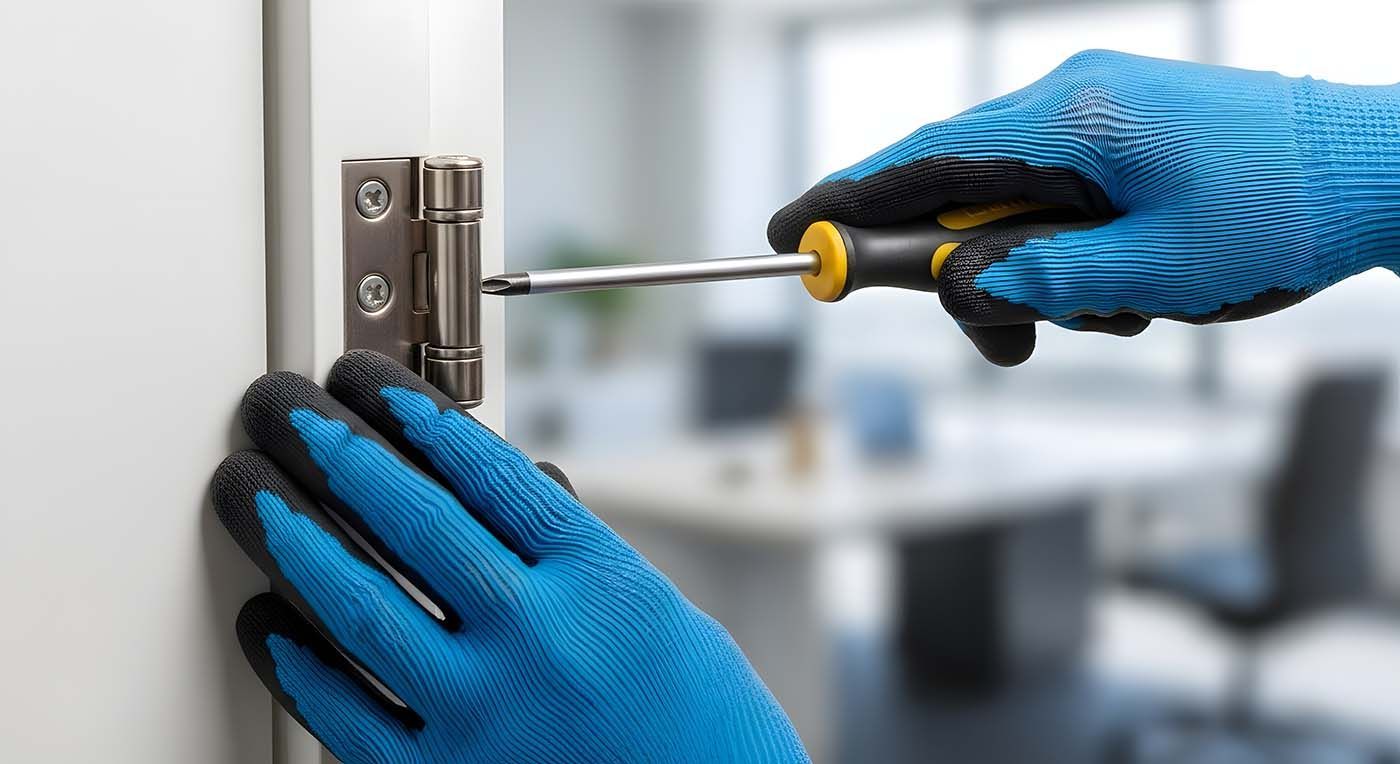
Hinges take a significant load on commercial doors, especially heavy steel or fire-rated assemblies. Over time, hinge pins wear down, hinge leaves crack, and fasteners loosen. A door with worn hinges will sag, drag, and eventually stop closing properly.

In fire-rated applications, hinges must also be rated for the door assembly. A failed or non-compliant hinge on a fire door can result in an inspection failure regardless of whether the door itself is in good condition.

4. Damaged or Out-of-Square Frame

The door frame defines the opening the door swings into. If the frame is damaged, bent, or has shifted out of square, the door may not close cleanly no matter how good the closer and hinges are.

Frame problems are common in NYC buildings that have experienced forced entry attempts, delivery impacts, or significant building movement. In these cases, frame repair or replacement is necessary before other hardware can function correctly.

5. Floor and Threshold Issues

Changes to flooring — new tile, worn thresholds, settled concrete — can reduce the clearance the door needs to swing and close. A threshold that has shifted upward, or a floor that has been built up with new material, may be physically blocking the door from reaching the latched position.

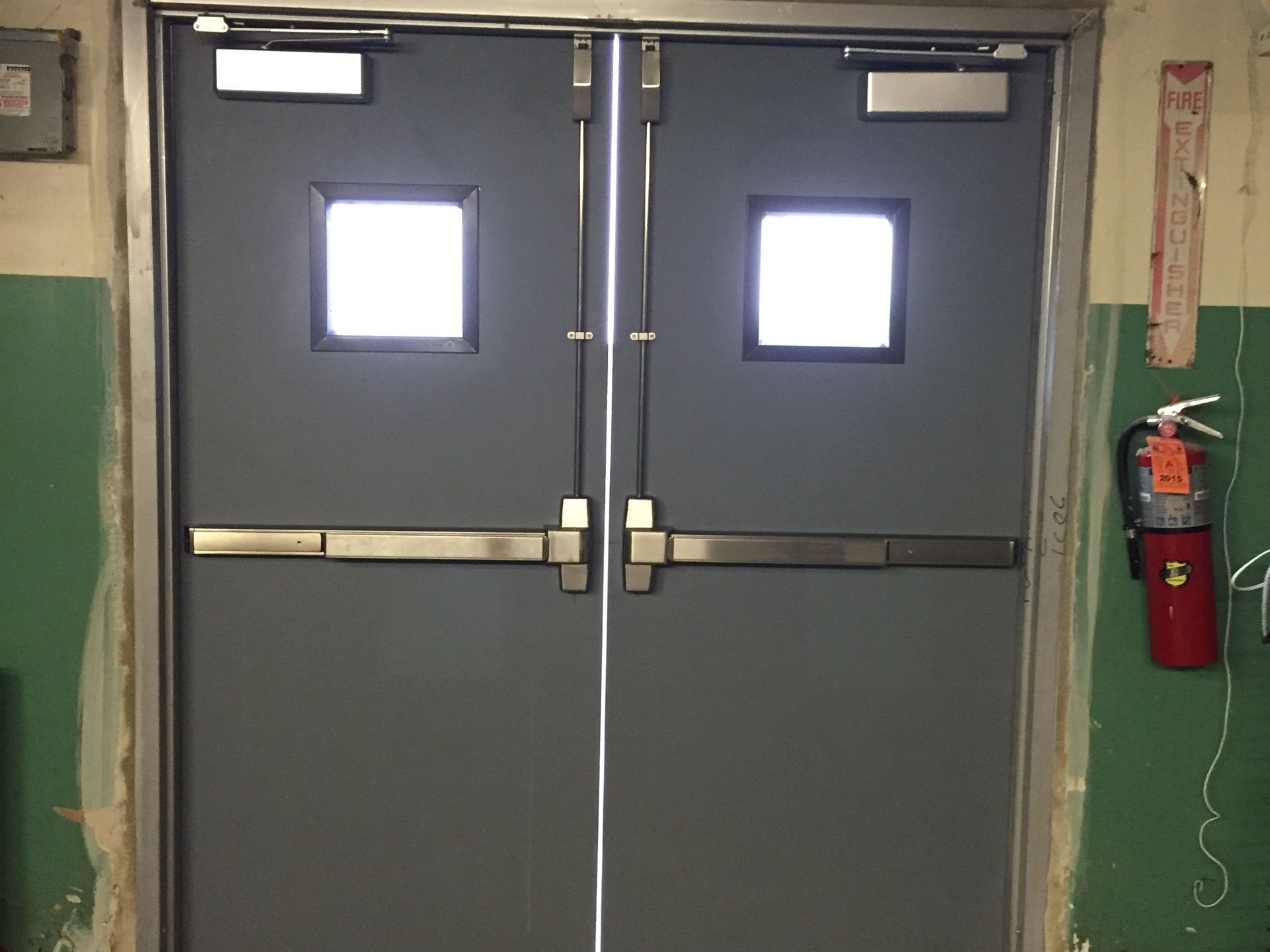
6. Panic Bar or Latch Failure

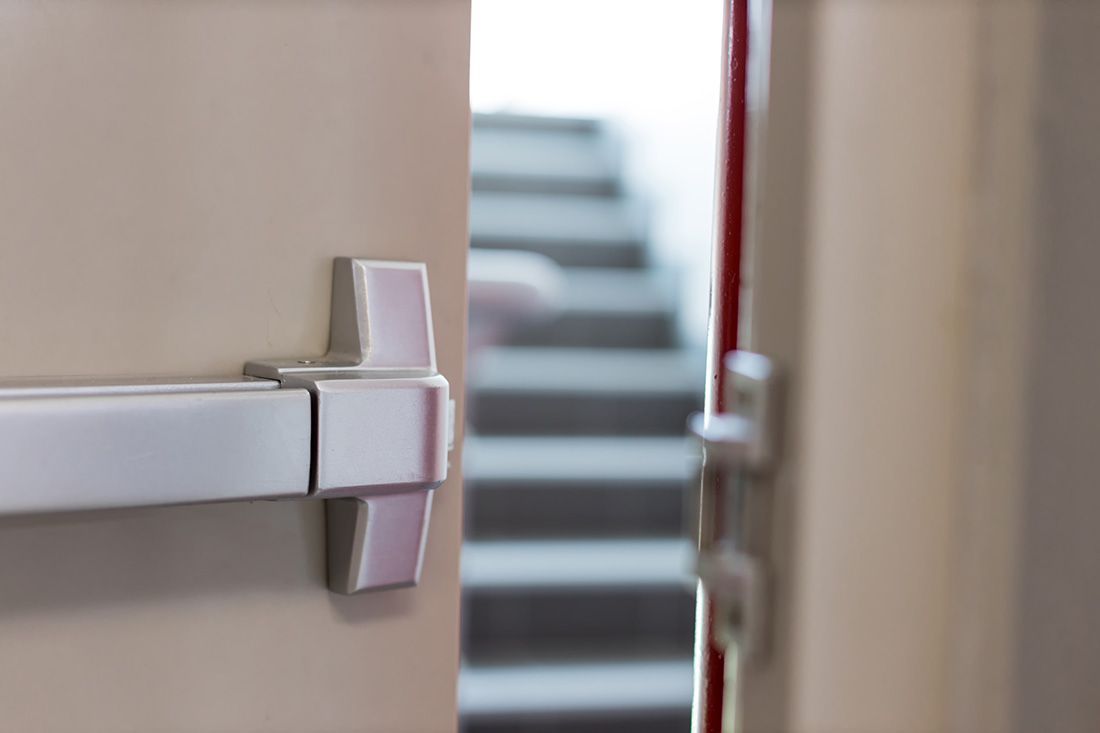
If the door is reaching the closed position but not latching, the issue may be with the panic bar, latch, or strike plate rather than the closer itself. Worn latch bolts, misaligned strike plates, and failing panic bar mechanisms all prevent proper latching even when the door closes fully.

Why This Matters More in Fire-Rated Doors

A commercial door that doesn't close fully is an inconvenience in most applications. In a fire-rated door assembly, it's a compliance problem.

NFPA 80 and the NYC Building Code require fire-rated doors to close and latch fully under their own power, every time. A door held open by a wedge, a door that requires a push to latch, or a door that stops short of the frame — all of these are deficiencies that will be flagged during a fire door inspection.

In NYC, fire door violations carry real consequences: DOB notices, fines, and mandatory corrective work. Addressing closing issues before an inspection is significantly less disruptive and costly than responding to a violation after.

When to Call for Service

Don't wait for a complete failure. Call for service when:

  • The door doesn't fully close or latch without being pushed
  • The door closes too fast or too slow
  • You notice a drag along the bottom, side, or top of the door
  • The door closer is leaking fluid
  • The door swings unevenly or looks visibly out of alignment
  • Hinges feel loose or the door has shifted position
  • A fire door inspection has flagged a closer or hardware issue

Parker Custom Security: Commercial Door Closer Repair in NYC

Parker Custom Security provides commercial door closer repair, hinge replacement, frame realignment, and full hardware service for commercial buildings throughout New York City, Westchester County, and Northern New Jersey.

We carry commercial-grade replacement closers, hinges, and hardware and respond within 24 hours of service requests. Whether it's a single door in a retail space or a building-wide hardware assessment before an inspection, we handle it.

Call (212) 491-5627 or request a service call online. We serve Manhattan, Brooklyn, Queens, the Bronx, Staten Island, Westchester County, and Northern New Jersey.

Common Questions About Commercial Door Closing Problems

Why won't my commercial door close all the way?

The most common causes are door closer failure, door misalignment, worn hinges, a damaged frame, or a threshold issue. A service inspection identifies the exact cause and the most cost-effective repair path.

How do I know if my door closer needs to be replaced?

Signs include a visible fluid leak, a door that closes too slowly or too fast, a door that stops short of latching, or a closer that has reached the end of its rated service life. When in doubt, have it inspected — catching closer failure early is significantly less expensive than waiting for a complete breakdown.

Can a misaligned commercial door be fixed without replacing the frame?

In many cases, yes. Hinge adjustments, closer repositioning, and minor frame corrections can restore proper alignment without full frame replacement. A site assessment determines the right approach for your specific situation.

Is a fire door that won't close a code violation in NYC?

Yes. NFPA 80 and the NYC Building Code require fire-rated doors to close and latch fully under their own power. A door that fails this requirement is a deficiency that must be corrected — and will be flagged during an official fire door inspection.

How quickly can Parker Custom Security respond to a door closer repair call?

Parker Custom Security provides a 24-hour response time from when service requests are received throughout NYC, Westchester, and Northern New Jersey.

Recent Posts

Parker Custom Security technician installing access control system on commercial building exterior in New York City
By Parker Custom Security May 1, 2026
Schools and houses of worship in NYC need access control systems that balance safety with open community access. Learn what to look for and how installation works.
Intercom system installation for NYC apartment building
By Parker Custom Security April 21, 2026
Choosing an intercom system for your NYC apartment building? Learn the options, what to consider, and how Parker Custom Security installs and upgrades.
Best commercial security door options for NYC buildings
By Parker Custom Security April 15, 2026
Choosing the right commercial security door for your NYC building? Parker Custom Security breaks down your options — steel, fire-rated, aluminum, and more.
Fire rated door inspection and compliance preparation in NYC commercial building
By Parker Custom Security April 14, 2026
Learn what NYC fire door inspection requirements mean for your building. Parker Custom Security helps commercial properties prepare for DOB and FDNY inspections.
Commercial storefront door installation and repair in NYC
By Parker Custom Security April 8, 2026
Storefront doors in NYC take a serious beating. Learn the most common reasons commercial storefront doors break down and how you prevent costly repairs.
Commercial access control system installation in NYC building
By Parker Custom Security March 24, 2026
Discover how commercial access control systems improve building security in NYC. Key fob, keycard, mobile, and biometric systems installed and serviced.
Commercial access control keypad installation NYC
By Parker Custom Security March 23, 2026
Learn what to consider when choosing access control systems for multi-tenant buildings in NYC. Improve security, access, and tenant management.
Door frame repair at a building in NYC by Parker Custom Security
By Parker Custom Security March 17, 2026
Learn the signs of commercial door problems and when to take action. Avoid costly repairs and security risks in NYC buildings.
fire rated door services for building owners in NYC, Westchester, and northern NJ
By Parker Custom Security March 4, 2026
Learn why fire rated doors are required in NYC buildings, common problems property owners face, and how proper installation protects tenants and property.
A metal door storefront with glass at an office building in NYC
By Parker Custom Security March 2, 2026
Learn which commercial doors are commonly used in NYC buildings, including metal, fire-rated, and storefront doors. Serving NYC, Westchester & NJ.
Show More