Common Storefront Door Problems in NYC Buildings
Quick Answer
The most common storefront door problems in NYC commercial buildings are broken or leaking door closers, cracked or damaged glass panels, misaligned frames, worn pivot and hinge hardware, damaged panic bars, and threshold issues. Most of these problems develop gradually and are repairable without full system replacement when caught early.
Walk through any busy commercial block in New York City and you'll spot them immediately — the storefront door that sticks when you pull it, the one with a crack running across the corner of the glass, the one that swings closed so hard it bounces back open.
Storefront door problems are everywhere in NYC. And most of them didn't happen overnight.
In our experience at Parker Custom Security — serving commercial buildings throughout New York City, Westchester, and Northern New Jersey since 2003 — these problems follow predictable patterns. The same issues come up repeatedly, in the same types of buildings, for the same underlying reasons.
Knowing what to look for and when to call for service can save a lot of money and disruption down the road.
1. Broken or Failing Door Closers
This is the single most common repair call we receive for commercial storefront doors.
A door closer controls the speed and force with which a door closes. In a high-traffic NYC storefront, closers take hundreds of cycles per day. Over time they wear out — leaking hydraulic fluid, losing tension, or failing to complete the closing cycle at all.
Signs of closer failure: the door swings closed too fast or too slowly, it stops short of latching, it drifts open after closing, or there's a visible oil stain on the door or frame near the closer body.
A failing closer isn't just an inconvenience. In fire-rated storefront applications, a door that doesn't close and latch fully is a code compliance issue. And in any commercial entrance, a door that doesn't close is a security gap.
2. Cracked or Broken Glass Panels
Aluminum storefront systems use tempered or laminated safety glass. In NYC's high-traffic environment, glass takes hits — from delivery equipment, shopping carts, vehicle impacts, and attempted break-ins.
Glass replacement is one of the more straightforward storefront repairs — but it needs to happen promptly. Leaving a cracked panel in place creates liability, compromises security, and in cold weather allows significant heat loss.
3. Misaligned Frames and Doors
A crack in a glass panel doesn't always mean the glass will immediately fail. But it does mean the panel has lost its structural integrity. Cracked tempered glass can shatter without additional impact. Cracked laminated glass may hold together but no longer provides the security or weather protection it's designed for.
NYC is a city of old buildings. Masonry settles. Floors shift. Door frames that were perfectly square when installed gradually move out of alignment — sometimes by fractions of an inch, sometimes more.
When a storefront door frame shifts, the door leaf no longer sits correctly in the opening. You'll notice it as a drag along the bottom, a gap at the top or side, or a door that requires extra force to open or close. Left unaddressed, misalignment accelerates wear on every other hardware component — closers, pivots, hinges, and latches all take additional stress when a door isn't sitting correctly.
Frame realignment is often possible without full frame replacement. The earlier the issue is caught, the more options are available.

4. Worn or Damaged Pivot Hardware
Most aluminum storefront doors use a pivot system rather than traditional hinges — a pivot set at the top and bottom of the door that allows it to swing smoothly. In high-use environments, pivot hardware wears down.
Worn pivots cause the door to sag, drag along the floor, or develop a grinding or squealing sound during operation. In some cases, a worn pivot will cause visible door drop — the door sits noticeably lower on one side than the other.
Pivot replacement is a straightforward repair in most cases, but ignoring it leads to floor damage, frame wear, and eventual full system failure.
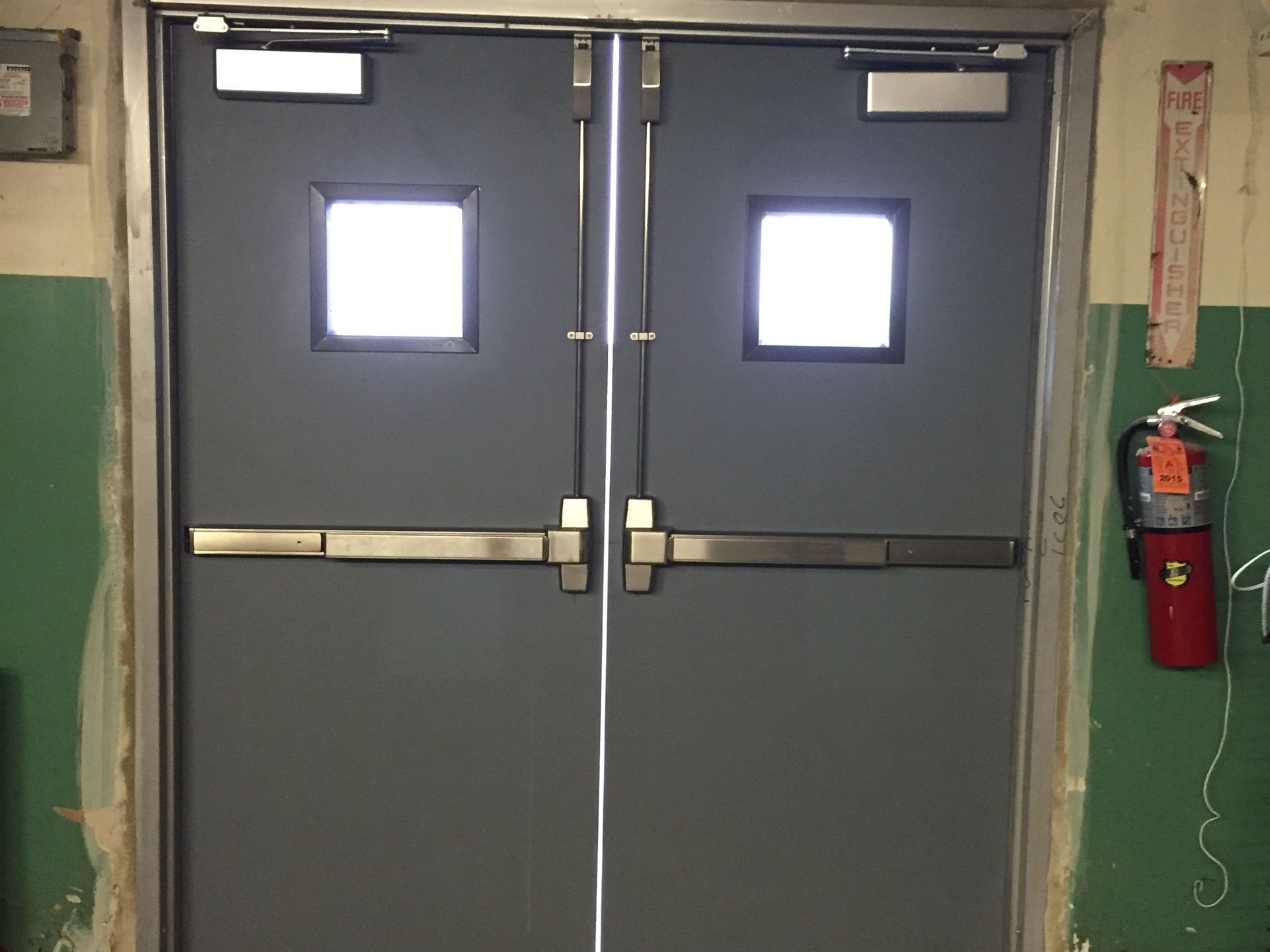
5. Panic Bar and Push/Pull Hardware Failures
Panic bars and commercial push/pull hardware take a beating in high-traffic storefronts. Internal springs fail. Latch bolts wear down. Strike plates shift out of alignment.
A panic bar that doesn't fully retract the latch prevents the door from latching properly. A push/pull hardware set that's loose or wobbly affects the feel and security of the entry — and signals to visitors that the building isn't well maintained.
In fire-rated and egress applications, functioning panic hardware is a code requirement. A failed panic bar on an egress door is a violation that must be corrected.
6. Weatherstripping and Seal Failures
Storefront doors in NYC deal with rain, snow, temperature swings, and humidity. Weatherstripping and door seals degrade over time — cracking, compressing, or pulling away from the frame.
Failed seals allow water infiltration, drafts, and energy loss. In cold months, a storefront door with failed seals can drive up heating costs meaningfully. Water infiltration around the frame also accelerates corrosion of the aluminum and hardware components.
Seal replacement is a low-cost maintenance item that prevents much larger problems.
7. Threshold and Floor Hardware Issues
Commercial storefront thresholds take constant foot traffic, delivery equipment, and weather exposure. Over time, thresholds shift, crack, or corrode — creating uneven surfaces that affect door operation and create trip hazards.
Floor-mounted closers and pivot boxes embedded in the threshold are particularly vulnerable. Water infiltration into floor-mounted hardware causes corrosion and eventual failure.
When to Call for Service
Don't wait for a complete failure. Any of the following is a reason to schedule a service inspection:
- Door doesn't close or latch fully
- Glass is cracked, chipped, or damaged
- Door drags, sticks, or requires extra force
- Closer is leaking, too slow, or not pulling the door shut
- Pivot hardware is making noise or door has dropped
- Panic bar or push/pull hardware feels loose or doesn't engage
- Weatherstripping is torn, compressed, or missing
- Water is entering around the door frame or threshold
Parker Custom Security: Storefront Door Repair in NYC
Parker Custom Security repairs and replaces commercial aluminum storefront door systems throughout New York City, Westchester County, and Northern New Jersey. We handle glass replacement, closer repair and replacement, pivot hardware, panic bar service, frame realignment, threshold repair, and full system replacement.
We respond within 24 hours of service requests and carry commercial-grade replacement hardware and glass for most standard storefront systems.
Call (212) 491-5627 or request a service call online. We serve Manhattan, Brooklyn, Queens, the Bronx, Staten Island, Westchester County, and Northern New Jersey.
Common Questions About Storefront Door Problems in NYC
How do I know if my storefront door closer needs to be replaced?
Signs include a visible fluid leak, a door that closes too fast or too slow, a door that stops short of latching, or a closer that has reached the end of its service life. Most commercial closers need replacement every 5 to 10 years in high-use environments.
Can cracked storefront glass be repaired or does it need full replacement?
Cracked tempered or laminated safety glass cannot be repaired — it must be replaced. The replacement panel must match the original specification for thickness, type, and any applicable safety ratings.
How long does storefront door repair take?
Most hardware repairs — closer replacement, pivot service, panic bar repair — can be completed in a single service visit. Glass replacement typically requires a follow-up visit once the replacement panel is sourced and delivered.
Can a misaligned storefront frame be corrected without full replacement?
In many cases, yes. Frame realignment and shimming can restore proper door operation without full frame replacement, particularly when the underlying masonry or structure is sound.
What causes storefront doors to break in NYC specifically?
NYC storefronts face high daily use, frequent delivery traffic, extreme seasonal temperature swings, and older building stock that settles over time. This combination creates more wear on storefront systems than in lower-traffic or newer construction environments.